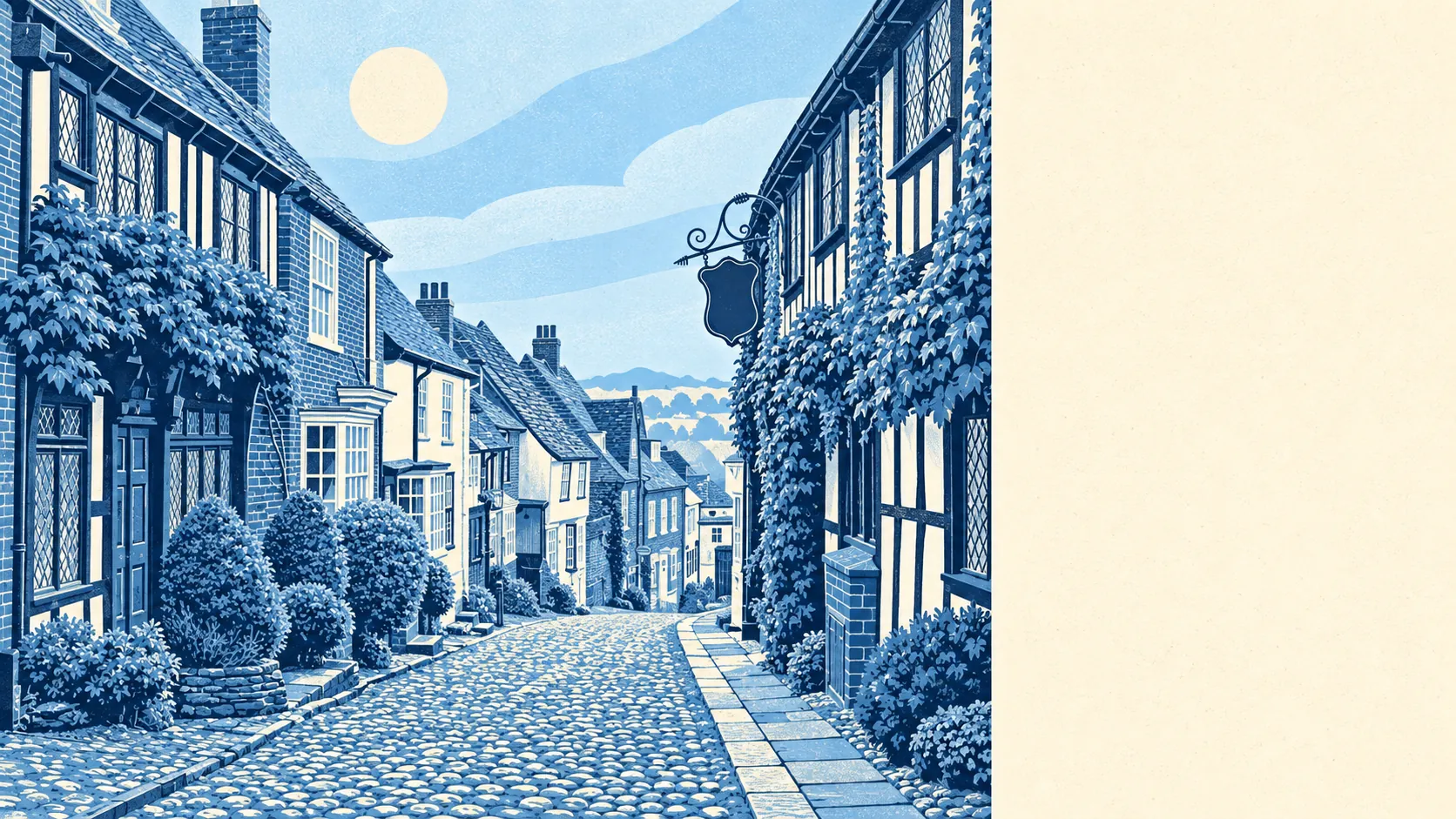
The land around Rye is the best reason to live in it. Green space is a short walk from almost any front door. Water is barely further off. The marsh, the dunes and the edge of the Weald are all within reach. Tourists come to photograph the town, and the people who stay do it for what's around it.
Across Rye's postcodes, the nearest public green space is about 136 metres away on average, and the typical home has about 16 green spaces within a kilometre. At that distance, "should we go for a walk" isn't a car journey.
Water is almost as close. The nearest river, channel or stretch of open water averages about 171 metres away, with about 112 bodies of water within a kilometre. For a town sitting where three rivers meet, the Rother, the Tillingham and the Brede, with drainage ditches criss-crossing the marsh, that's what you'd expect. It's also why anyone who gets the dog back clean has earned a medal.
Getting out into it is easy. The National Cycle Network is about 179 metres away on average, and about 93% of postcodes are close to a route. There's no ancient woodland inside the area. What you get instead is flat, open ground with long views, which cyclists appreciate on the way out and resent on a headwind home.
For amenities, the rating records list 236 shops, 28 pubs and 12 restaurants, alongside 86 offices and 210 holiday lets. In other words, the high street is built for browsing and a pint, and the holiday lets explain who's doing a fair share of it.
Air quality for the Rother council area as a whole measured about 6.5 micrograms per cubic metre of fine particles in 2024. That's a district-wide figure, not a reading from any particular street.
On landscape designations, the High Weald Area of Outstanding Natural Beauty clips about 1% of the area. There's no site of special scientific interest overlapping Rye and no ancient woodland. The countryside here is marsh and river valley rather than protected hillside, and it doesn't need a designation to be worth a walk.
The character comes from what's on the doorstep. Camber Castle sits out on the flats. There's a Martello tower at Rye Harbour, and the Royal Military Canal runs out past Winchelsea. The Wooden Wreck on Camber Sands is listed as a scheduled monument, which may be the only shipwreck in England with better legal protection than most sheds. Peasmarsh, Playden and Iden fill in the countryside inland, and several long-distance footpaths start or pass through the town, including the Saxon Shore Way and the Royal Military Canal Path. The sandstone Weald runs right down to the coast here, so the view changes completely within one walk.
Private gardens add to the public space: across Rye's six neighbourhood areas there are about 244,500 square metres of garden per 1,000 residents. For anyone whose ideal Saturday involves a spade rather than a park bench, that's the figure to look at.
The valuation list holds 1,123 rateable premises across the area. These are premises assessed for business rates, not a count of businesses currently trading, so treat it as the size of the stage rather than the cast list.
When it comes to eating out, about 82% of the 124 food premises with a hygiene rating hold the top score, and none sit at the bottom end. In a town that feeds this many visitors, that record holds up.
The surroundings are Rye's standout strength: water, green space and open marsh within minutes, with a coastline full of castles and towers that someone else has to maintain. If you move here for the town, you'll probably end up staying for the walks.