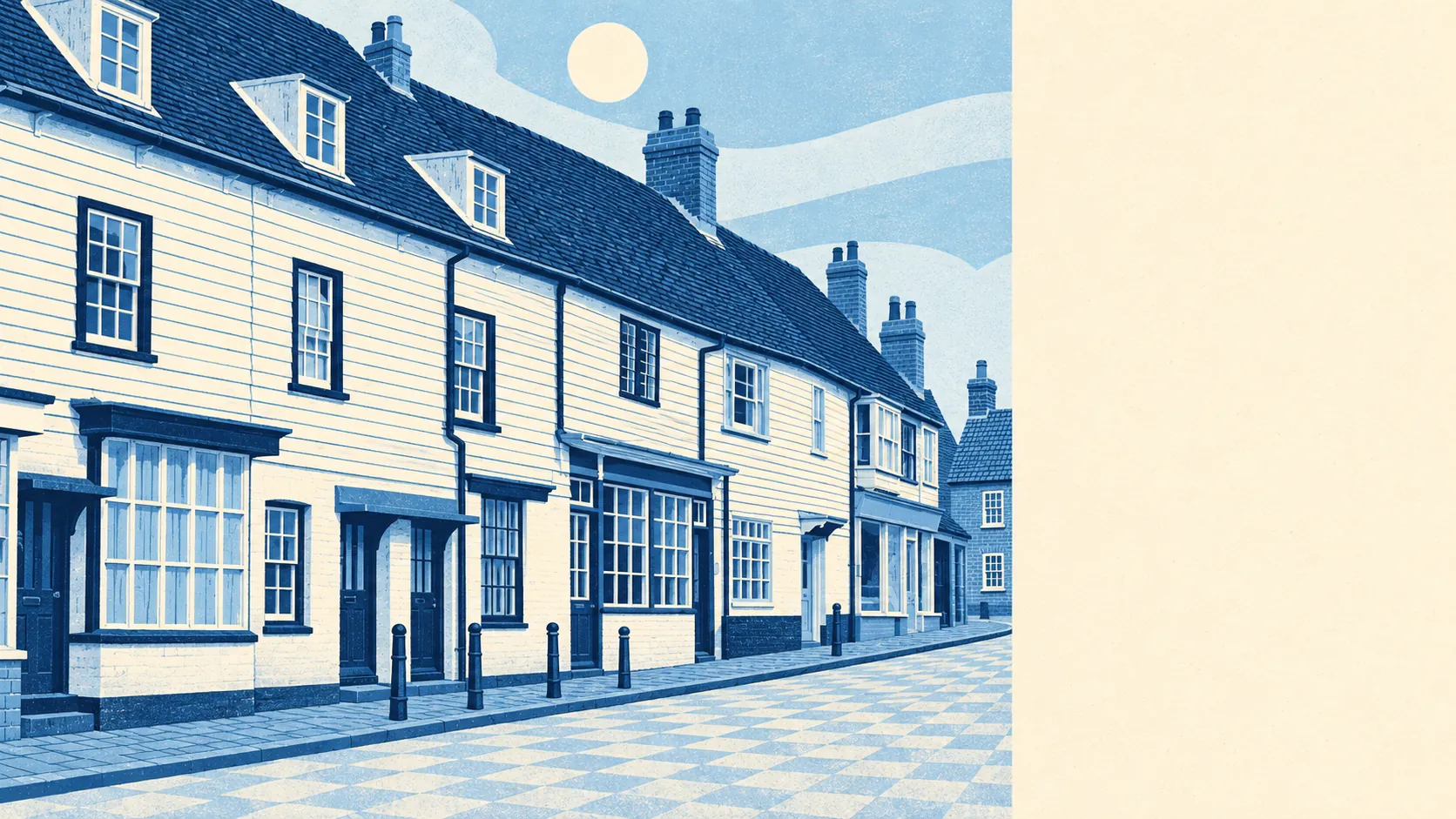
Countryside on every side, arranged as if someone planned the view first and the village second. Green space sits a short stroll from almost every door. Ponds and streams turn up around most corners. A national cycle route runs past the end of the road. Rotherfield is the small bit in the middle of a very large garden.
The average home is about 85 metres from public green space, and there are about 7 green spaces within a kilometre. The Rotherfield Millennium Green, set up in 2000 and run by volunteer trustees for the village, is the one with a committee behind it. The rest is fields, verges and footpaths, which in the High Weald count as the main attraction rather than the leftovers.
Water is closer than most buyers expect on a hilltop. The average home sits about 217 metres from the nearest blue space, and there are about 12 ponds, streams or other water bodies within a kilometre. The River Rother rises on the south side of the hill, so the village has its own source rather than a borrowed river.
The National Cycle Network passes on average about 101 metres from home, and about 97% of postcodes are close to it. There is no ancient woodland inside the area itself. The hills do the rest, and they make every return trip on a bike a stern lesson in why the village sits where it does.
Across the wider postcode area, the rated-premises records list 136 shops, 11 pubs and 6 restaurants. Eleven pubs against six restaurants is a clear statement of local priorities. Nobody here needs a tasting menu when a proper pint is within reach.
Air quality is measured at council level. Wealden's fine-particle level was 6.4 micrograms per cubic metre in 2024, a figure for the whole district rather than for this hilltop.
The whole area, 100% of it, lies inside the High Weald Area of Outstanding Natural Beauty. No Site of Special Scientific Interest overlaps the village itself.
The parish holds more than one village. Mark Cross and Eridge sit alongside Rotherfield, with hamlets such as Town Row, Castle Hill and Argos Hill scattered around them. The landscape carries its industrial past lightly: Woolbridge furnace, a scheduled monument, is a reminder that the Weald once made iron, and the hillfort on Saxonbury Hill is a reminder that people chose these ridges long before estate agents did.
Private gardens are generous. The area has about 650,000 square metres of garden per 1,000 residents, which is the measure of how much outdoor space people have to themselves. The public countryside is lovely. The private version starts at the back door, and most households have plenty of it.
The village itself is modest in commercial terms. The valuation list shows 21 rateable premises, and shop premises make up the largest group at 9. These are premises on the list rather than a guarantee of what is trading today, but the scale is clear: a village centre, not a shopping destination.
Eating out comes with clean kitchens. Of the 8 food premises rated for hygiene, about 63% hold the top score, and none sit in the lowest bands.
The surroundings are one of Rotherfield's real strengths: protected landscape, water and footpaths on every side, and private gardens big enough to make the public ones optional. The countryside is the reason people come, and it keeps its side of the bargain.