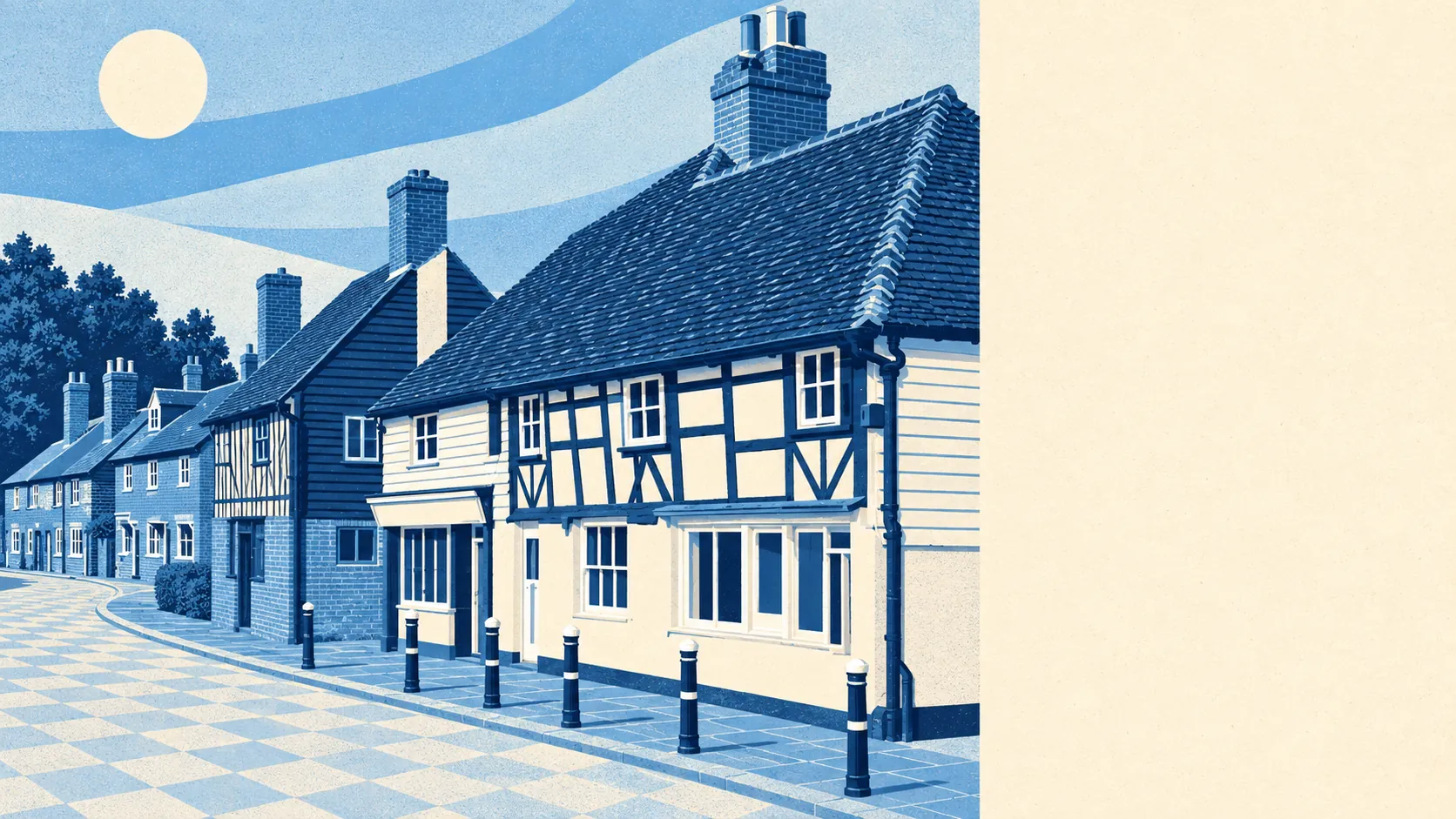
Mostly yes, as long as your house isn't one of the old ones. About fifty homes and buildings are listed. None of them is in the top grade. No conservation area is recorded around the village. The one catch is the protected landscape, and nobody mentions that at the viewing.
Robertsbridge has 54 listed buildings. None is Grade I, two are Grade II* and 52 are Grade II. Listing covers the whole building, inside and out, so changes that affect its character need listed building consent on top of any planning permission. That can include internal walls, windows, roofs and the fireplace the previous owner covered up in 1974 (a rhetorical year, but you know the type). Grade II* marks a building of more than special interest, and consent for those two gets correspondingly careful scrutiny. For the other 52, consent is achievable, but you'll be writing a heritage statement before you pick up a trowel.
The neighbours are clearly getting on with it. Rother's planning register shows 204 applications in the Robertsbridge area between March 2024 and June 2026, 82 of them in the last twelve months. That's how many were submitted, not how many were approved. Still, a village where that many people are asking for permission is a village where plenty of people extend. The planning notice on a lamp post here is about as common as the parish magazine.
For most homes, the rules are the national ones with a landscape twist. A house that isn't listed, with no conservation area around it, keeps its ordinary permitted development rights for many rear extensions and loft changes. But the whole village sits inside the High Weald Area of Outstanding Natural Beauty, and on that kind of protected land some of those rights are narrower than elsewhere. Side extensions and certain external cladding are the usual examples. Before you commission an architect, ask the council for a lawful development certificate or pre-application advice. And don't assume the builder who says "you won't need permission for that" has read the same rules as the planning officer.
The practical split is simple. Buy one of the late-twentieth-century houses and you're working within normal rules with a landscape overlay. Buy a listed cottage and every alteration becomes a consent application, so the character that sold you the house is also what limits what you can do to it. If you want to change the house, look at a newer one. If you love an old house as it is, go ahead and buy it.
Freedom to extend here is middling. Most houses can grow within ordinary limits, while the listed buildings and the landscape designation keep the older homes and the village's look under close supervision.