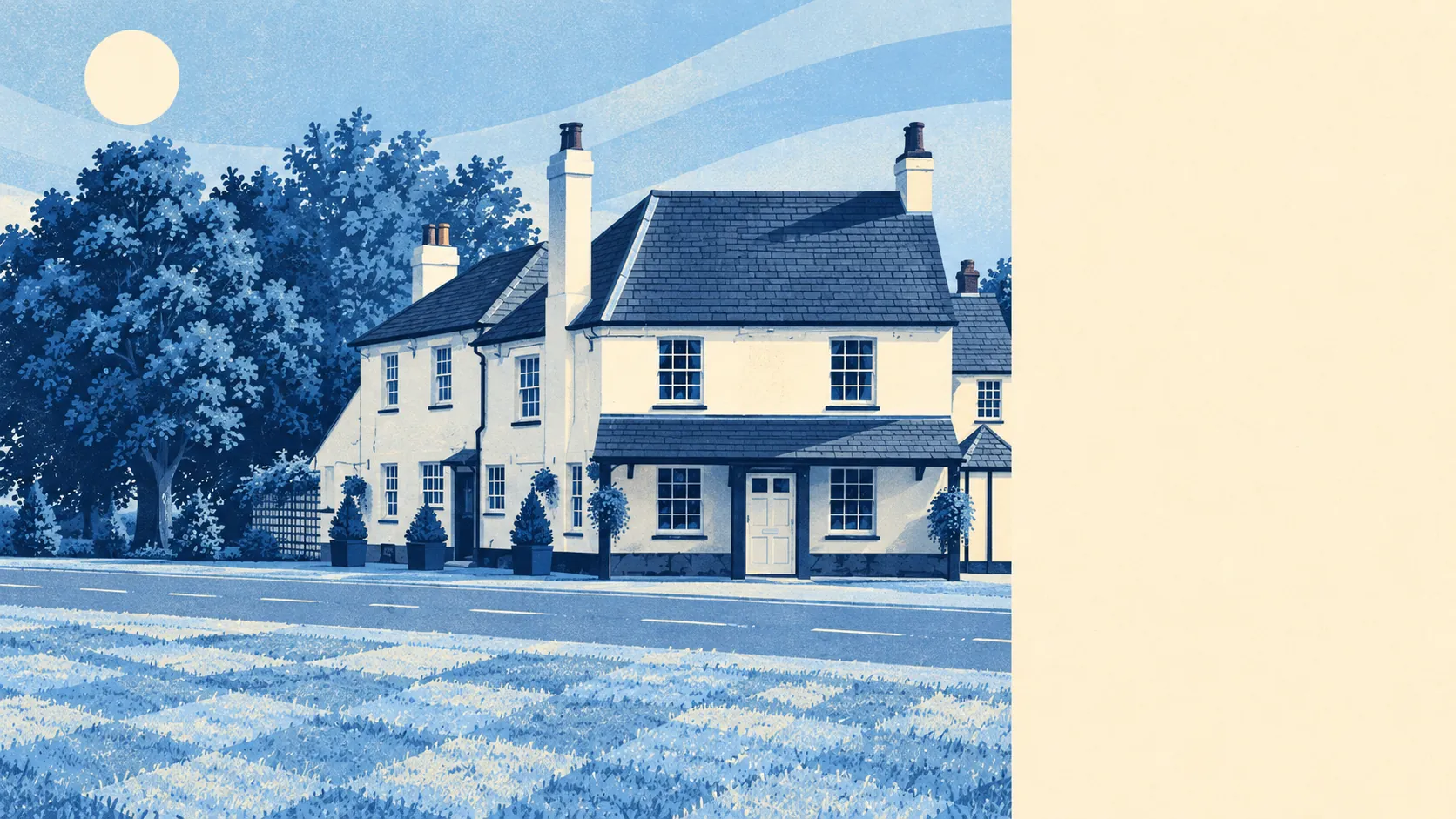
Redbourn charges about £565,000 for a typical home and, for most of the people paying it, hands over enough village to make the cheque feel defensible. Three in four households own. A patch of green is about a minute's walk from most front doors. A first-time buyer on one salary will usually be turned away before reaching the green.
The Land Registry recorded 52 sales in Redbourn in the year to May 2026, at a typical price of about £565,000. The spread by type is wide. The ten detached houses that sold went for a typical £921,000, semis for about £590,000, terraces for about £461,000, and the five flats that changed hands for around £300,000. Terraces at £461,000 are the nearest thing the village has to a starter home, which tells you who does the starting here. Band E is the most common council-tax band, only about 6% of homes are in bands A or B, and a Band D bill comes to about £2,420 a year.
Renting is a thin market. Only about 9% of Redbourn's households rent privately, with another 16% in social housing. The Office for National Statistics puts typical private rent across the St Albans area at about £1,920 a month, so that figure covers the district and not just this village.
On the council-tax valuation list, about 28% of Redbourn's homes are detached, 25% semi-detached and 24% terraced, with flats at 11% and bungalows at 9%. About 21% were built before 1930, and most of the homes with energy certificates went up after the war. Of those certificated homes, 48% reach band C or better, 41% are in band D and 11% are E or worse. About 82% are on mains gas. Redbourn's old industries mostly became places to live or meet. The silk mill site is now a housing estate, and the straw hat factory on the High Street is the village hall.
About 75% of households own their home, and the typical resident is 46. The Office for National Statistics models gross household income across the area at about £75,700 for the financial year to March 2023. At the 2021 census about 49% of working residents worked from home. That explains why the village doesn't empty out at eight in the morning the way a commuter village is supposed to.
Flood risk is modest for a village on the River Ver. About 9% of Redbourn's postcodes carry a high risk on at least one flood indicator, surface water included, and about 12% a medium one. The Environment Agency's river-and-sea flood zones are tighter, with about 2% of postcodes in zone 2 and about 1% in zone 3. None of the village's postcodes appears on the historic flood record. Two measures giving two answers, both correct, is exactly the sort of nuance that gets lost by the time it reaches a sales brochure.
Redbourn has no station. Rail commuters get themselves to Harpenden, St Albans City or St Albans Abbey, so at the 2021 census only about 2% of working residents went by train, against 40% who drove. The village has 25 bus stops, averaging about 18 weekday departures each, and every stop has a weekend service, though at peak that works out at under one bus an hour. Gigabit broadband reaches about 91% of premises, and every mobile operator covers the area with 4G or 5G. The Nickey Line, the branch railway to Harpenden and Hemel Hempstead, closed in 1979 and is now a shared path, so the best rail link in Redbourn is one you cycle.
Police.uk records about 71 crimes per 1,000 people in Redbourn for the year to May 2026, roughly 13% below the St Albans district average of about 81. Anti-social behaviour makes up about 29% of what gets reported, against 16% nationally. The totals are small enough that a few incidents can swing that share, so it may say more about one year than about the village.
Redbourn has 89 listed buildings, one at Grade I, two at Grade II* and 86 at Grade II, plus one conservation area covering the village itself. St Mary's church dates from the early 12th century, and a house inside the conservation area needs permissions that a post-war semi on the edge of the village can do without. Not long after the church went up, the abbot of St Albans founded a priory on Redbourn Common because some bones found there were reputed to be those of St Amphibalus. That is a lower standard of evidence than any modern conservation officer would accept for a replacement window.
The one primary school in the district with published results averages 107 in the Key Stage 2 maths test, and Redbourn Primary School is in the village. Across Hertfordshire, Ofsted has graded 203 of 227 settings good or outstanding, including 40 at outstanding. That is a county-wide count, and it promises nothing about any particular classroom. For secondary school, the Department for Transport's 2019 modelling puts the nearest at about 27 minutes by public transport or 14 by car. Townsend Church of England School and St Albans Girls' School are among the options outside the village.
The green space is where Redbourn earns its price. On average the nearest green space is about 120 metres from a front door, there are about 17 within a kilometre, and water is about 410 metres away. There is the common, the water meadows of the Ver that once grew watercress, Redbournbury Mill to the south and the Nickey Line heading off towards Harpenden. Dog walkers here have more routes to choose from than the buses do.
Redbourn's notable residents are a strange collection. Saint Amphibalus, the priest who converted Saint Alban, was martyred here. Sir Richard Reade, Lord Chancellor of Ireland, is buried at the parish church, and Henry Stephens, the inventor of an improved blue-black ink, is on the list too. Elizabeth Howard, Duchess of Norfolk, was sent to Redbourn after her marriage broke down and complained that the duke "locked me up in a chamber and took away my jewels and apparels". Nearly five centuries later, people hand over the jewels of their own accord for the privilege of being sent here.
Redbourn is right for two-income households with a car, people who work from home, and anyone whose ideal weekend starts at the end of the garden path. Daily rail commuters who resent the drive to the station should look elsewhere, and so should a single first-time buyer hoping the terrace price will come down to meet them.
Every field, common and riverside path is free, but getting the door key that puts them a minute away costs about £565,000, and that is where Redbourn loses people. Those who can afford to get in end up with a good village and a short walk to open country, and very few of them complain about being sent here.