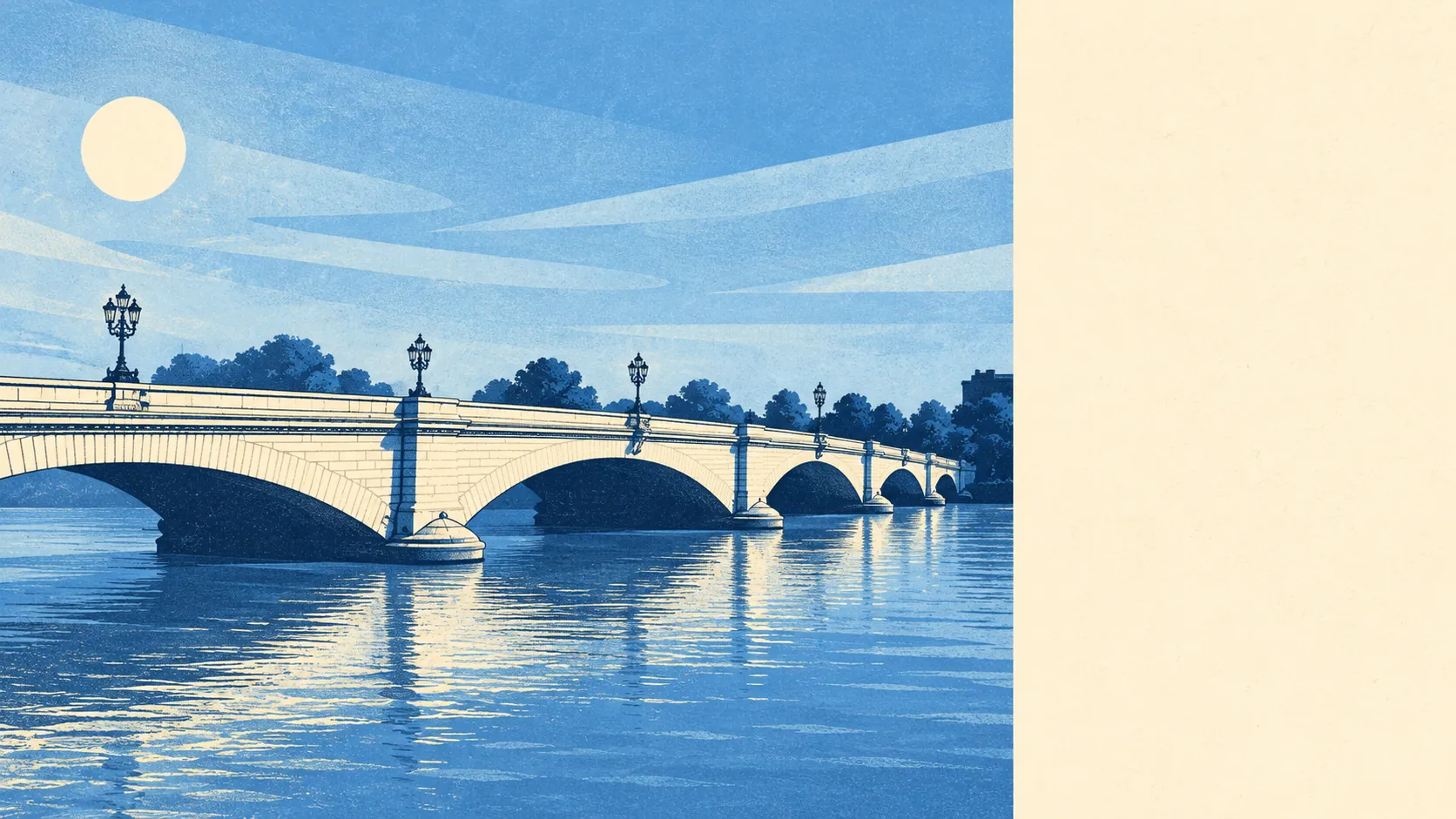
Putney is surrounded by more open space than almost anywhere this close to central London has any right to. A park is a couple of minutes' walk from most front doors. The Thames is a short stroll beyond that. The heath, the commons and Richmond Park run along the western side. The flats are small, and the outdoors more than makes up for it.
Green space is about 140 metres from the average Putney front door, and the average home has about 32 green spaces within a kilometre. That count covers everything from a pocket square to Putney Heath, Putney Lower Common and Wandsworth Park, and on the western edge it runs into Richmond Park, the deer park Charles I enclosed in the 17th century. The commons are where Putney lives once it is out of the flat.
Water is about 440 metres away on average, with about 31 bodies of water within a kilometre. Most of that is the Thames, which gives Putney its embankment and its pier, and the river frontage is a conservation area of its own.
The National Cycle Network is about 900 metres from the average home, and about 21% of postcodes are close to it. There is no ancient woodland in the area.
Wandsworth's air carried an average of about 9 micrograms of fine particles per cubic metre in 2024, the council area's figure for the year.
Putney mixes the common and the river with dense, busy streets. Putney Embankment, Putney Heath, East Putney and West Putney all carry conservation-area status, and Putney Vale, Roehampton and Kingston Vale stretch out along the south-western side. A district with a high street and a hundred buses an hour still has a heath at the top of the hill, and most of its residents use it.
Private outdoor space is scarcer than the public kind. Putney has about 35,300 square metres of private garden for every 1,000 residents, and with most homes being flats, much of it belongs to the houses. If a garden matters, check whether a flat comes with its own patch, a share of a communal one, or only a window looking at somebody else's.
The valuation list has 1,231 rateable premises in Putney. Shops are the biggest group at 439, followed by 311 offices and 60 restaurants. Those are premises on the rating list, and some may be empty or between tenants on any given day. The rated-premises count puts 441 shops, 20 pubs and 60 restaurants in the area. With sixty restaurants against twenty pubs, Putney goes out to eat a good deal more readily than it goes out to drink.
The Food Standards Agency has rated 314 food premises in Putney, and about 84% of them hold the top hygiene score, while about 2% sit at the bottom of the scale. On those numbers, a meal out in Putney is a fairly safe bet.
No area of outstanding natural beauty, site of special scientific interest or ancient woodland overlaps the Putney district itself. Richmond Park, on the western edge, carries national designations of its own as a nature reserve. Putney's own green space is the everyday kind, made up of commons, parks and the riverbank, and it has no official protection beyond that.
The surroundings are one of Putney's real strengths. Few places this close to central London put a common, a riverside and a royal park all within a short walk of so many homes.