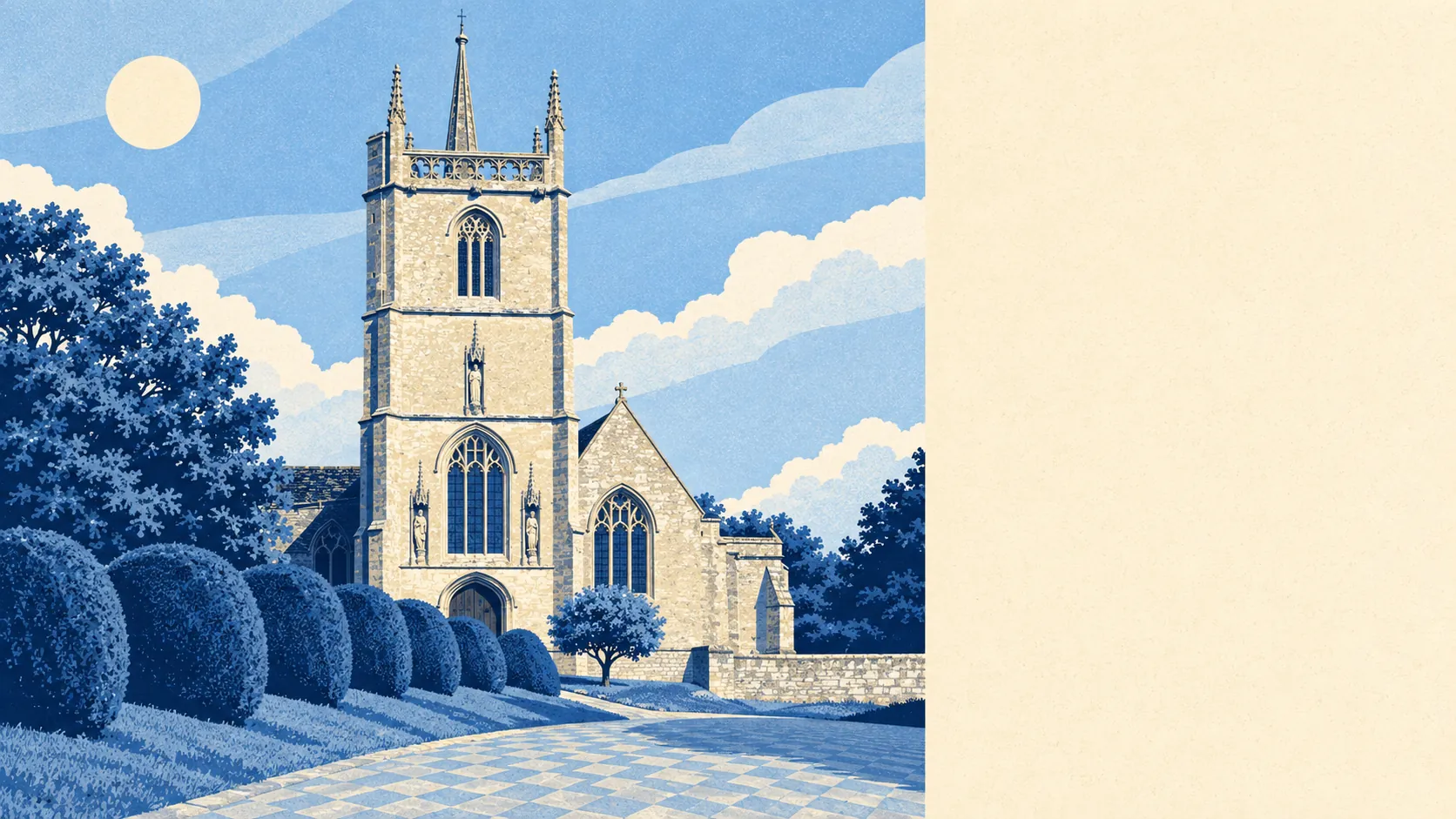
Purton is a good place to live, provided you own a car and enjoy being left alone. Crime runs well under the Wiltshire average. Nearly eight in ten households own their home. The buses turn up often enough to be noticed, rarely enough to be planned around. It's a comfortable hilltop village that expects you to drive yourself out of it.
The housing is mostly houses, and plenty of them are big. The council-tax valuation list puts about 32% of Purton's dwellings as detached, 29% semi-detached, 15% bungalows, 12% terraced and 11% flats. About a quarter were built before 1930. That bungalow share tells you a village has been thinking ahead about stairs. The energy certificates are middling: 44% sit in band D, about 42% make A to C, and roughly 15% are E or worse. About 63% of homes heat with mains gas and about 10% run on electric-only heating, which is worth finding out at the viewing, not when the first winter bill arrives. The British Geological Survey puts every postcode in Purton in its class 3 for shrink-swell clay. In practice that means the ground moves with the weather, so the surveyor should look hard at any big tree near the foundations.
The Land Registry's last twelve months, to April 2026, show 37 sales at a median of £352,500. Detached houses went for a median of about £490,000 across 15 sales, terraces about £295,000 across eight, and semis about £263,500 across twelve. Semis coming in under terraces says more about which few semis happened to sell than about semis in general, so don't read it as a rule. Council tax band C is the most common, and about a fifth of homes sit in bands A or B. Cheap starter stock exists here, but it's thin on the ground.
Renting is a minority pursuit. Only about 11% of households rent privately. The typical private rent across the Wiltshire area was about £1,060 a month as of April 2026, from the Office for National Statistics' rent index. That's a county-wide figure, not Purton's own. With so few rentals in the village, the listing you actually find may bear little relation to the average.
Safety is where Purton earns its keep. Police figures for June 2025 to May 2026 put the crime rate at about 37 per 1,000 residents, roughly 41% below the Wiltshire average. Its bloodiest story is a Civil War battle thought to have been fought around Restrop, where the old name for Restrop Road, Red Street, may refer to the blood. Nothing since has come close. The modern version is people complaining about parking on the High Street.
The schools are next door to each other. Bradon Forest School, the secondary, sits in the middle of the village south of the High Street. It also takes pupils from Cricklade, Lydiard Millicent and West Swindon, so for once the traffic comes to Purton. St Mary's Church of England Primary School is on the adjacent site, and Ridgeway Farm CofE Academy serves the newer housing on the east side of the parish. The three primaries in the area average 104 on the end-of-primary maths scale, and the one secondary has an Attainment 8 score of about 48. Across Wiltshire, Ofsted has graded 106 of 128 settings good or better. The modelled walk to the nearest primary is about 17 minutes and to the secondary about 18, which is walkable if nobody's legs are under nine.
Connectivity is the weak spot, and it doesn't pretend otherwise. Purton has no railway station, and the share of residents who commute by train rounds to zero. Half drive to work and about 36% work from home, so for a lot of people the home office is the commute. There are 18 bus stops. The 13 with timetable data average nine weekday departures each, the typical stop sees no bus in the peak hour, and 92% get a weekend service. The Department for Transport's 2019 modelling puts the nearest town centre 34 minutes away by public transport and 15 by car, and a hospital 27 minutes by car or 79 by bus. Broadband does better than the buses. Gigabit service reaches about 74% of premises, superfast 99%, and all four mobile networks cover 98% of the area.
The flood picture is small but worth checking. About 14% of Purton's postcodes are high risk on at least one flood indicator, surface water included, with another 9% medium and 30% low. None of the village sits in the Environment Agency's river-and-sea flood zones 2 or 3. So the risk is rain running off the hill, not the Thames arriving at the door. Green space is close, with the nearest about 264 metres away on average and roughly ten within a kilometre. Water is about 330 metres off, including the River Key out near Purton Stoke. Radon is in the lowest band.
Heritage is a real constraint in places. Purton has 52 listed buildings: one grade I, one grade II*, and 50 grade II. There's also one conservation area, named Purton, and two scheduled monuments nearby, among them Ringsbury Camp hillfort. If your dream home is listed or inside the conservation area, the replacement windows go through the council first. Budget for the timber quote and the patience.
The village is settled, comfortable and a little grey at the temples. About 78% of households own their home, the median resident is 50, and gross household income averaged around £60,700 in the financial year to March 2023. Nobody here is short of a second car or an opinion about the bypass. This page also covers Leigh, out on the edge of the Cotswold Water Park, which is quieter again.
Purton suits families who want a secondary school within walking distance, retirees who want a bungalow and a low crime rate, and home workers who need decent broadband and never catch a train. It rewards people who already drive everywhere and see no problem with that.
It doesn't suit anyone planning to live without a car, or anyone whose commute runs on a timetable. Buyers who want nightlife, a station or a choice of rentals should look at a bigger town and accept the trade: more buses, more noise.
The written record goes back a long way. In 796 King Ecgfrith of Mercia gave Purton land to Malmesbury Abbey, and the Maskelyne family, long-standing landowners, won the right to be buried in the church's south transept. The Reverend Dr Nevil Maskelyne, Astronomer Royal from 1765, is buried in the churchyard. The notable names linked to the village also include Edward Hyde, Anne Hyde, Desmond Morris, Billie Piper and Dave Gregory, which is a broader cast than the High Street suggests.
Purton is an above-average place to live that knows exactly what it is. Its real strength is safety, with crime far below the county norm on streets that stay quiet. The weak spot is transport and connectivity, because without a car the village is a very nice place to be stuck. Buy the car first and the house second.