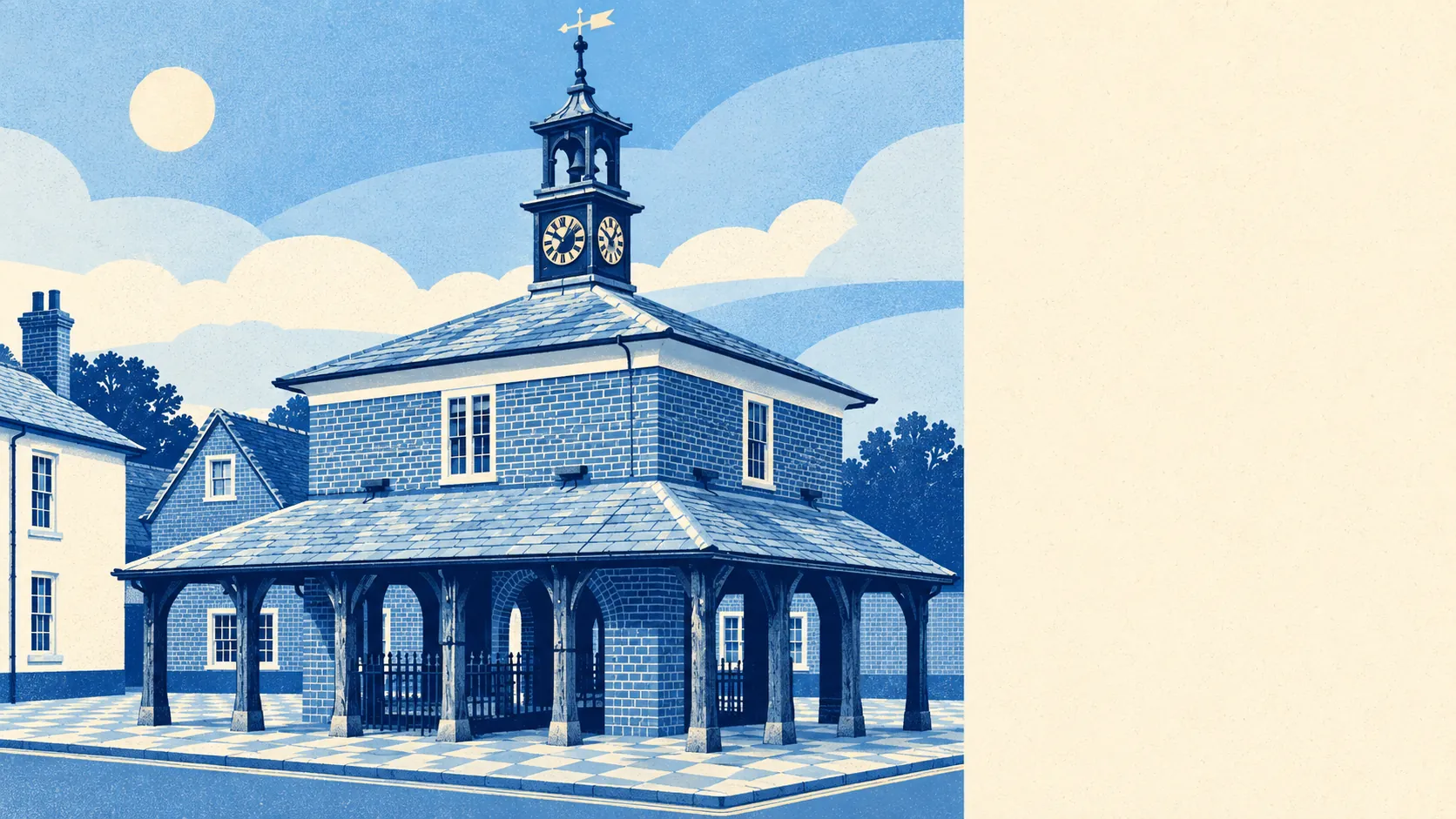
You can extend a house in Princes Risborough, but in the older parts of town and its villages expect to ask first and wait for an answer. There are dozens of listed buildings. Six conservation areas cover the old centre and the villages around it. The ground has some clay in it as well. Outside those lines it is a normal planning conversation, and inside them it is a long one.
Historic England lists 93 buildings in and around the town: 1 at Grade I, 6 at Grade II* and 86 at Grade II. Listing covers the whole building, inside and out, so changing a staircase, a fireplace or a window in a listed house needs listed building consent from Buckinghamshire Council as well as any planning permission. Work done without that consent is a criminal offence, and the owner who inherits it inherits the problem.
There are six conservation areas: Princes Risborough itself, Monks Risborough, Whiteleaf, Askett, Alscot and Horsenden. Inside a conservation area, some of the work a householder could do elsewhere without asking, such as certain extensions, cladding or changes visible from the road, needs planning permission, and the council judges proposals against the character of the area. In Monks Risborough the monks have long gone, and the interest in the windows has not. Buckinghamshire Council's conservation area maps show whether a specific address falls inside one of the six, and a buyer with plans should check before the survey.
Seven scheduled monuments are in the surrounding area, the strictest tier of protection there is. They matter mainly to owners of land next to or on one, where even digging a trench can need consent.
None of this stops people trying. Buckinghamshire Council received 595 planning applications for the area between April 2024 and June 2026, 260 of them in the last twelve months. That is a town full of people with plans for the back of the house, and a planning department that hears about all of them.
The British Geological Survey rates shrink-swell clay in the area up to class 3 on its hazard scale, and about 41% of postcodes reach that class. Clay of this kind swells when wet and shrinks when dry, so an extension here may need deeper foundations than a builder from elsewhere would assume, especially near trees. A structural engineer's opinion before the foundations are designed costs much less than a crack in the new wall.
For a post-war house outside the conservation areas and off the listed register, a modest rear extension may fall within permitted development, the rights that let householders build within set limits without applying. Inside a conservation area those rights shrink, and on a listed building almost everything needs consent. The same extension can be routine on one street and a long application two streets away.
Freedom to extend here is limited. A buyer with plans for an old house in the centre or the villages should expect consent forms, patience and a few compromises before the builders arrive.