Exceptional, and it is the reason people forgive the city its middle. Open ground starts a couple of hundred metres from the average front door. Water is barely further. Two rivers, a sound and the edge of a moor sit inside the same run of postcodes. This is a city with a national park at its back and an estuary at each elbow, and it has never worked out how to mention that without sounding embarrassed.
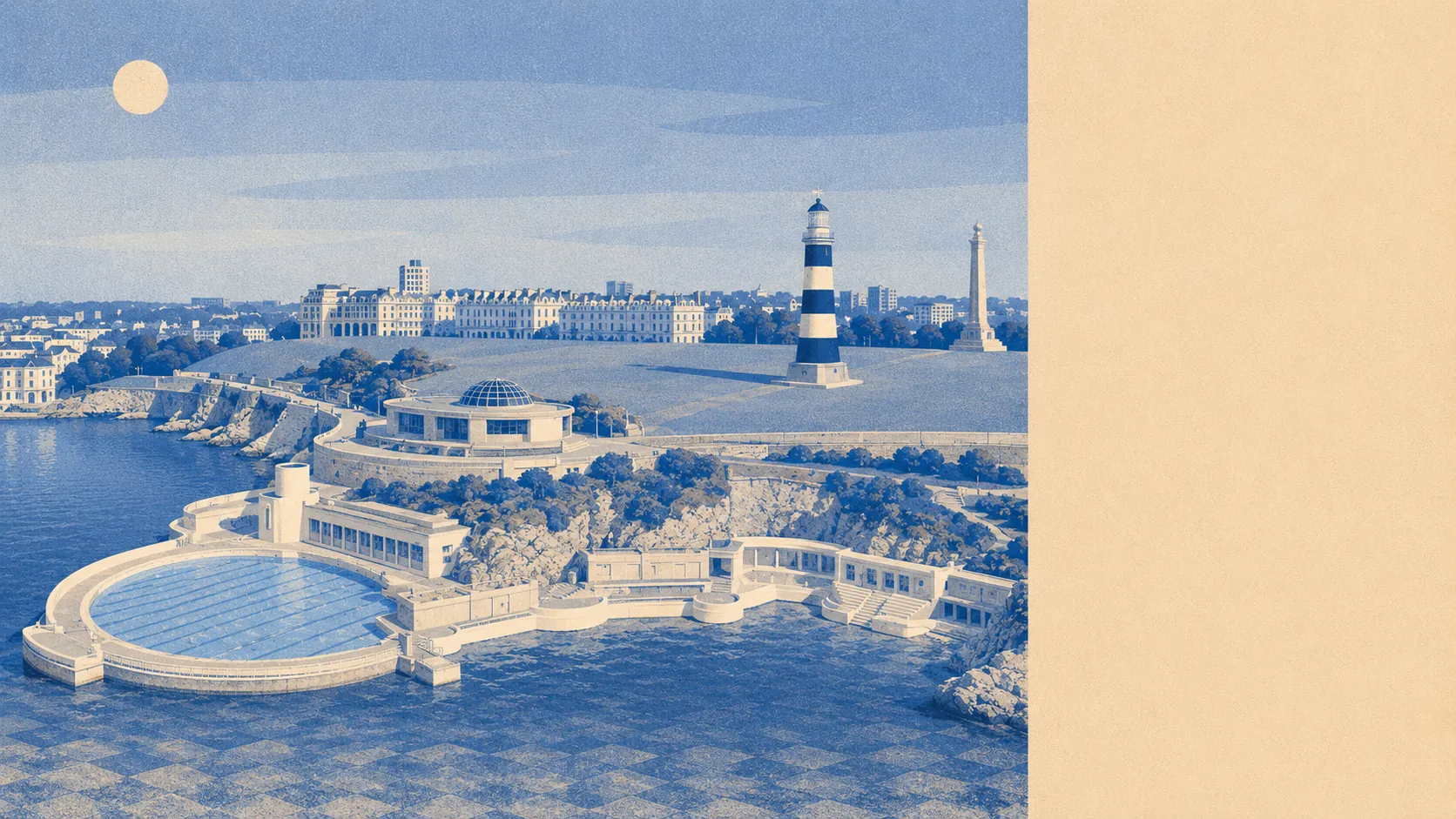
Green space is close to relentless. The typical postcode has around 24 mapped green spaces within a kilometre, and the average distance to the nearest is about 145 metres. Those are not all the same kind of thing: Central Park sits in the middle of the city with the football ground in it, Devonport Park and Victoria Park serve the western suburbs, Freedom Fields carries a Civil War battlefield under the grass, and Ford Park Cemetery is registered as a park in its own right. The Hoe is the one everybody pictures, and it is a public lawn on a limestone cliff with the whole Sound laid out below it.
Water is nearer than in almost any comparable city. The average postcode sits about 480 metres from some form of blue space, with roughly 32 water features within a kilometre. Plymouth Sound takes the credit, along with the Tamar on one side, the Plym and the Cattewater on the other, and the Breakwater holding the weather off the lot of it. Drake's Island sits out in the middle looking like a set piece nobody commissioned.
For getting out under your own power, the National Cycle Network averages about 1,400 metres from the typical postcode, and about 35% of postcodes sit close to it, including the long coast-to-coast route that runs off the moor and finishes in the city. There is no ancient woodland inside the area, so the walking here is coast path, park and moor edge rather than old forest.
The high street, measured as rateable premises, comes to 1,682 shops, 166 pubs and 144 restaurants. That pub count against that restaurant count tells you which tradition got here first and is not planning to leave.
Air quality is good by urban standards. Fine particle levels averaged about 5.5 micrograms per cubic metre across the Plymouth council area in 2024, which is what a westerly wind off the Atlantic does for a city that would otherwise struggle.
Character depends on which edge you leave by. Head east through Plympton and Plymstock and the city gives way to Wembury, Yealmpton and the South Hams lanes. Head west across the water by ferry from Cremyll or Torpoint and you are in Cornwall inside ten minutes, with Mount Edgcumbe's parkland facing the city back across the Sound. The Barbican holds the old harbour, Saltram and Antony sit in registered parkland on opposite banks, and Turnchapel and Oreston keep the working-water look the rest of the coast has mostly gentrified away.
Private outdoor space holds up too. Gardens run to roughly 71,200 square metres per thousand residents, which for a city this dense is a genuinely generous figure and reflects the post-war suburbs where the plots got laid out properly.
Across the whole area the valuation list carries 7,864 rateable premises, with shops and offices as the two largest blocks at 1,682 and 1,589 respectively, plus 189 holiday lets. Those are premises on a list rather than businesses currently trading, so read them as the shape of the built commercial stock rather than as a directory of open doors.
On food, 1,478 premises carry a hygiene rating, about 77% of them at the top score and about 4% at the lower end. That is a solid distribution for a city with this much of a restaurant and takeaway trade.
One honest absence: no area of outstanding natural beauty, no site of special scientific interest and no ancient woodland falls inside the area itself, with the South Devon protected landscape sitting alongside rather than overlapping. The surroundings here are not good because a designation says so. They are good because the water, the parks and the moor are simply there and mostly walkable.
The setting is the best thing Plymouth has, without much competition. Few English cities put this much park, coast, river and moor within a short walk of ordinary housing, and fewer still manage it at these prices.