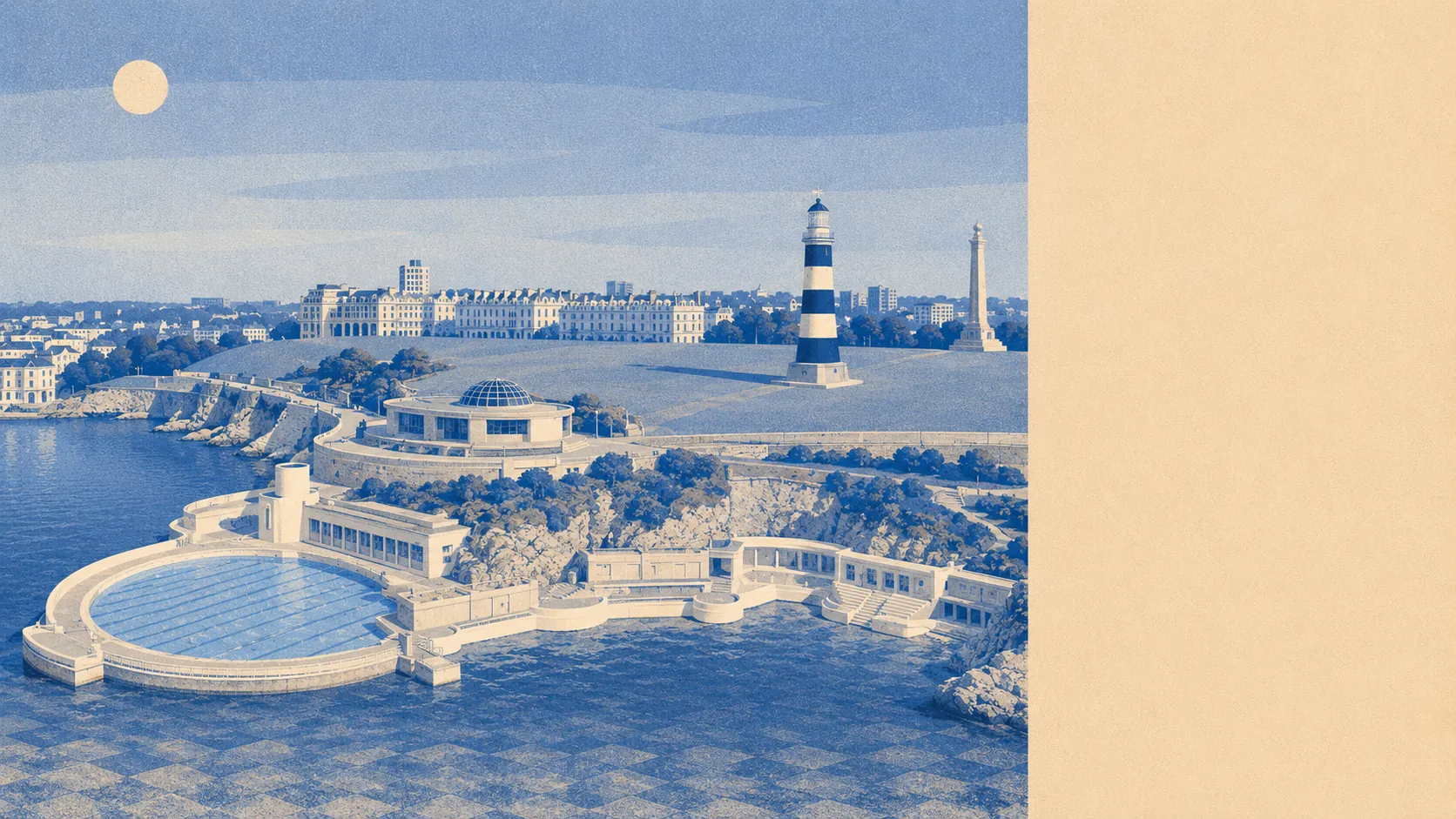
Yes, and not for the reasons the postcards push. The typical home changes hands for about £225,000. A quarter of households run no car at all. Green space starts about 150 metres from the average front door. That is a full-sized city priced like a market town, and the people already here would rather nobody worked it out.
The stock is terraced first and everything else afterwards. On the council tax valuation list, which covers every dwelling rather than only the ones recently sold, about 34% of homes are terraced, 27% are flats and 23% are semi-detached, with detached houses and bungalows on about 8% each. Roughly 27% predates 1930 and only about 5% went up between 2000 and 2008, which tells you the city was rebuilt in one enormous municipal effort after the war and has been living off that effort since. Around 81% of homes run on mains gas and about 7% are heated by electricity alone, and that second figure is the one that matters when the flat you are viewing has storage heaters and a seller who describes them as modern. Energy performance certificates put roughly 52% of certificated homes in bands A to C, about 38% in band D and about 10% in band E or worse.
The Land Registry's last twelve months recorded about 2,970 sales at a median of £225,000. Flats came in around £136,000, terraces around £210,000, semis around £262,000 and detached houses around £395,000, so the distance between the bottom and the top of this market is the width of an entirely different city. Band A is the most common council tax band and about 65% of dwellings sit in bands A or B, with a band A bill of roughly £1,630 a year. Cheap to buy and cheap to be taxed on is a combination most of the south coast quietly stopped offering.
Renting typically runs at about £990 a month as of April 2026, up about 5% over the year, and that is the typical private rent across the Plymouth area rather than a figure for any one street. By size it works out at roughly £695 for a one-bedroom, £870 for two and £1,050 for three. Those are mean private rents from the official price index, not the optimistic numbers on a letting board.
Recorded crime came in at about 110 offences per thousand residents in the year to May 2026, level with the Plymouth local-authority average of about 112. That is the published rate, not something worked out on the back of a population count. The more uncomfortable figure belongs to Devon and Cornwall Police rather than to the city: about 8% of recorded crimes ended in a charge over the same period, against about 12% nationally, and roughly 26% closed with no suspect identified. A place can be exactly as safe as its neighbours and still offer poor odds that anyone is prosecuted for what happened to you.
Ofsted has graded 52 settings in the Plymouth authority, of which 47 are good or better and seven are outstanding, with two requiring improvement and three rated inadequate. Key Stage 2 maths across 71 primary schools in these districts averages about 105, and the 19 secondaries average about 47 on Attainment 8. Plymouth also kept three selective state grammars, Devonport High School for Boys, Devonport High School for Girls and Plymouth High School for Girls, so the city runs a selection round and a permanent parallel conversation about it at the school gates. The University of Plymouth, Arts University Plymouth and the University of St Mark and St John keep the student population and the flat market pointed firmly at each other.
About 51% of working residents drive to work and about 21% work from home, while roughly 6% take the bus, 10% walk and around three in a thousand commute by train. Plymouth Rail Station sits on the main line, with local stops at Devonport, Dockyard, Keyham and both St Budeaux stations, and Brittany Ferries still sails from Millbay to Roscoff and Santander for anyone who wants to leave the country without visiting an airport. The bus network is the genuine surprise: nearly 2,000 stops across the area, an average of about 104 scheduled weekday departures per stop, and weekend service at about 92% of them. Broadband beats the city's reputation, with gigabit service at roughly 91% of premises, superfast at about 97%, and nothing sitting below the universal service obligation.
About 10% of postcodes carry a high rating on at least one flood indicator, surface water included, and about 12% a medium one. The Environment Agency's river and sea flood zones are far narrower: roughly 2% of the area falls in zone 3 and about 1% in zone 2, rising to about 7% once climate allowances are applied. Those two measures answer different questions, and a buyer who muddles them will either panic or relax for entirely the wrong reason. Green space is the quiet triumph, averaging about 150 metres from a front door with around 24 sites within a kilometre, and open water about 480 metres away. Radon is the fact nobody raises at a viewing: roughly 81% of postcodes fall in band 3 or above, and the highest band is present in the area, so a test belongs on the survey list rather than in a drawer.
Heritage is where the freedom to do as you like with your own house runs out. The mapped area holds 993 listed buildings, 31 of them Grade I and 108 Grade II star, along with four conservation areas, 52 scheduled monuments and 13 entries on the Heritage at Risk register. Listing and conservation-area status mean consent for windows, rooflines, extensions and sometimes the colour of a front door, and the process has no interest in what the neighbours got away with before the boundary was drawn.
About 58% of households own their home and the median age is 40, which makes this a more settled city than the student headcount suggests. Household income sits at roughly £50,000 gross before tax for the financial year to March 2023, modelled across the area rather than measured street by street. Around 33% of households are one person living alone, and that number shapes the flat market more honestly than any agent's description of a studio.
This page covers the neighbourhoods as well as the centre. Devonport, Stonehouse, Keyham, Ford, Millbridge and St Budeaux sit on the dockyard side. Mannamead, Peverell, Stoke, Lipson, Laira and Milehouse hold most of the older housing. North Prospect, Crownhill, Efford, Eggbuckland, Estover, Honicknowle, Leigham, Southway, Whitleigh and Woolwell are the estate-built city, running from the interwar experiments out to the 1980s edges. Plympton, Sherford, Sparkwell, Bickleigh and Tamerton Foliot are where the city stops pretending it is not standing next to open country.
It suits people who want a working city with real water at the end of the street and refuse to pay Devon coastal prices for the privilege. First-time buyers, families weighing a grammar option against a well-graded primary within a short drive, and anyone whose work happens at home or in the city itself will all get more here than the money buys further east.
It does not suit the buyer who needs a hospital within ten minutes on public transport, since that journey averages closer to 38 minutes by bus against about 17 by car. It suits even less the buyer who wants a period property to gut, glaze and extend without asking anyone's permission.
Plymouth has form for producing people who then left. Legend has Francis Drake finishing his game of bowls on the Hoe before dealing with the Armada, which set the local tone: do the thing, decline to make a fuss about it. John Hawkins sailed from here, Joshua Reynolds and Benjamin Robert Haydon painted their way out, William Cookworthy found the china clay and started a porcelain venture on the back of it, and John Smeaton built the third Eddystone Lighthouse whose name the city still carries in Smeaton's Tower. Robert Falcon Scott grew up at Outland House in Milehouse, a spot now given over to a bus depot and a traffic junction, which is about the most Plymouth ending a national hero could hope for.
Plymouth is a good place to live, and it is better at being a place than at being a city centre. Its real strength is everything around it: green space a couple of minutes from almost every front door, water on three sides and the moor at the top of the road. The weak spot is the freedom to alter a home, because between the listed buildings, the conservation areas and the scheduled monuments this is a city where the paperwork holds firm views about your windows. Buy for the water and the price, and take the planning department as part of the deal.