The area around Pimlico is excellent: gardens wherever you look, with the river at the bottom of the road. The average front door is a short stroll from green space. Dozens of parks and squares sit within a kilometre. The Thames is close enough to walk to before the kettle boils. For a district this central, it's remarkably easy on the eye.
The average home in Pimlico is about 80 metres from green space, with 54 green spaces within a kilometre. Most of them are the garden squares built into the grid, among them St George's Square Garden, Eccleston Square and Warwick Square, with Pimlico Gardens on the riverbank, the landscaped grounds of Churchill Gardens and the gardens of Dolphin Square. In Pimlico the nearest greenery is usually across the road, and a buyer doesn't need to plan a trip to reach it.
Water is close too. The average home is about 420 metres from blue space, with about 63 bodies of water within a kilometre, mostly the Thames and the features along its banks. Victoria Tower Gardens lies upstream, and Battersea Park is just across the river.
The National Cycle Network passes about 280 metres from the average home, and about 85% of postcodes are close to it. There's no ancient woodland at all. The cycle route runs along the embankment, and the trees here were planted by somebody with a plan.
The high street is about what a dense residential district needs, and no more. The local premises count shows 244 shops, 21 pubs and 37 restaurants, alongside 424 offices. There are more offices than shops, which makes sense for a neighbourhood that has Westminster's working population on its doorstep.
Westminster City Council's area recorded fine-particle pollution of about 10 micrograms per cubic metre in 2024. That's a figure for the whole borough, and a quieter garden square away from the main roads can read differently from the junctions.
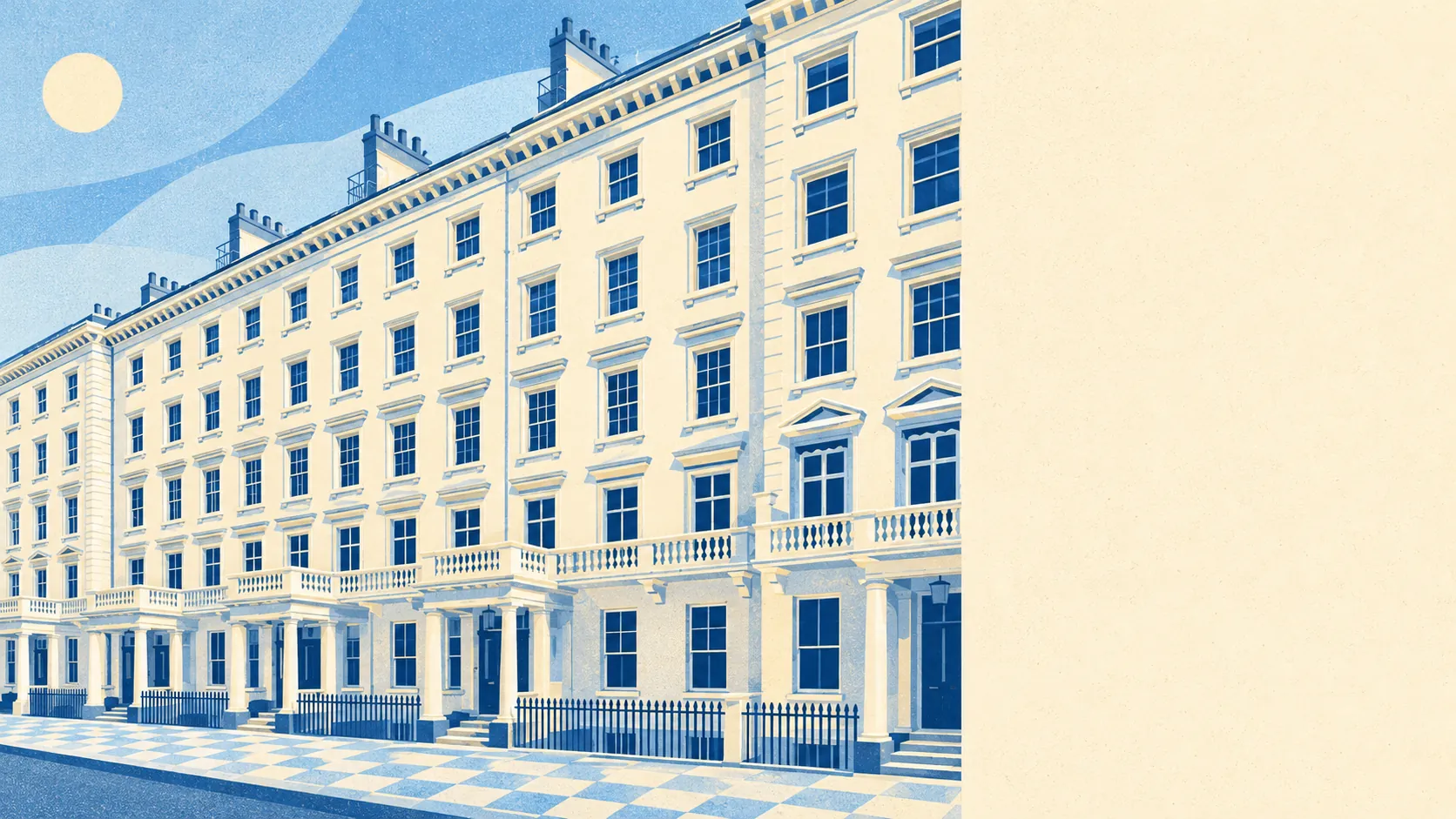
Pimlico's character comes from the white stucco grid Thomas Cubitt laid out from 1825, with the grand houses along St George's Drive and Belgrave Road and smaller three-storey terraces on the side streets. To the south the post-war estates at Churchill Gardens and Lillington Gardens change the scale, and the Tate Gallery stands on the river edge at Millbank. Belgravia, Victoria and Chelsea are all within reach. The grid looks orderly on the map and turns out to be confusing on foot, and newcomers get to know Lupus Street better than they meant to.
Private gardens are scarce. Pimlico has about 4,460 square metres of garden for every 1,000 residents, which is about what you'd expect in a district made almost entirely of flats. Most residents' outdoor space is the square across the road, shared with everyone else on it.
The valuation list behind those business numbers holds 975 rateable premises in Pimlico, with 411 offices and 242 shops at the top of the list. Those are premises on the rating list, which isn't the same as businesses open and trading today. Still, the mix is clear enough: this is a district where people go to work as well as live.
Eating out is mostly clean. Of the 198 food premises with a hygiene rating, about 61% hold the top score of five, and about 6% sit at the low end. In a district this compact, nobody has to travel far to find a clean kitchen.
None of the protected-landscape designations reach Pimlico: there's no area of outstanding natural beauty, no site of special scientific interest and no ancient woodland. Pimlico's green space was designed, from the squares to the planted riverbanks, and it comes with railings, not wildflower meadows.
The surroundings are one of Pimlico's real strengths. A garden square stands at the end of most streets, the river is a short walk away, and the whole arrangement was planned so residents would never be far from either.