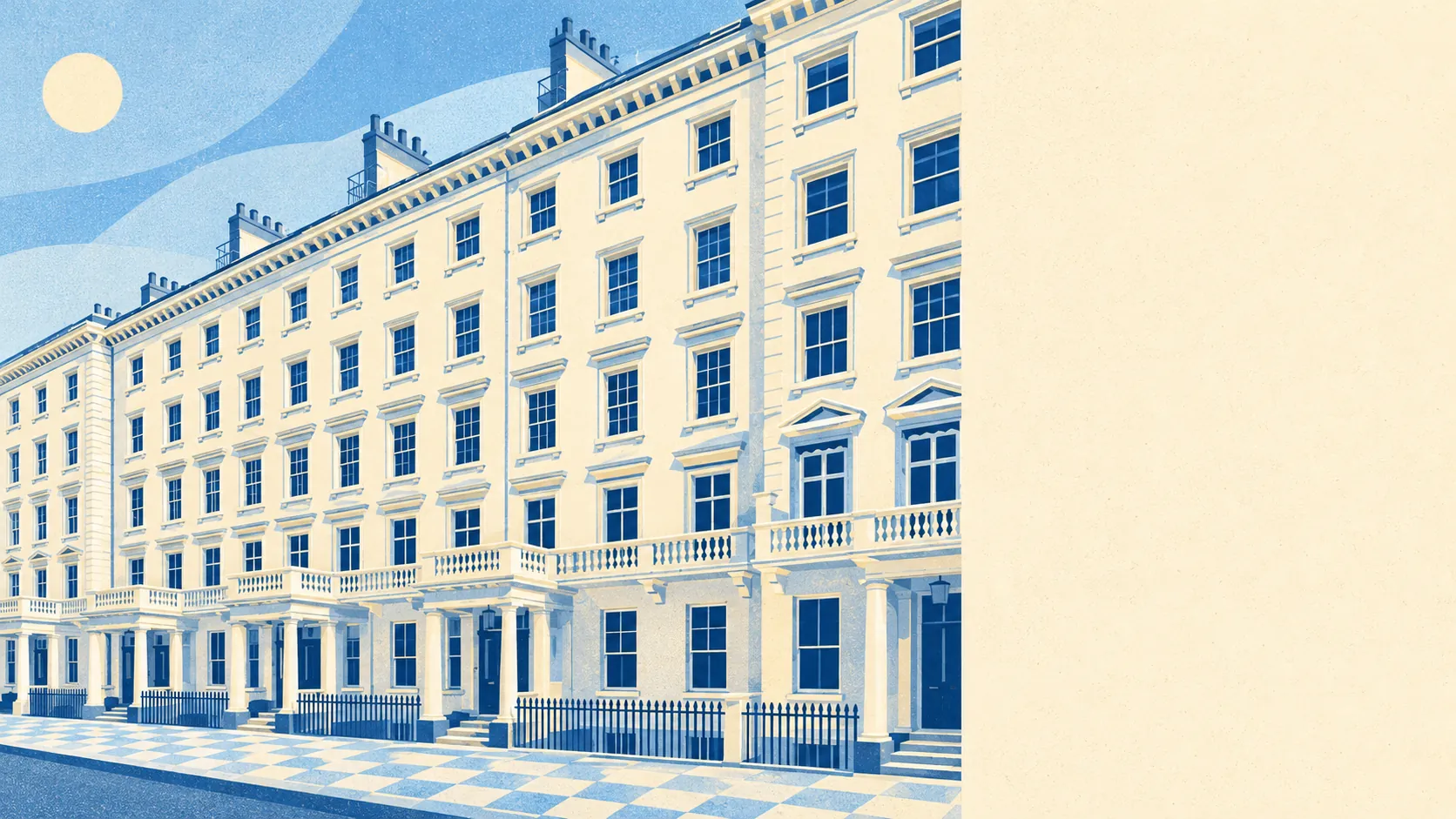
Pimlico gives you central London on one condition: leave the building as you found it. There are 347 listed buildings here and 19 conservation areas reaching into the patch, so the loft conversion, the new windows and the roof terrace all need someone else's blessing first. The parks are on the doorstep and the river is a stroll away. What you can't do is make the house your own.
Thomas Cubitt laid out the white stucco grid for Lord Grosvenor in 1825, and Westminster's planners have been defending his decisions ever since. Of those 347 listed buildings, four are Grade I, 61 are Grade II* and 282 are Grade II. The conservation areas include the obvious Georgian and Victorian set, plus Churchill Gardens, Dolphin Square and Lillington Gardens, three twentieth-century estates protected as firmly as the stucco. Westminster logged 715 planning applications in the patch between April 2024 and June 2026, 362 of them in the last twelve months. People keep asking for permission. They keep needing it, too: even the post-war council blocks have heritage status.
The flood figures look worse on paper than in the record. The Environment Agency puts virtually every postcode, near enough 100%, inside the river-and-sea flood zone 3, and about 40% of postcodes are high on at least one flood indicator, surface water included. The Agency's count of properties at risk from rivers and sea reads differently. Of roughly 6,700 properties listed, two are rated high and about 6,300 very low, because that count allows for the defences and the zone map assumes they aren't there. Five floods are on record, and the most recent was in 1928, when the main river overtopped its defences.
Safety is a strong point. The police.uk figures for the year to May 2026 put Pimlico at about 221 recorded crimes per 1,000 residents, roughly half the Westminster average. The mix leans towards nuisance and pockets. Anti-social behaviour makes up 31% of recorded crime, against 16% across England and Wales, and theft from the person accounts for 13% against a national 2%. Front doors here are mostly fine. It's phones that go missing.
Buying in costs what the postcode suggests. The Land Registry's twelve months to May 2026 show a typical sale price of £650,000 across 136 sales, and flats, at about £643,000, make up almost all of that. Twelve terraced houses changed hands, at a typical £1,935,000. Most homes fall in council tax band E, only 8% sit in bands A or B, and Westminster's Band D bill comes to about £1,050 a year. That last figure is the only line in the household budget that looks like it belongs somewhere cheaper.
Across the whole borough, Westminster's typical private rent was about £3,150 a month in April 2026. That average covers Mayfair's penthouses and Pimlico's mansion flats alike, so a two-bed off Lupus Street can land well either side of it.
Flats make up 93% of the homes on Westminster's council tax list and terraced houses 5%, with 47% built before 1930. Most of those flats are carved out of the Cubitt terraces, so you get the ceiling height and the cornicing along with somebody else's footsteps overhead. The energy certificates are better than the age suggests: 60% are rated A to C and 8% E or worse. About half of homes heat with mains gas and 16% are electric only. Original sash windows are lovely right up to the day you learn the conservation officer has a say in what replaces them.
Pimlico is a renter's district with a professional bent. A quarter of households own their home, and the rest split almost evenly between private and social renting. The median age is 37, and the Office for National Statistics models average gross household income at about £73,450 for the financial year to March 2023. Nearly half of households are a single person. The lifestyle here runs to a one-bed and a gym membership, and the one-bed has a fireplace nobody is allowed to light.
Getting around is barely worth planning. Pimlico station is on the Victoria line, and Victoria station, at the northern edge of the area this page covers, adds the District and Circle lines and National Rail. Pimlico has 91 bus stops, each averaging about 460 weekday departures and 24 an hour at peak, with the 24, 360 and C10 running through the middle. Riverboats leave from Millbank Millennium Pier. About two-thirds of households have no car, which is the right number for streets where parking is an exam. Gigabit broadband reaches 89% of premises, and at the 2021 Census 55% of workers were working from home.
Green space is where Pimlico shines, and it isn't close. The average home is about 80 metres from green space, with 54 green spaces within a kilometre, from St George's Square Garden and Eccleston Square to Warwick Square and Pimlico Gardens on the embankment. The river is about 420 metres from the typical front door. Nobody in Pimlico is ever more than a short walk from a bench under a plane tree.
Pimlico is right for the renter or flat buyer who wants to walk to work in Westminster, sit in a garden square at lunch and never think about a car. It's wrong for anyone whose plan involves knocking through, building up or digging down, and for families after a whole house with a garden: twelve terraced sales a year is hardly a market. Buy the flat you'd be happy to keep exactly as it is, because Cubitt's grid and the planners guarding it will see to that. As a place to live, Pimlico comes out middling. It has the parks, the safety and the river walk, and in return you have to put up with the rules.