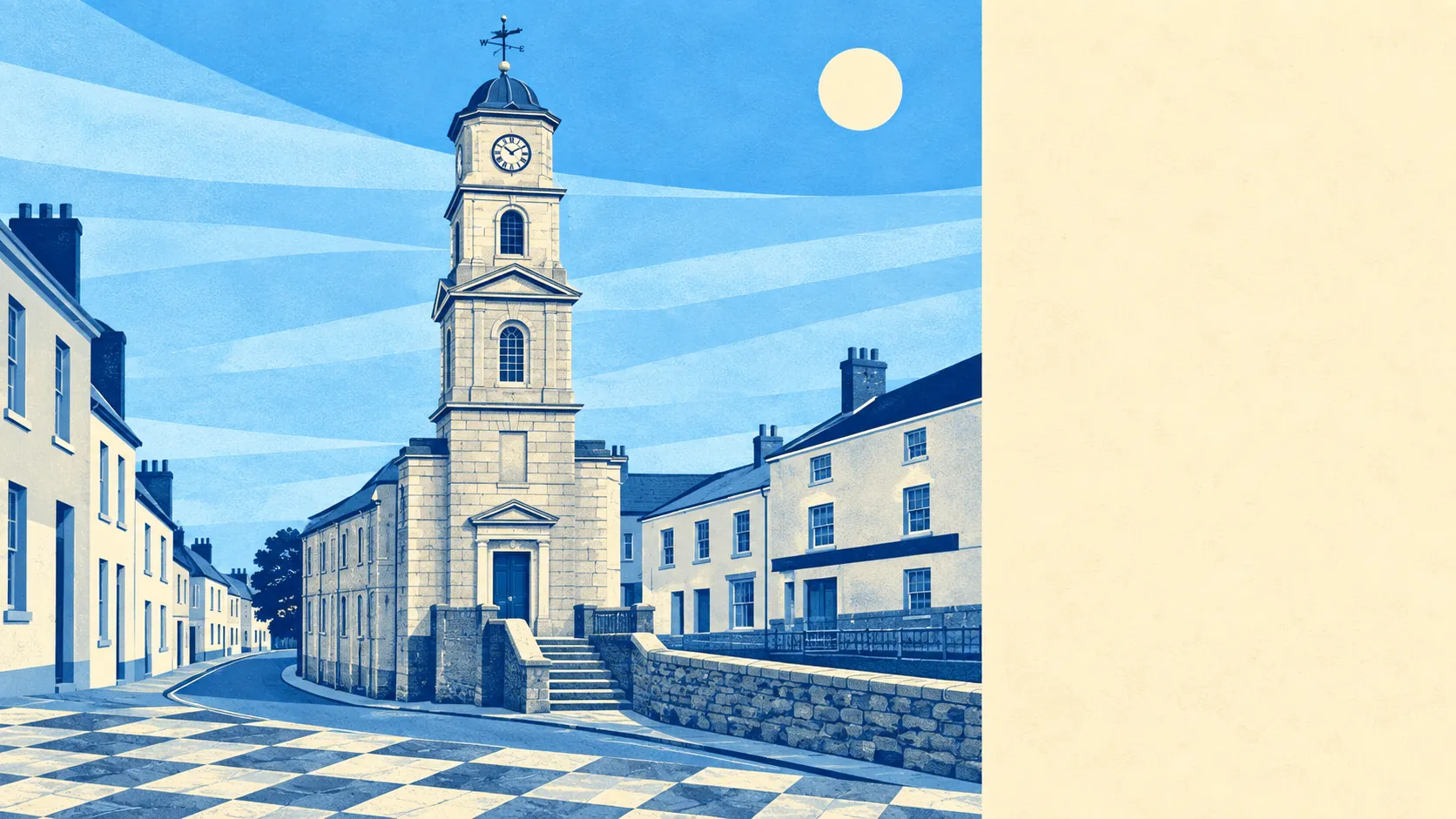
Yes, and you should expect to ask permission for things that would be nobody's business elsewhere. The town carries 215 listed buildings. Its historic core sits inside a conservation area. Hundreds of planning applications go in across the area every year, so this is plainly a place where people do alter their homes. The constraint is not whether you can build. It is how much of the decision belongs to you.
Listing is the big one. There are 215 listed buildings in the area, of which 212 are grade two and three are grade two star, with none at grade one. Grade two is the ordinary tier and it is still a real legal control: listed building consent is needed for anything affecting the special interest of the building, inside as well as out, and that catches work most people assume is maintenance. Windows, internal walls, roof coverings, chimneys and render all count. The three at grade two star are handled with more caution again. A listed granite frontage is a lovely thing to own and a slow thing to change.
One conservation area covers the historic streets. Designation does not freeze anything, but it narrows what can be done without asking: demolition, work to trees and certain alterations that would be permitted development anywhere else come back under council control, and the visual character of the street becomes a material consideration rather than a matter of taste. Anyone buying inside the boundary should establish where that boundary runs before drawing anything, because it rarely follows the line a buyer expects.
Three scheduled monuments sit within the area. That is the strictest protection tier in the system, and it matters mainly to anyone whose land sits on or beside one, where consent comes from national government rather than the council.
The reassuring counterweight is volume. Across the planning record from April 2024 to June 2026, 1,623 applications were lodged in the area, 694 of them in the most recent twelve months. Whatever the constraints look like on paper, this is not a town where alteration has stopped. People here are extending, converting and reroofing at a steady clip, and the professionals who deal with the council do it weekly.
Practically, that splits buyers into two groups. A post-war or later house outside the conservation area and off the list keeps the normal permitted development rights, and a rear extension or a loft conversion is the ordinary process it is anywhere in England. An older property inside the boundary, or listed, needs the consents established before exchange rather than after, and a builder who has worked on protected stock rather than one who has not. The cost difference between those two routes lands mostly in time and professional fees rather than in bricks.
Freedom to alter is the tightest constraint the town puts on an owner. Buy the unprotected house if you want a free hand, and go in with open eyes if you want the granite.