Yes, provided the car and the spare bedroom do the commuting. Seven in ten own their homes. Nearly half work from home. Crime sits well below the rest of the borough. Overton solved the commute by mostly not making one.
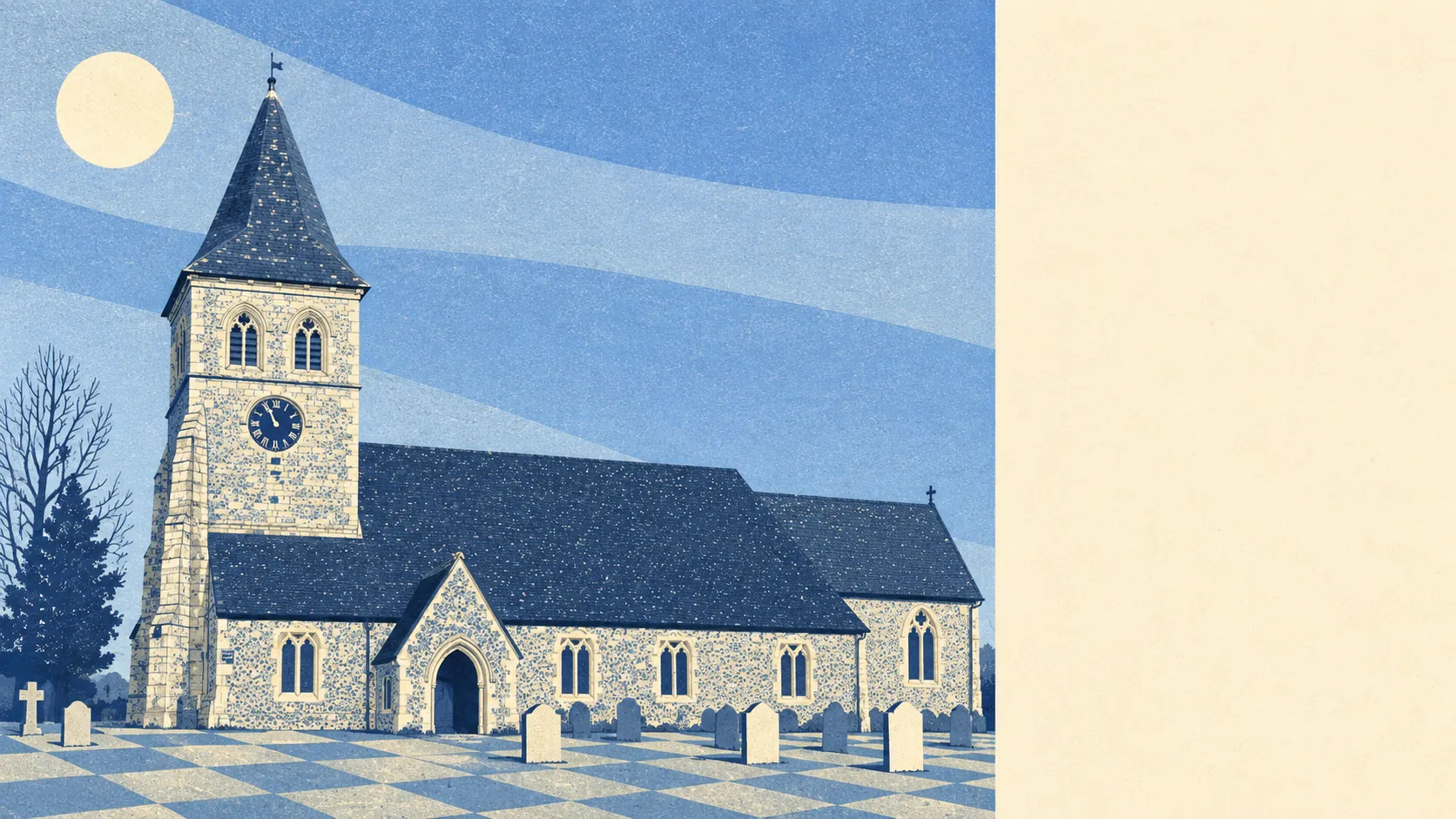
The housing is an even-handed mix, which is rarer than it sounds in a Hampshire village. On the council-tax valuation list, which covers every dwelling rather than only the ones that have changed hands recently, about 27% are terraced, 23% detached, 23% semi-detached, 14% flats and 13% bungalows. Only about 22% were built before 1930, so the chocolate-box cottages near the Church of St Mary are the postcard, not the stock. Most of the village is post-war and later, built by people who wanted a garage more than a beam. On energy performance certificates, about 63% of certificated homes sit in bands A to C, and about 76% of households heat with mains gas. Around 6% rely on electric-only heating, a small group, but worth knowing about before the viewing rather than after the first winter bill.
The Land Registry recorded 47 sales in the twelve months to the end of April 2026, at a typical price of about £365,000. That middle figure hides a wide split. Ten detached houses went for a typical £675,000, twelve semis for around £392,500, nineteen terraces for about £340,000 and six flats for roughly £172,500. So the same village sells a first flat and a four-bedroom retirement plan, and the gap between them is the price of a decent house somewhere else. Band C is the most common council-tax band, and only about 12% of homes sit in bands A or B, which tells you the valuation officer has long since stopped seeing Overton as cheap.
For renters, the only reliable figure is for the wider borough: the typical private rent across the Basingstoke and Deane area was about £1,320 a month as of April 2026. That is an area average, not Overton's own, and a village with this little rental stock tends to set its own terms whenever something comes up.
Safety is where Overton gets smug, and it has earned it. Police records put the rate at about 43 crimes per 1,000 residents over the year from June 2025 to May 2026, roughly 39% below the Basingstoke and Deane average. The village's recorded history of disorder runs heavily to the Black Death, which halved rents and cancelled the medieval courts. Modern Overton has been considerably less eventful, and the residents intend to keep it that way.
Connectivity is the weak spot, and it is weak in a specific way. Overton Rail Station sits on the West of England Main Line, with Whitchurch (Hants) the next stop west, yet only about 2% of working residents commute by train. About 41% drive and about 45% work from home. There are 19 bus stops, and the ones with timetable data average about 66 weekday departures, around three or four an hour at peak, with every one of them also running at weekends. Superfast broadband reaches every postcode, but gigabit-capable connections reach only about 12%, so the home-working half of the village is doing its video calls on yesterday's cable and hoping nobody screen-shares anything large. Mobile data coverage from at least one network reaches every postcode.
The countryside is close enough to be taken for granted. The average home sits about 134 metres from green space, with around 16 green spaces within a kilometre, and water is typically about 315 metres away. The River Test rises at Ashe and runs west through the village, and a sliver of the area falls inside the North Wessex Downs Area of Outstanding Natural Beauty. Flood risk is modest but not zero. In the Environment Agency's river-and-sea flood zones, about 2% of postcodes fall in Flood Zone 2 and about 1% in Flood Zone 3. On the broader postcode indicators, which also count surface water, about 6% of postcodes carry a high rating on at least one measure, 7% a medium and 18% a low. A chalk stream through the middle of a village is lovely right up to the point it decides to visit.
Heritage rules bite in the middle of the village. There are 45 listed buildings, three at Grade II* and 42 at Grade II, and one conservation area, Overton's own, covering the historic core. Buy there and replacement windows become a conversation with the council rather than a Saturday job. Buy in the post-war streets and the only person with an opinion on your extension is the neighbour.
The people are settled and comfortable. About 68% own their homes, the typical resident is 47, and gross household income, modelled by the Office for National Statistics for the area and averaged, came to about £76,500 in the financial year to March 2023. That is the profile of a village where the parish newsletter's most controversial item is a hedge.
It suits people who work from home most of the week, families who want a quiet village with room for a car or two, and downsizers after a bungalow within walking distance of a pub. The White Hart has been pouring since at least 1442, so the pub question has been settled for a while.
It suits people less if they need fast fibre for serious uploads, rely on public transport to get to work, or want a rental market with any choice in it. Commuters who fancy the train should know that almost nobody here uses it, and in a village that practical, there is usually a reason.
Overton is a good place to live, and its real strength is the community: a settled, safe, well-off village where people own their homes and stay put. The weak spot is transport and connectivity, meaning a station the village mostly ignores, buses that come a few times an hour and broadband that stops short of gigabit. If you can work from the kitchen table and drive the rest, the trade is a good one. If you can't, the village will still be lovely, and you will be sitting in traffic on the way to Basingstoke.