Yes, if you want a comfortable, well-off village that has quietly stopped needing the railway. Six in ten own their homes. More than a third work from home. Hardly anyone takes the train. It's a good place to live, and a poor place to be without a car.
The detached house runs the show here. On the council-tax valuation list, which covers every dwelling rather than only those that have changed hands recently, about 33% are detached, 28% semi-detached and 19% terraced. Flats make up 9%, and bungalows another 9%. About 23% of homes were built before 1930, so the old core is real, but most of the village is post-war family housing on plots big enough for a trampoline and an argument about the hedge. Of the homes with an energy certificate, about 65% are rated A to C, 27% sit in band D and 8% are E or worse. Around 82% of homes heat with mains gas and only 3% rely on electric-only heating. The expensive-to-heat period cottage exists, but you'd have to go looking for it.
It isn't cheap, and it knows it. The Land Registry recorded 51 sales in the year to April 2026, with a median of £495,000. Detached houses went for a median of £740,000 across 13 sales, semi-detached for £485,000 across 17, and terraced for about £413,000 across another 17. Only 4 flats sold, at a median of £245,000, which tells you how rarely anyone in Odiham downsizes into one. For council tax, band C is the most common, and only about 5% of homes sit in bands A or B. The cheap end of the market barely exists here.
Renting is cheaper to get into, but not by much. The typical private rent across the Hart area was about £1,410 a month in April 2026. That is a district-wide average, not a figure for Odiham's own streets, and a family house near the High Street will ask more.
Crime is low. Over the year to May 2026, the published crime rate for Odiham was about 32 per 1,000 residents, about 31% below the Hart average. You won't lose sleep over it here, unless you count the planning applications, of which there were 199 in the last twelve months.
Getting around is the weak spot, and residents have mostly given up pretending otherwise. There is no station in the village. The nearest are at Hook and Winchfield, with Bentley further out. Under 1% of working residents commute by train, about 38% drive, 15% walk and 37% work from home, so the answer to the rail problem has been to stop going anywhere. There are 13 bus stops, and the ones with timetable data average about 84 departures on a weekday, with weekend services at every one of them. Gigabit broadband reaches about 42% of premises, but superfast covers 98%. That's enough for the home-working third, and less than the price tag suggests. The Department for Transport's 2019 modelling puts the nearest hospital about 22 minutes away by car and just over an hour by public transport. That hour is the gap between owning a car and relying on the bus.
Flooding needs a closer look than the headline figure suggests. In the Environment Agency's river-and-sea flood zones, only about 1% of postcodes sit in zone 3 and about 1% in zone 2. On a broader measure that also counts surface water, about 27% of postcodes carry a high rating on at least one flood indicator. The river is rarely the problem. The rain running off the lanes is where the risk sits, so check the exact address, not the village. Green space is right there: the typical home is about 130 metres from a green space, with around 13 of them within a kilometre, and water is about 430 metres away.
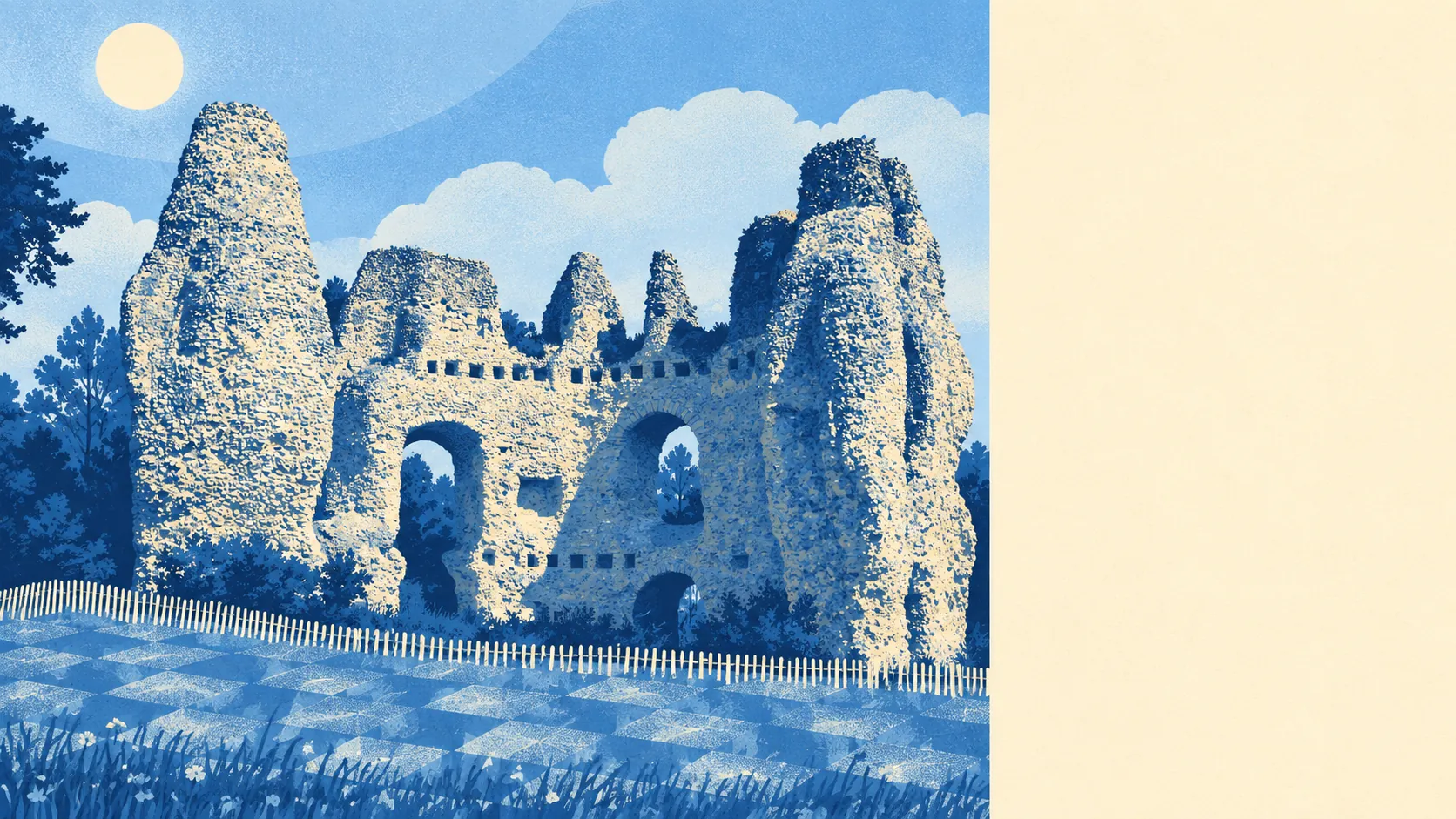
The past has paperwork attached. Odiham has 194 listed buildings, one of them Grade I, 7 Grade II* and 186 Grade II, among them The George Hotel and Odiham Castle. The boundary count shows no conservation areas inside the village itself, though the Basingstoke Canal conservation area sits nearby. If you buy a listed cottage, the replacement windows go through planning first.
The community is the strongest thing about Odiham. About 61% of households own their home and about 38% rent. The median age is 40, which is younger than the High Street would have you believe. Modelled gross household income averaged about £79,500 in the financial year to March 2023. Roughly 89% of residents report good or very good health and unemployment sits at about 2%. It's a village that looks after itself and can afford to.
It suits a family who drive, work at least partly from home, and want good schools and a village where people turn up to things. Hampshire's schools are mostly graded good or better by Ofsted, and Mayhill Junior, Buryfields Infant and Robert May's School are all local names. If that's you, Odiham makes a lot of sense.
It doesn't suit someone who needs a station within walking distance, a flat to rent at a first-jobber's budget, or a night out that runs past closing time at the pub. For the station, Hook is the better fit and says so on the map. For a first flat, the stock here barely has one to sell you.
The village has always attracted a certain kind of visitor. Henry VIII stayed at Odiham Park with Anne Boleyn in 1531, before either of them knew how that would end. The French Dauphin besieged the castle for two weeks in 1216, the last time anyone arrived in Odiham without checking the parking first. The Pest House, built around 1622 to isolate the sick, was restored by the Odiham Society in 1981 as a small heritage centre. Two Victoria Cross holders have streets named after them: William Addison, educated at Robert May's School, and Brigadier Manley James, born and raised here. The racing driver Louis Foster is from the village too, which is fitting for somewhere this committed to the car.
Odiham is an above-average place to live, and more than that if the car is already on the drive. Its real strength is the community: settled, healthy, comfortably off and quick to form a society about anything. The weak spot is transport and connectivity, with no station, patchy gigabit coverage and a hospital an hour away by bus. Buy here for the life inside the village, not for the journey out of it.