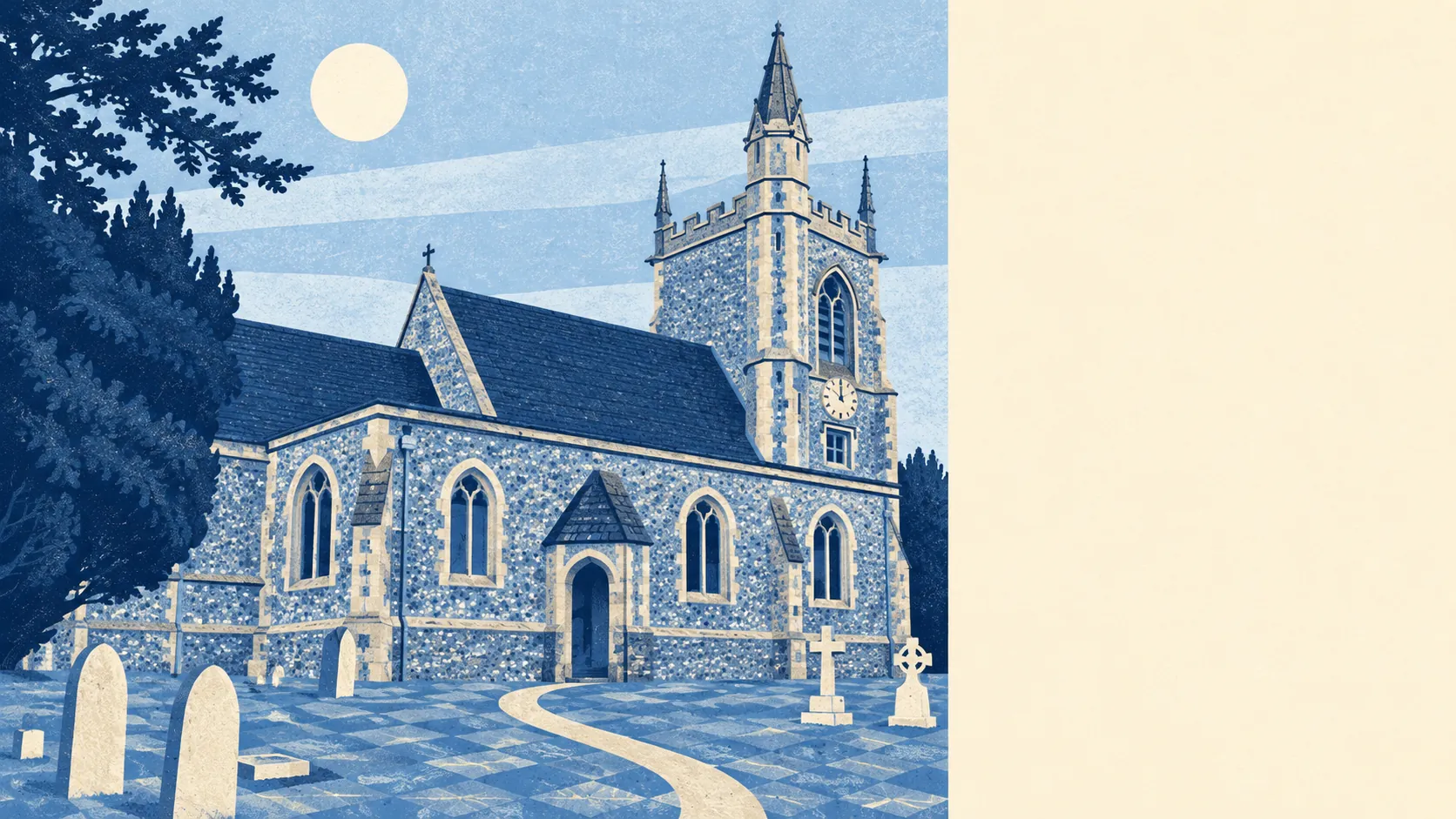
Open, green and quiet, with Basingstoke on one side and farmland on the others. Most homes have about nine green spaces within a kilometre. Protected downland touches the edge of the area. The gardens are large. Oakley suits people who want a field at the end of the road, not a bar.
Green space is close to everyone. The average home in the Oakley area is about 320 metres from public green space, with about 9 green spaces within a kilometre. Nobody here has to drive to find grass.
Water is less prominent. The average home is about 610 metres from the nearest blue space, with about 3 within a kilometre. They're ponds and small streams rather than a riverside, which fits a chalk landscape where most rain soaks into the ground.
The National Cycle Network is less handy. The average home is about 4 kilometres from the nearest route, and only about 5% of postcodes are close to one. Cyclists here mostly use the country lanes. The brief records no ancient woodland inside the area.
The local amenities are modest. The wider area's property records list 145 shops, 58 pubs and 16 restaurants. Those figures cover the surrounding villages as well as Oakley itself, so they don't describe one high street. Most of the pubs are the one-per-village kind rather than a cluster in the centre.
Air quality is good. Fine-particle pollution across the Basingstoke and Deane council area averaged about 6 micrograms per cubic metre in 2024, a council-wide figure rather than Oakley's own.
The North Wessex Downs Area of Outstanding Natural Beauty clips the edge of the area, overlapping less than 1% of it. It isn't the setting of most homes, but it's a short drive away. The brief records no site of special scientific interest here. The countryside is ordinary working farmland, with no rare habitats needing protection, and that is part of why it's open to walk in.
The history sits in the fields rather than behind a ticket barrier. The surrounding landscape includes the Iron Age hillfort of Winklebury Camp, the Popham Beacons round barrow cemetery and the landscaped grounds of Hackwood Park, alongside small places like Deane, Church Oakley, Wootton St Lawrence and North Waltham, which this page also covers. The villages have churches, farm names and footpaths between them. Nobody sells tickets to any of it.
The gardens match the houses. The area has about 332,000 square metres of private garden for every 1,000 residents, measured across all 7 of its neighbourhood areas. Most homes have a lawn you need a proper mower for. Anyone who wants a patio and a planter will find themselves with far more garden than they bargained for.
There isn't much commercial activity. The business rates list counts 239 rateable premises in the area, with offices and shops among the most common categories. Those are premises on the valuation list, not a count of businesses currently trading. The area supports daily life but is not somewhere people come to spend a day out.
Food hygiene is strong where it's measured. Of 50 rated food premises, about 74% hold the top hygiene score and about 6% sit at the low end.
The surrounding area is one of Oakley's real strengths. There's green space in every direction and downland within reach, with little to go out for apart from a walk.