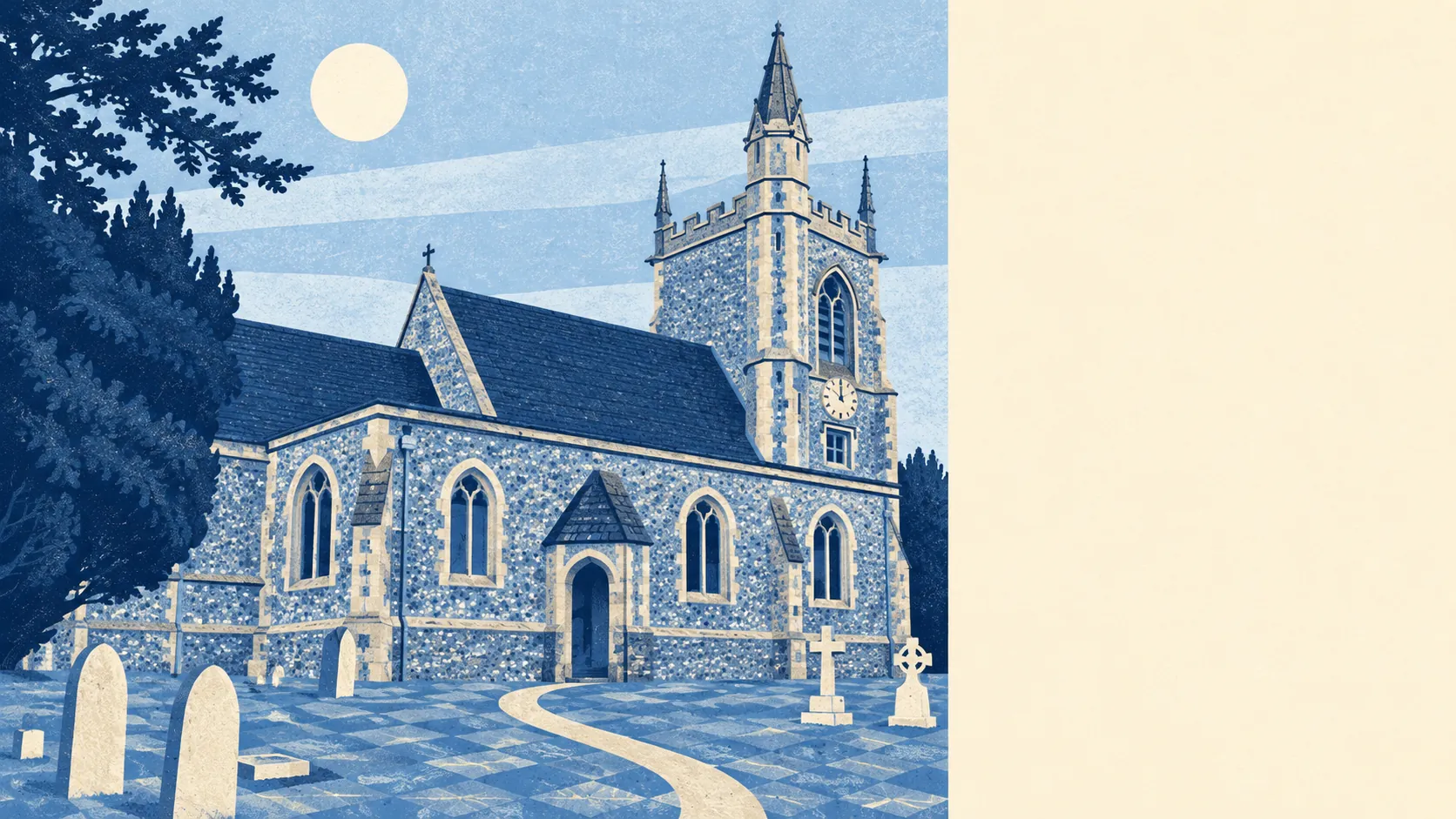
Sometimes, but expect a lot of paperwork. Hundreds of listed buildings sit across the surrounding area. There are eighteen conservation areas. There are ancient monuments in the fields. The neighbours apply for planning permission in their thousands anyway. Any extension here starts with the planning department, not the builder.
There are 332 listed buildings in the wider area around Oakley. Six are Grade I, 22 are Grade II* and 304 are Grade II. Listing protects the whole building, inside and out, not just the front elevation. Any change that affects its character needs listed building consent on top of any planning permission. Grade II is the most common grade, and buyers often treat it as the easy one. It isn't. It's the same protection, applied to more buildings. Owning one means the council has a say in your windows, your render and sometimes your kitchen.
The same wider area has 18 conservation areas, including Church Oakley and Deane. Inside one, the rules tighten for demolition, some extensions and alterations that change how a street looks, so work you'd expect to do without asking elsewhere can need permission. If a house sits inside a conservation area boundary, look up the boundary and the council's guidance before you commission any drawings.
There are 14 scheduled monuments in the area, the strictest protection tier. They matter mainly for land near one: burial mounds, earthworks and old settlement sites where digging is off limits. Most houses won't be affected. A large plot backing onto open downland should be checked.
People still build here in large numbers. Between April 2024 and June 2026 the area produced 2,859 planning applications, 1,280 of them in the most recent twelve months. That is plenty of kitchen extensions, loft conversions and garden rooms making their way through the system. It shows that people alter their homes here routinely. It doesn't show how many applications succeed, and nobody should assume that a busy planning register means an easy one.
In practice, a post-war semi or detached house outside the conservation areas will generally fall under the national permitted development rules. Many rear extensions and loft conversions on those houses can go ahead without a full planning application, subject to the usual size limits. A listed building, or a house inside a conservation area, is different: expect to need consent, drawings the council approves of and a longer timescale. Before exchange, check whether the house is listed and whether it sits inside a conservation area.
Freedom to extend is Oakley's weak point, and the protections are what cause it. The more history a house has, the less of it you'll be allowed to change.