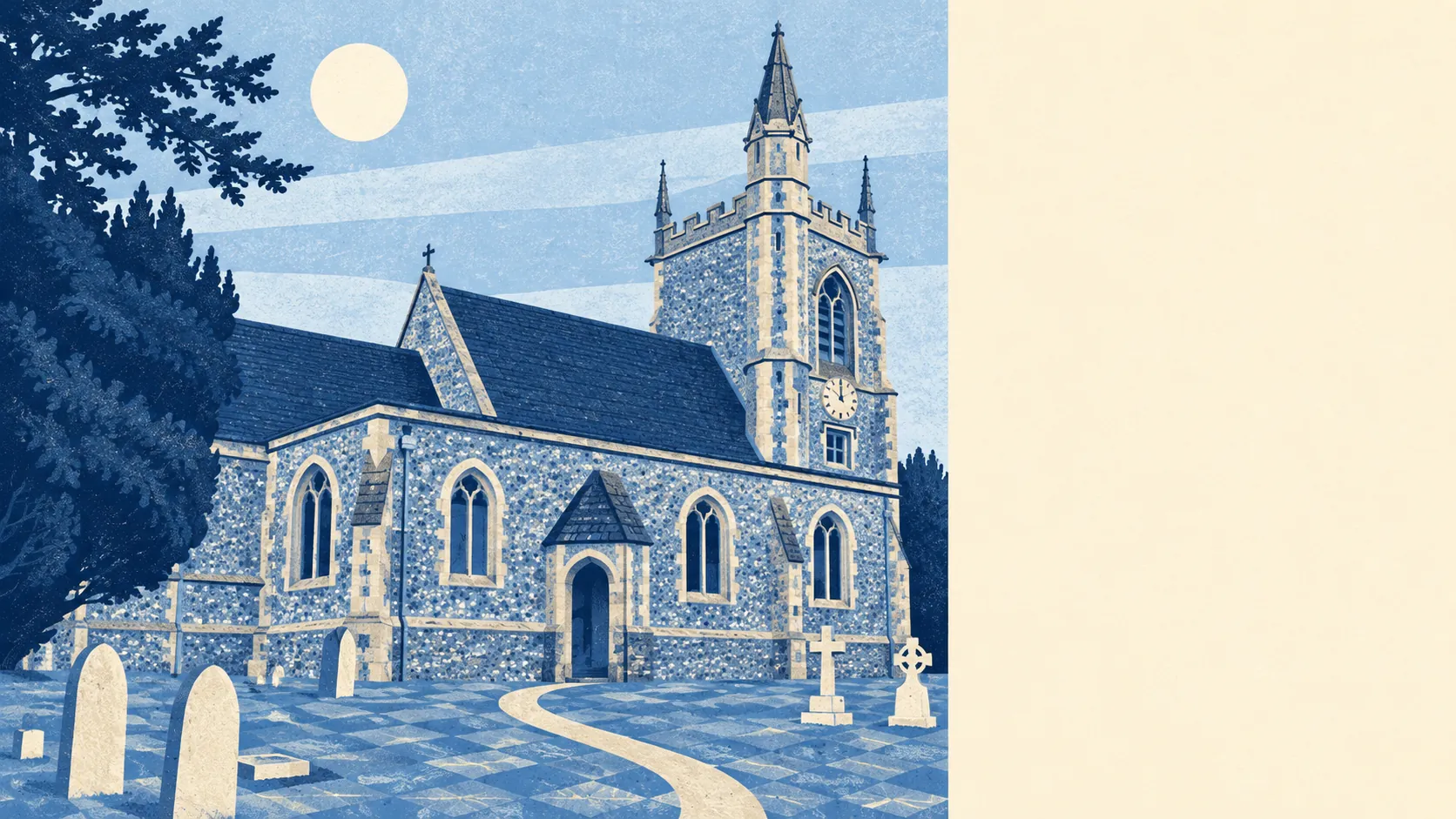
Yes, and it's a commuter village that has half stopped commuting. Three in four households own their home. Nearly half of working residents work from home. Hardly anyone takes the train. The drive into Basingstoke is still there for the days that need it. Most days, the kitchen table has replaced it.
The housing stock belongs to people who wanted space and got it. The council-tax valuation list puts about 35% of homes in the Oakley area as detached, 27% semi-detached, 18% bungalows, 12% terraced and only 8% flats. Around 18% were built before 1930, so the thatch-and-flint picture exists but is a minority. The bulk is post-war, built for families and their cars. Energy certificates are better than the age suggests: about 66% of certificated homes sit in bands A to C and about 13% in E or worse, so most viewings won't come with a boiler horror story. About 61% of homes run on mains gas and only 5% rely on electric heating alone. The bungalow share tells its own story. A fair number of these houses were bought with the stairs already in mind.
Space costs what space costs. The Land Registry's last twelve months, to April 2026, recorded 121 sales at a typical price of about £480,000. Detached houses went for around £560,000 across 71 sales, semis for about £395,000 across 30, and terraces for about £345,000 across 17. Only 3 flats sold, at a typical £98,000, which is too few to tell you anything beyond the fact that Oakley barely does flats. The most common council-tax band is D, and just 9% of homes sit in bands A or B. There is no cheap end of the village to start from. There is a less expensive semi.
Renting is a thin option, with only about 12% of households renting privately. The typical private rent across the Basingstoke and Deane area was about £1,320 a month as of April 2026, a figure for the whole borough rather than the village. A four-bed detached in Oakley is not what that borough figure describes, and the letting agent will tell you so.
Crime is lower than the borough's. Police records for June 2025 to May 2026 put the Oakley area at about 57 crimes per 1,000 residents, roughly 21% below the Basingstoke and Deane average of about 72. That gap is what you'd hope for from a village of detached houses and long driveways. It doesn't make the area immune, and burglary makes up a larger share of local crime than it does nationally. Buyers who leave the side gate open because it feels safe out here are part of the reason it isn't quite as safe as it feels.
Connectivity comes down to how often you have to go anywhere. The Department for Transport's 2019 modelling puts Basingstoke town centre about 19 minutes away by car and about 54 by public transport, and that gap explains the whole transport situation. About 44% of working residents drive to work and around 1% take the train, even with Basingstoke, Overton and Micheldever stations all nearby. There are 395 bus stops across the wider area, and about 83% of those with timetable data get a weekend service. Broadband is the thing that makes the home-working possible: about 90% of premises can get superfast and 62% can get gigabit. The other 38% find out on their first video call. Mobile coverage from all four operators reaches about 99% of the area.
The surroundings are the best thing about the place. The average home is about 320 metres from public green space, with around 9 green spaces within a kilometre, and the North Wessex Downs Area of Outstanding Natural Beauty clips the edge of the area. On flooding, about 12% of postcodes carry a high rating on at least one flood indicator, and surface water drives most of that. The river-and-sea flood zones cover well under 1% of the area. That makes this a check on the drains and the gradient of the road, not a question about living next to a river. Two ground issues matter more than water. About 71% of postcodes fall in the higher radon bands, so a radon test belongs on the survey list. Almost every postcode also sits on soluble rock, which is a question for the surveyor rather than a reason to walk away.
The drawback is what you can do to your own house. The wider area around Oakley holds 332 listed buildings, 6 of them Grade I and 22 Grade II*, plus 18 conservation areas, including Church Oakley and Deane. Plenty of Oakley's post-war streets sit outside all of that. The older cottages, the church end and the villages around it do not. If the plan is a glass box on the back of something with a thatched roof, the planning department will be the first to see the drawings and the last to sign them off.
The people match the housing. About 77% of households own their home, the typical resident is about 47, and the Office for National Statistics models median household income at about £71,000 for the financial year to March 2023. That's an established, settled, mid-career population. The book club and the parish council are well staffed. The nightclub scene isn't, and nobody here is campaigning for one.
This page also covers North Waltham, a smaller village to the south with its own pond and two pubs. It follows the same pattern: bigger houses, quieter lanes, and a car for every errand.
Oakley suits families who want a detached house, a garden and a lower crime rate than the town next door, and who have jobs that let them work from home most of the week. It suits downsizers who want a bungalow that isn't miles from a hospital. It also suits anyone whose ideal Saturday involves a footpath rather than a queue.
It doesn't suit renters on a budget, people who can't drive, or anyone who needs the train every day. It also doesn't suit buyers who fall for the oldest cottage in the village and assume the extension is a formality. For some of them, Basingstoke's flats, stations and shorter journeys will fit better, and there's nothing wrong with that.
Oakley is a good place to live, with limits. Its real strength is the surroundings: green space in every direction and open downland close by. The weak spot is how little freedom the older homes give you to change them. Buy the post-war house, work from the spare room, and it holds up. Buy the listed cottage for its extension potential and it won't.