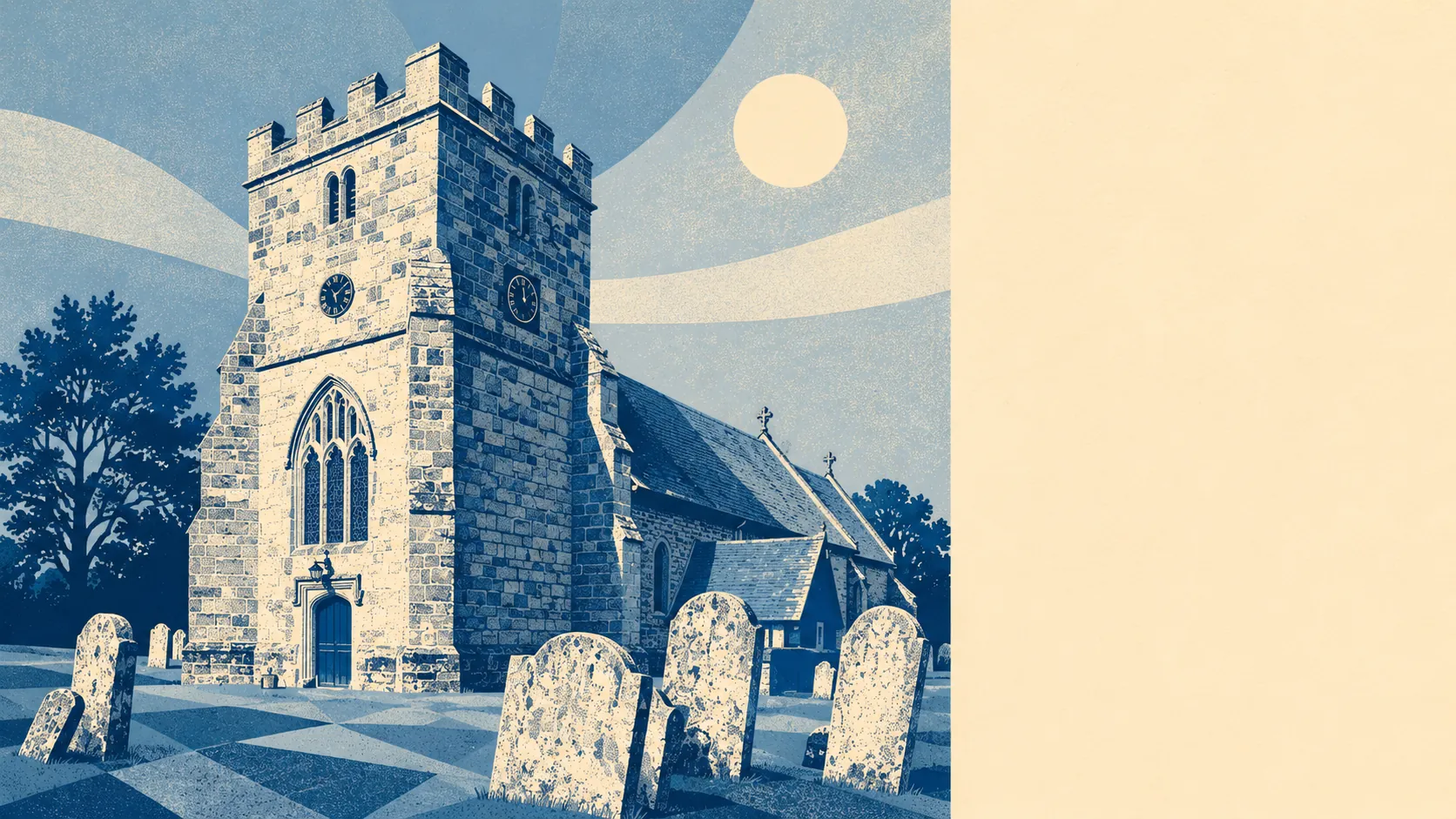
Newick is a settled, older, well-off village that has kept the people who made it what it is. Roughly four in five homes are owned rather than rented. The median resident is fifty-one. Typical household income sits at around £70,800 a year. Most of the working-age population is in the older-professional bracket rather than the twenty-something one. It is the demographic profile of a rural Sussex village that has priced its buyer and sold to them, and the buyer, quietly, stayed.
On tenure, the picture is heavily owner-occupier. Around seventy-nine in a hundred homes are owned outright or with a mortgage, which is well above the national norm and one of the strongest single indicators of what kind of village this actually is. Private renting sits at about eleven in a hundred, which is a modest share and one that mostly reflects the fact that people who move here tend to stay put. Social renting adds another nine or so per cent on top. That leaves the overall rental market at about twenty in a hundred, but the flavour of it is different from a town rental market: it is quieter, longer-term, and does not have the churn that a student or young-professional postcode has.
On age, this is not a young village and it is not pretending to be. The median resident is around fifty-one, which sits well above the England-wide median and marks Newick out as an older-than-average place even by rural Sussex standards. The working-age share between twenty-five and forty-four is about seventeen per cent, which is on the lean side. What that means in practice is a village where the school gates are busy but the pubs at six on a Thursday are quiet, and where the average buyer is somebody in their forties or fifties trading in from somewhere bigger rather than a first-time buyer stretching to their first mortgage.
On income, the typical household here earns about £70,800 a year, which is comfortably above the England-wide median and consistent with a village where the housing costs need supporting. This is not a wealth-hoarding number, it is a comfortable-professional number. It is the income of households that have adults in mid-career-or-later jobs, often with two earners, and often with one of them working from home. The share of adults with a degree-level qualification sits at around forty-one in a hundred, and the share with no qualifications at around eleven in a hundred, both of which reinforce the same picture without saying anything the income figure did not already say.
On households, the make-up is unsurprising for the age and price profile. Around twenty-four in a hundred households are single-person, and roughly one in seven of those is a single pensioner. About twenty-one in a hundred are couples with dependent children, which is the family-life anchor of the village. Lone-parent households sit at around eight in a hundred, which is modest. The overcrowding indicator sits at about two per cent, effectively zero for a village setting, meaning space per resident is not a pressure here. Full-time student share is negligible, at around one in a hundred. This is a household profile that reads as stable, older-skewing, and comfortably resourced rather than one that reads as churn.
The verdict on who lives in Newick is that the village is populated by people who have made a considered choice to be here, can afford the version of rural Sussex it offers, and mostly do not move away. That is a settled, above-average population profile in the terms the data provides, and it is a coherent one. Newick is a village of people who arrived, worked out the trade-off, and stayed.