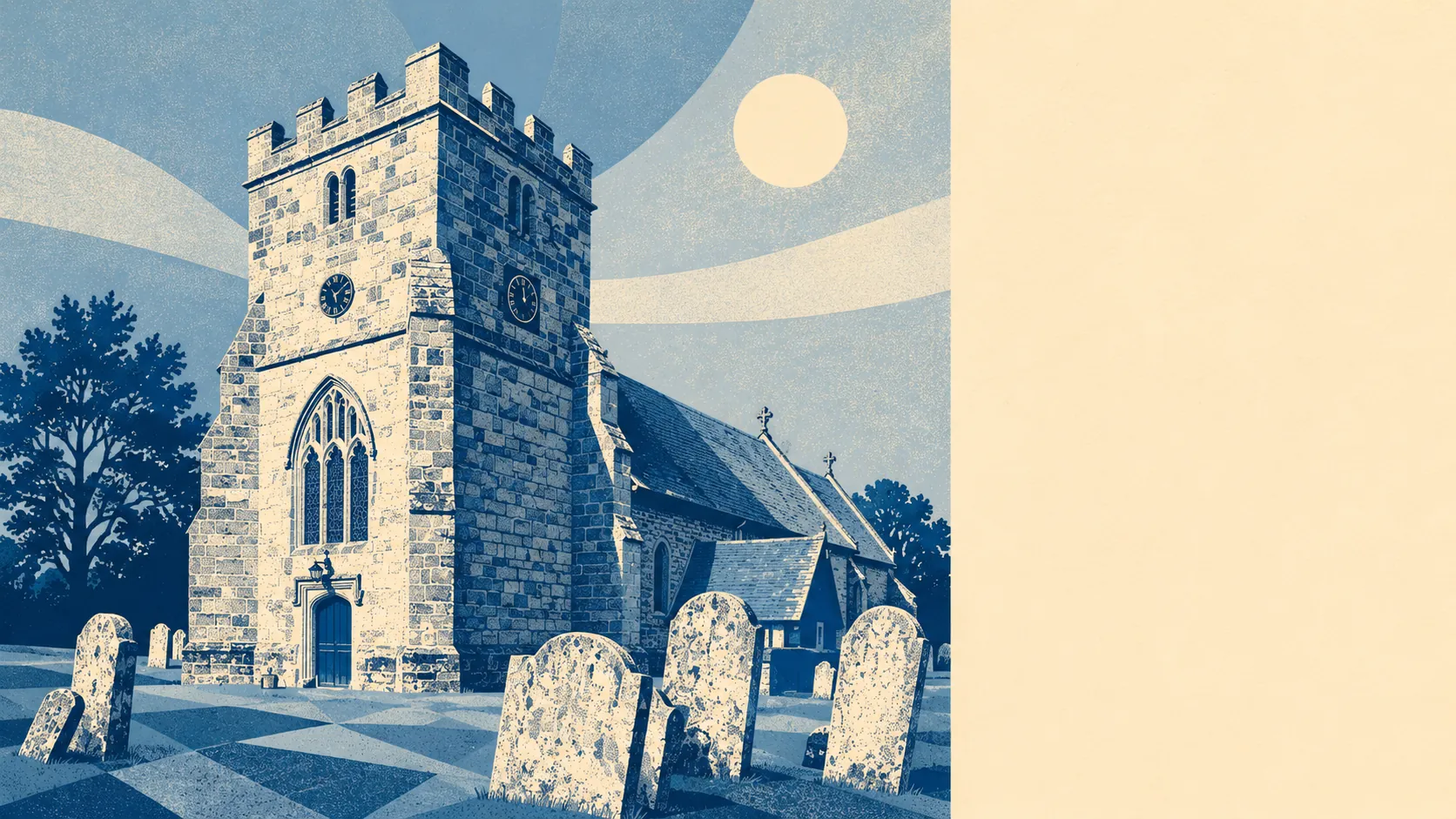
Newick is a Sussex village that has quietly become one of those places where the people who live there don't want you to know how good it is. Population under four thousand. Median age fifty-one. Crime rate about half the Lewes district average. It's the kind of village that answers the question by not answering it, because the people already there worked it out and would rather you didn't.
The housing stock does most of the character work. Roughly three quarters of homes are houses and around one in five are bungalows, which tells you almost everything about who lives here and who is coming. Flats are a rounding error. The dominant era is post-war rather than the picture-postcard Sussex chocolate box everyone imagines when the name Newick appears in an estate agent's window, though roughly one in six homes predates 1930 and those are the ones that command the premium. On energy performance, about four in ten homes sit in band D, with roughly a quarter in E or worse. That is a village-of-old-houses profile, not a new-build profile, and it means the winter gas bills are what they are.
On price, this is where the answer stops being flattering. Typical sale prices over the last twelve months came in around £660,000, which is not a village price, it is a commuter-belt-with-a-view price. Detached houses ran to roughly £785,000, semis to about £516,000, terraces to roughly £400,000. Council tax bands run high, with band G the most common and only about seven in a hundred homes falling into bands A or B. If you are looking for value, this is not the answer. Newick has been rediscovered by people who can afford to pay for the quiet, and the pricing reflects it.
Rent gives a slightly softer version of the same story. Typical private rent across the Lewes area is about £1,320 a month, up around six per cent on the year. That's a district-wide figure, not a Newick-specific one, and the Newick end of it will sit toward the top rather than the bottom.
On safety, this is where Newick genuinely earns its keep. The published crime rate is about thirty-one per thousand residents a year, which is roughly fifty-six per cent below the Lewes district average. Rural Sussex villages are usually safer than the towns near them, and Newick is more so than most. This is the strongest dimension of the answer by a wide margin. If crime is the thing keeping you awake, Newick is the answer to that question.
Schools are harder to grade. There are three primary schools in the postcode districts on published Key Stage Two data, with an average maths score of around 104, which is a shade above the national floor. Only one secondary school falls in the districts, with a Key Stage Four attainment score of around 49, which is below the current national benchmark of 50 but not by much. Parents who care about schools already know the pattern in this part of Sussex: primaries are generally solid, and secondary choice usually means driving or moving into the catchments that people fight over. Newick fits that pattern.
Connectivity is where the pastoral picture pays its bill. Only about three in a hundred residents commute by train, and one in a hundred by bus, because there is no station in the village itself and the bus network is a rural network. Roughly forty-four per cent drive to work, and forty-six per cent work from home, which is the highest number in this answer and the fact that quietly explains the whole village. Newick works if you don't have to be somewhere else at half-eight every morning. Broadband helps: gigabit coverage sits at just over half, and superfast is nearly universal. If you can log in from home, the village can carry your life.
On environment, Newick sits in a genuinely benign spot. Formal flood zone coverage is nil, historic flooding is nil, and only about five per cent of postcodes carry any high-risk surface-water indicator. Green space is close: average distance to the nearest patch is around 330 metres, with roughly five patches within a kilometre. Water access is similarly close at around 410 metres. This is the countryside people move to the countryside for.
Heritage constraints are lighter than the setting suggests. Forty-two listed buildings sit in the wider area, three at Grade II*, the rest at Grade II. Two conservation areas cover parts of the village, at The Green and around Church Road. If you're buying inside those conservation zones you'll need consent for the visible things, but most of Newick sits outside them and the modification headache that comes with, say, Lewes town is not the headache you get here.
On neighbourhood character, roughly four in five homes are owner-occupied, the median resident is fifty-one, and typical household income is around £70,800. That is a settled, older, well-off village that has kept the people who made it what it is, and quietly attracted more of them. Roughly a quarter of households are single people, and around one in seven of those are pensioners. This is not a young village, and it is not pretending to be.
Who it's for: buyers with the budget for a Sussex village and the temperament to enjoy one. People who work from home, or who commute rarely and don't mind the drive to Haywards Heath station when they do. Families who value primary schools and quiet streets more than they value cinemas and takeaway options. Anyone who has already decided that the trade-off is one they want.
Who it's not for: buyers whose sums don't work at the price. Anyone whose daily commute is by train. Anyone who wants the buzz of somewhere in transition rather than somewhere already settled. Families who need extensive secondary-school choice on their doorstep. First-time buyers, essentially at any level, because the entry-level numbers here are somebody else's mid-market numbers.
On the overall picture, Newick is an average answer to the question, which is a slightly misleading way of saying it is good at some things and expensive at others. Safety is the standout, and it is a genuinely strong one. Value is the weakness, by a long way. The village is not going to reward the person hoping to find undervalued Sussex here, because it was rediscovered a while ago and has been priced accordingly. What it will reward is the person who has the money already, wants the countryside without the isolation, and would rather live somewhere the crime figures do the arguing.