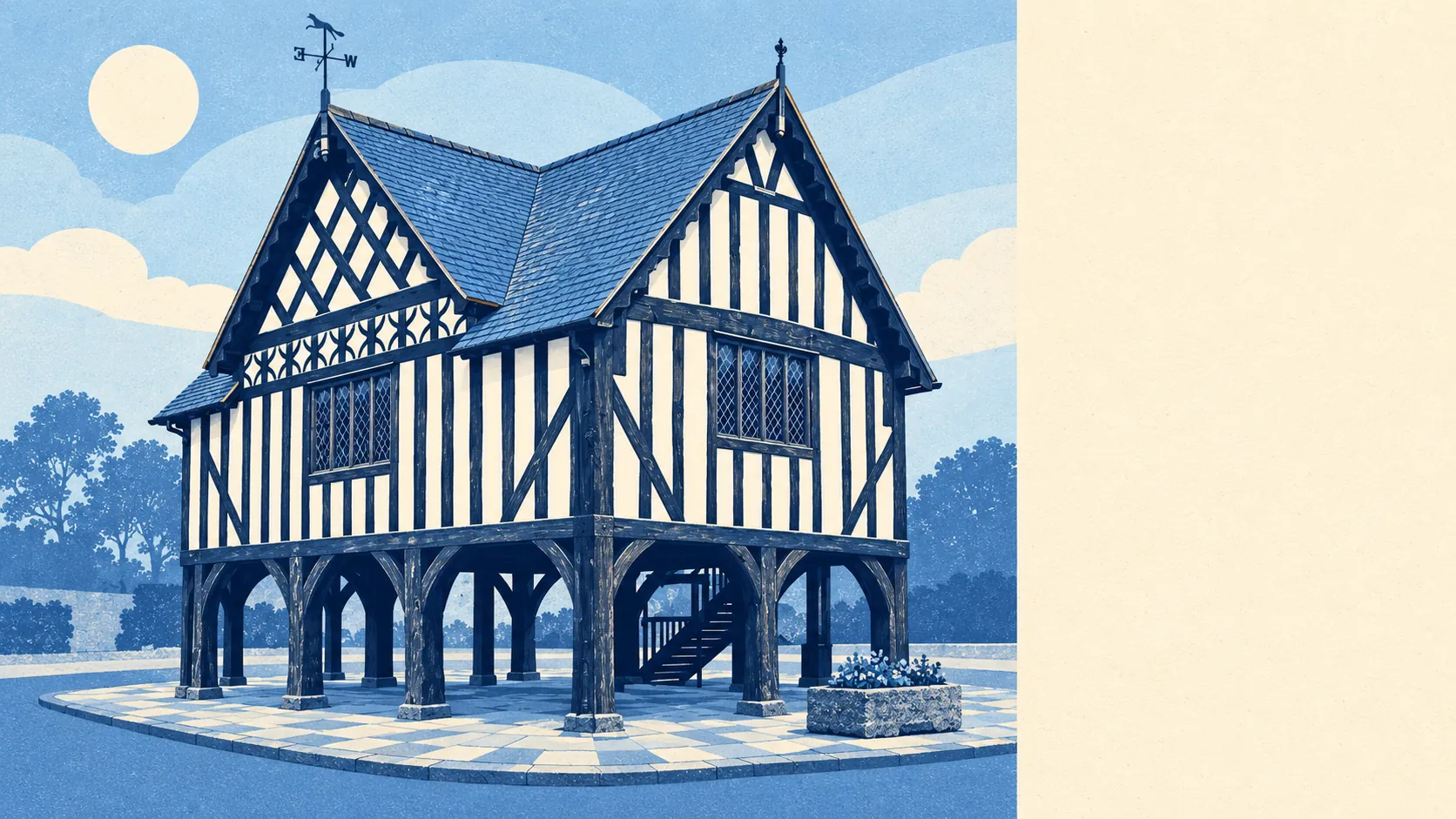
Newent gets more house for the money than most buyers expect from a half-timbered market town, and pays some of that saving back in police reports. A typical sale goes for about £265,000. Two in three homes rate C or better for energy. Crime runs about a third above the rest of the Forest of Dean. The houses are the bargain, and the evenings are the cost.
The Land Registry recorded 74 sales in Newent in the year to May 2026, with a typical price of about £265,500. Detached houses went for around £367,500, semis about £252,500 and terraces about £224,000. Only nine flats sold all year, at a typical £107,500. Band B is the most common council-tax band, and about 45% of homes are in bands A or B. Nine flat sales in a year tells you plainly who Newent was built for, and it was not the person who wants a lock-up-and-leave.
Rents are only published for the whole district. Typical private rent across the Forest of Dean area is about £820 a month, a figure that blends Newent with every other town and hamlet the council covers.
Every home on the council-tax list counts in the valuation figures. About 28% are detached, 23% semis and 22% terraced. Flats and bungalows each make up about 13%. Only around 14% of homes were built before 1930. The black-and-white buildings on Church Street are the postcard, and the post-war closes behind them are where most people live. Energy ratings are good for a place this old, with about 67% of certificated homes rated C or better and only 7% rated E or worse. About 72% of homes heat with mains gas. In Newent the half-timbering is the part you photograph, and the double glazing is the part you buy.
Safety is the weak side, and the town's manners hide it. Gloucestershire Constabulary's records for June 2025 to May 2026 put Newent at about 57 crimes per 1,000 residents, roughly 34% above the Forest of Dean average. The force itself charged in about 9% of cases over the same year, against about 12% nationally, and that is a county-wide figure for the force. A conservation area protects the window frames, and its powers stop there.
Flooding is a smaller worry than the town's riverside history might suggest. In the Environment Agency's river-and-sea flood zones, about 1% of postcodes are in zone 3 and 3% in zone 2. A wider measure that includes surface water finds about 10% of postcodes at high risk on at least one indicator. Six floods are on record, and the latest was in 1968, when the main river overflowed a channel with no raised defences.
This is driving country. About 56% of working residents drive to work and 23% work from home, while 1% take the bus. There are 31 bus stops in the area, averaging about 14 weekday departures each and fewer than one an hour at peak. The railway closed in 1959. Broadband has kept up much better. Gigabit connections reach about 88% of premises and superfast about 98%. On the Department for Transport's 2019 modelling, the nearest hospital is about 33 minutes by car and 53 by public transport, and the bus figure has probably aged worse than the road. Newent got the fibre in and has accepted that the commute goes by car.
About 64% of households own their home, and the typical resident is 46. The Office for National Statistics models gross household income at about £49,000 for the year to March 2023, an estimate for the wider area and not a count of anyone's payslip. That is a settled, middle-aged, home-owning town, with enough renters that the pub on a Friday is not one generation deep.
Newent has 112 listed buildings, one of them Grade I, the Church of St Mary, and the town centre is a conservation area. Buyers who fancy putting bifold doors on a timber-framed house on Church Street will spend their first year learning how listed building consent works, and the rest of it waiting for the answer.
Green space is close at hand. On average the nearest public green space is about 100 metres from a front door, and water about 190 metres. The villages this page also covers, Dymock, Redmarley D'Abitot and Upleadon, carry that further into fields and lanes, at the cost of being even further from anything with a timetable.
The town has produced a slightly odd set of famous names. Charlotte Dujardin and Carl Hester, the Olympic dressage riders, are on the list. So is the composer Rutland Boughton, who spent much of his life at Bevan's Hill in Kilcot just outside town. Alex Cuthbert went to Newent Community School, grew up in England, was passed over by the England set-up and went on to score two tries against England for Wales in 2013. Newent educated him well enough, and English rugby looked the other way.
Newent is the right buy for a family that drives, wants a proper detached or semi-detached house and a garden at a price the larger Gloucestershire towns can't match, and is happy for weekends to mean the fields around Upleadon. It is a poor fit for anyone who needs a train, wants to live without a car, or expects a small town's crime figures to be as calm as its high street looks.
Newent is better than average: the house prices give you real value, and the crime figures are the one part of the deal you have to accept with your eyes open. Buy it for the house and the space, and assume the half-timbering won't do anything about the crime.