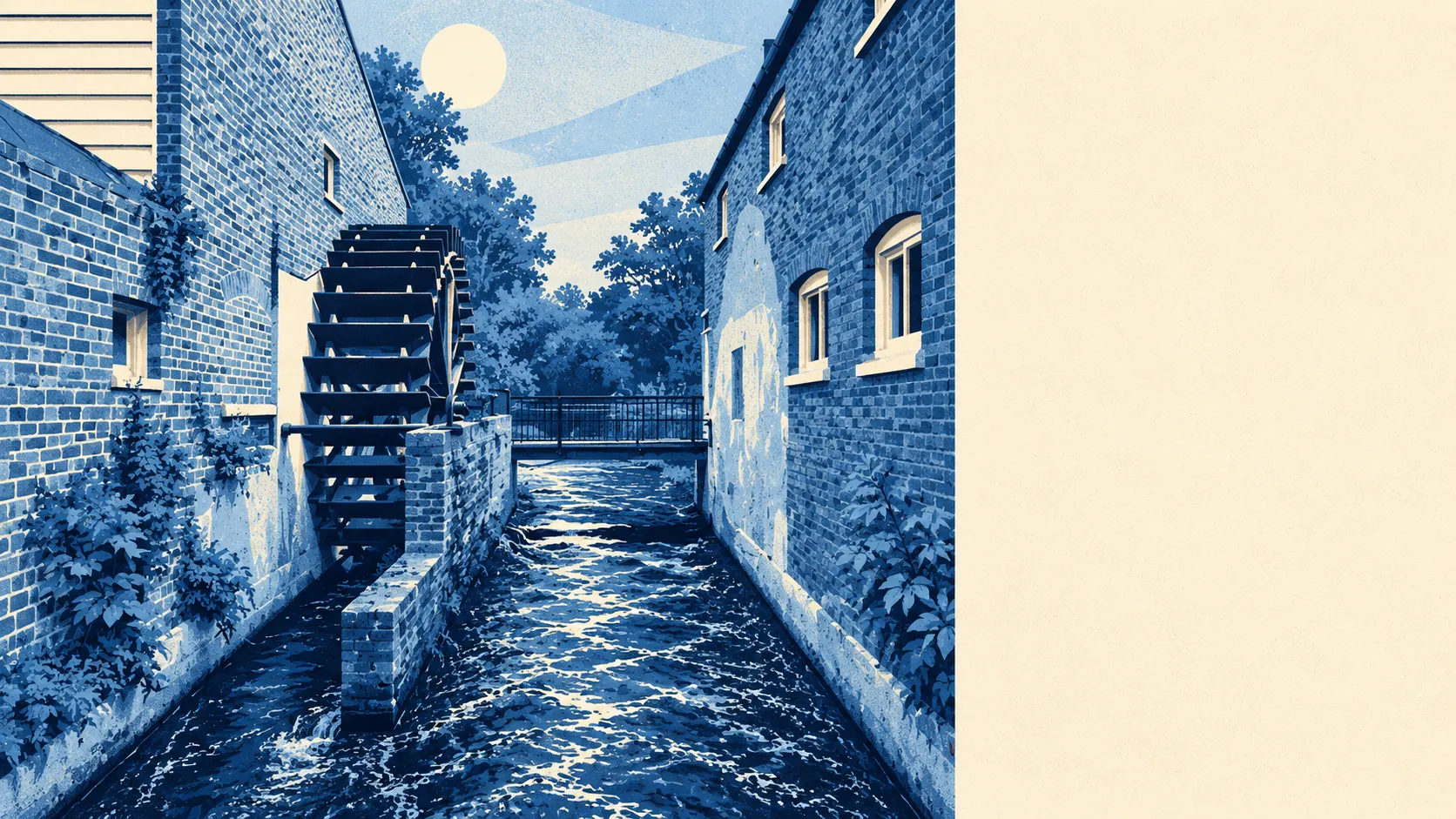
Morden is unusually green for a London suburb. A park is a couple of minutes' walk from most front doors. Water is close by too. Back gardens are a normal part of the housing. The interwar housing was built around old country estates, and the parks those estates left behind are now its main asset.
On average, the nearest green space is about 120 metres from a Morden home, and about 30 green spaces are within a kilometre. Morden Hall Park, which the National Trust runs, is the best known, and Morden Park has its own grand house. A dog owner here can try a different park each week for most of a year.
Water is close as well. On average the nearest river, pond or lake is about 330 metres away, and around 29 bodies of water are within a kilometre. Much of that is the Wandle and the water features of the old estates, inside what is now the Wandle Valley conservation area.
The National Cycle Network is on average about 540 metres from a Morden home, and about 46% of postcodes are close to it. There is no ancient woodland in the area. The trees here mostly belong to old estates, laid out for a family's grounds more than for the countryside.
The rated-premises list counts 220 shops, 15 restaurants and 5 pubs. Morden's high street is built for shopping, with eating and drinking a smaller part of it. The George Inn, a 17th-century coaching inn on the old Epsom road, is now modernised and run by a national pub-restaurant chain. Coaches stopped running on that road long ago, but the inn is still there.
Across the London Borough of Merton, fine-particle pollution averaged about 8.6 micrograms per cubic metre in 2024. That is a figure for the whole borough, Wimbledon's main roads included, and it doesn't measure any single street.
Morden began as a village around St Lawrence's church on the hill, with fields between it and the hamlet of Lower Morden, until the tube arrived in 1926. The suburb that followed filled the gaps between the estates and left the estates themselves alone. That is why so much of the town is within reach of Morden Hall Park, Morden Park and the Wandle Valley. Nonsuch Park is a short trip further out to the south.
There is about 49,500 square metres of private garden per 1,000 residents across Morden. Most of the interwar terraces and semis have a back garden behind them, often longer than a London buyer expects, and that private outdoor space is part of what you get for your money in Morden.
The council's rating list counts 580 business premises in the area. Shops make up the largest group, 219 of them, followed by 65 offices and 27 warehouses. These are premises on the valuation list, which isn't the same as businesses currently trading, so treat them as a rough guide to the area's commercial mix. Morden's centre is a place for shopping and office work, with less of a café-and-bar scene.
Of 160 food premises with a hygiene rating, about 76% hold the top score of five and about 1% are near the bottom of the scale. Most places in Morden that serve food are kept clean.
No protected landscape overlaps Morden: there is no area of outstanding natural beauty, no site of special scientific interest and no ancient woodland. Its green space comes from old estates and parks, open to anyone who walks in, with no rare habitat that would need a protected designation.
The surroundings are one of Morden's real strengths. Few places this close to central London have this much open green space.