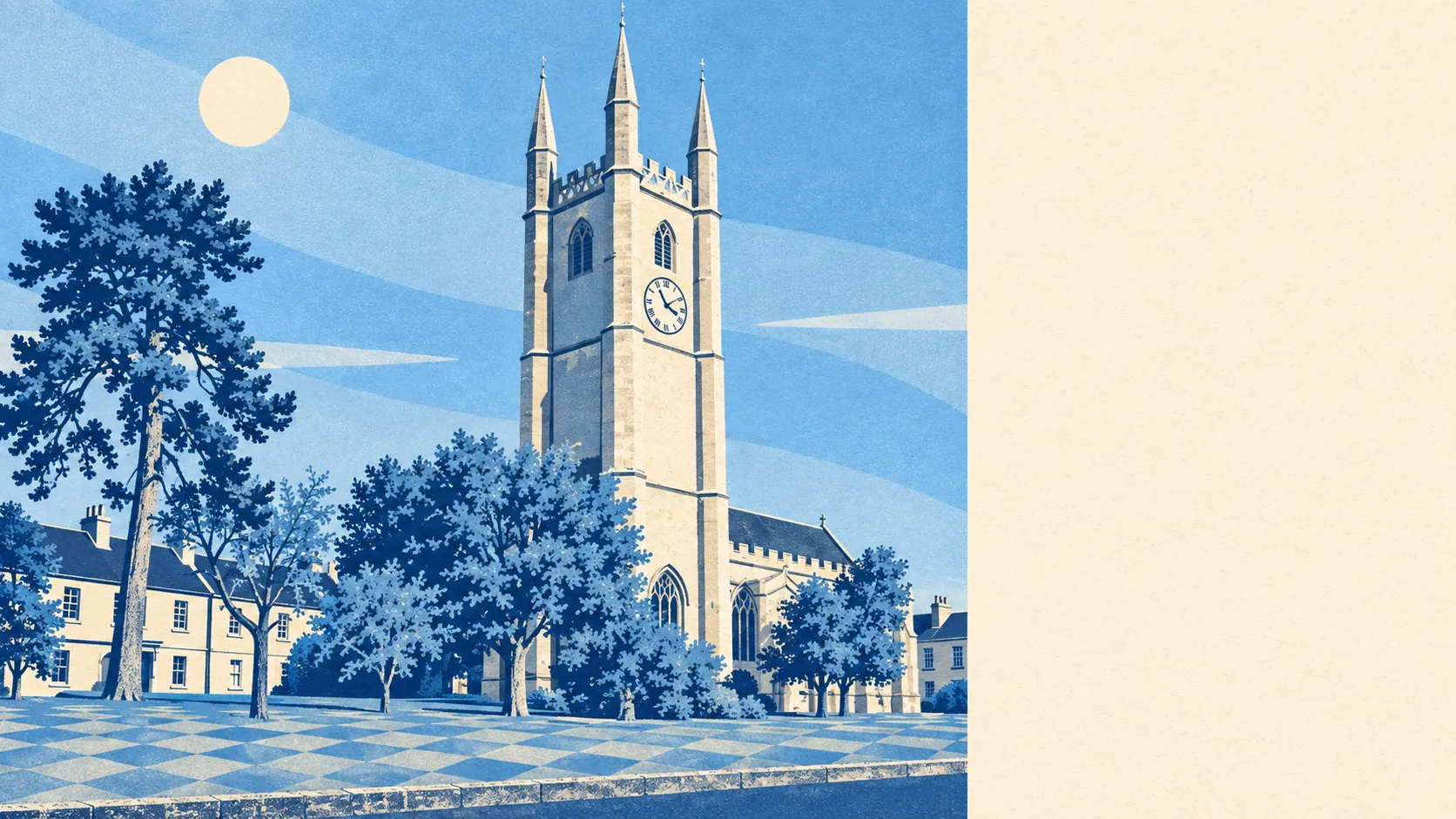
The country around Marlborough is the best reason to live here, and the town knows it. Green space is a short walk from almost every door. The Kennet runs straight through the middle. Everything around it is protected downland. The town is pleasant. The countryside around it is what people pay for.
On average, the nearest green space is about 150 metres from home, and there are around 18 green spaces within a kilometre. A parkrun takes place on the town's common every Saturday, which is the town's idea of vigorous public life.
Water is almost as close. The nearest river, pond or other water is about 260 metres away on average, with around 36 within a kilometre, most of them strung along the Kennet and its side channels.
The National Cycle Network is about 340 metres from the average home, and about 79% of postcodes are close to it. The Wessex Ridgeway, a long-distance National Trail, starts here and heads off towards Dorset for anyone who thinks a weekend walk should need a map.
Marlborough's commercial side is small and specific. The rated-premises register lists 162 shops, 34 pubs and 15 restaurants. The pubs outnumber the restaurants by a wide margin, which tells you how the town prefers to spend an evening.
For fine particles in the air, the Wiltshire Council area as a whole measured about 6 micrograms per cubic metre in 2024. That is a county-wide figure, not a reading taken on the High Street.
Every postcode in the area sits inside the North Wessex Downs Area of Outstanding Natural Beauty. There is no site of special scientific interest in the town itself and no ancient woodland on record inside its boundary. That's no gap in the wildlife. This is chalk downland and river valley, not old forest, and Savernake Forest, the royal hunting ground William the Conqueror claimed after 1067, lies just outside the town.
The surrounding country has been occupied and argued over for a very long time. The Rockley Plantation barrow cemetery sits north of the town, the Wansdyke runs to the south, and the Marlborough White Horse was cut into a downland slope in 1804 by boys from Mr Greasley's Academy on the High Street. It is still there, which is more than most school projects can say. Villages such as Clatford, Fyfield, Rockley and Ogbourne Maizey are within easy reach, each a smaller, emptier version of the town's surroundings.
Private outdoor space is plentiful. Garden area comes to about 210,000 square metres per 1,000 residents, so most homes here have their own patch as well as the downs.
The business rating list has 442 rateable premises, and shops and offices are the two largest categories. These are premises on the valuation list, not a count of businesses trading today, but they describe a working market town rather than a dormitory.
Of the 56 food businesses with a hygiene rating, about 70% hold the top score and none sits at the bottom. The kitchens are well run, even if there aren't many restaurants to eat in.
The surroundings are one of Marlborough's real strengths. The protected downs, the river and a forest are all on the doorstep, and they're what make an ordinary market town worth what it costs.