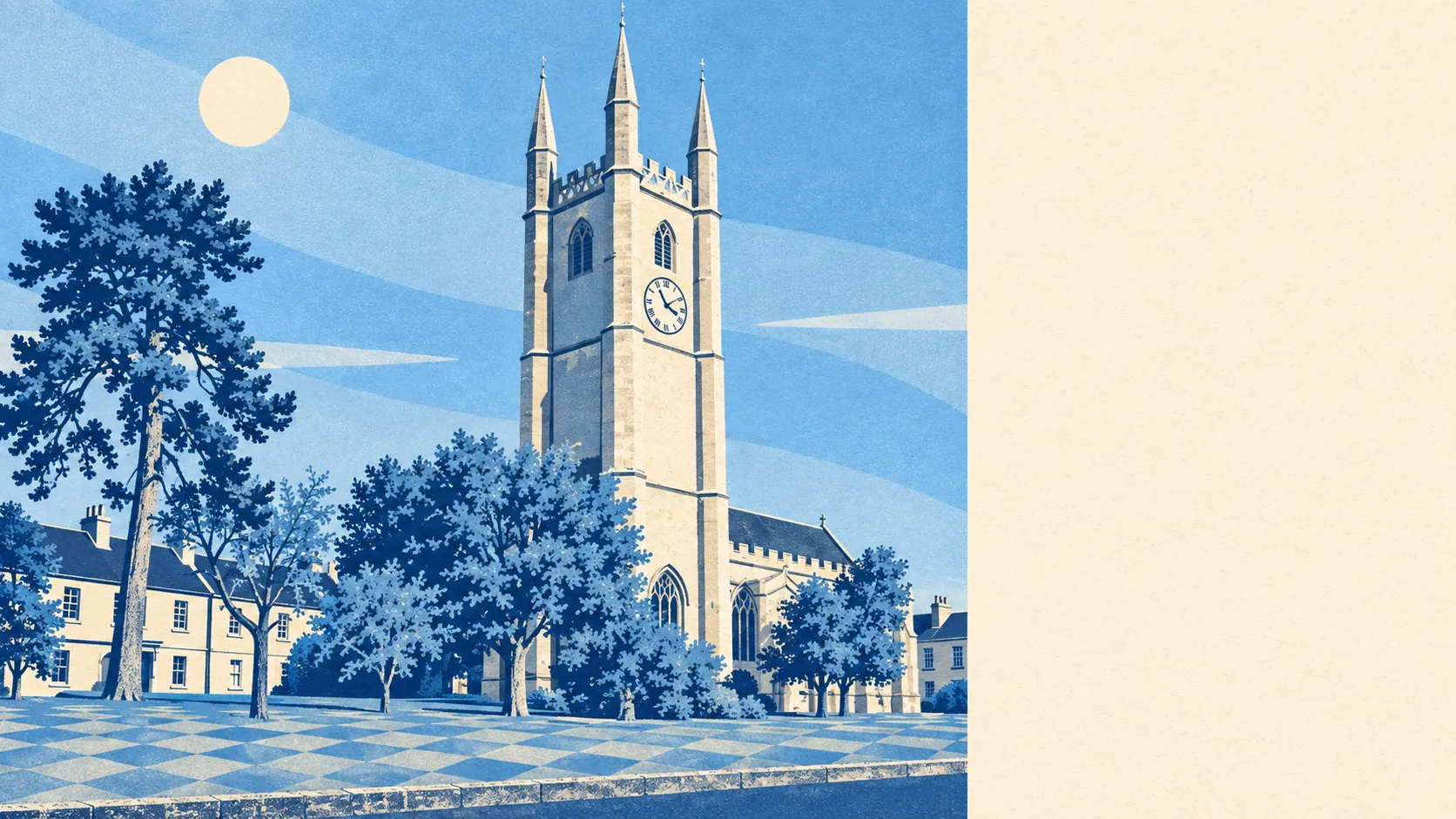
Yes, provided you like things tidy and have no plans to change them. Six in ten households own their home. Crime runs well below the Wiltshire average. Every postcode sits inside protected downland. Marlborough is a nice town that intends to stay exactly this nice, with or without your extension.
The housing refuses to pick a lane. Across every home on the council-tax valuation list, about 26% are detached, 26% terraced, 20% semi-detached, 18% flats and 9% bungalows, and about 23% were built before 1930. On energy certificates, about 53% of rated homes sit in bands A to C, 36% in band D and 11% in E or worse. About 69% of homes are on mains gas and about 15% heat with electricity alone. In an older property, find that out at the viewing, not from the first winter bill. The listing will call the draughty ones full of character. Character is the bit you pay to heat.
In the Land Registry's twelve months to late May 2026, 92 homes sold at a median of about £317,500. That single number blurs a wide spread. Flats went for around £153,000, terraces around £297,000, semis around £345,000 and detached houses around £606,000. The town's reputation lives in the 20 detached sales, and first-time buyers live in the 24 flats. Band C is the most common council-tax band, and only about 22% of homes are in bands A or B, so cheap to run is not the default setting.
Renters only get an area figure. Typical private rent across the Wiltshire area was about £1,060 a month as of April 2026, from the Office for National Statistics' rent index. That covers the whole county, so treat it as a yardstick rather than a quote for a flat above a shop on the High Street.
Police records put Marlborough at about 49 crimes per 1,000 residents over the twelve months to May 2026, roughly 21% below the Wiltshire average. Violence and sexual offences are the largest category, as they are almost everywhere. Shoplifting stands out: about 13% of recorded crime, against about 8% nationally. A town with this many independent shops attracts people who would rather not pay at them.
Across the 11 primary schools in the district, the average Key Stage 2 maths score is about 105. Marlborough St Mary's CE Primary and Preshute Church of England Primary School are the ones in and around town. The state secondary is St John's Marlborough, with an average Attainment 8 score of about 51. Across Wiltshire as a whole, Ofsted rates 106 of its 128 graded settings good or outstanding. Marlborough College, the independent boarding school on the west side of town, is the institution everyone has heard of. For most families on the housing estates, the school that counts is St John's.
There is no railway station. Fewer than one working resident in a hundred commutes by train, about 41% drive and about 35% work from home. About 18% walk, which is what a compact town rewards. Buses call at 61 stops, averaging 23 weekday departures per stop, and about 88% of those stops have some weekend service. Department for Transport modelling from 2019 puts the nearest hospital about 22 minutes away by car and about 39 minutes by public transport. Broadband is where the town earns its home-working share: gigabit-capable connections reach about 81% of premises and superfast about 98%.
The whole town sits inside the North Wessex Downs Area of Outstanding Natural Beauty. The nearest green space is about 150 metres from the average home, with around 18 green spaces within a kilometre, and the River Kennet runs through the middle. On flooding, about 1% of the town falls in the Environment Agency's highest river-and-sea flood zone and about 5% in the medium zone. Counting postcodes flagged on at least one flood indicator, including surface water, about 11% are high risk and about 15% medium. Check the specific address. The British Geological Survey puts every postcode in class 3 for soluble rock, which is the chalk under the town and something your surveyor should raise. Radon is low.
This is where the town pushes back hardest. Marlborough has 294 listed buildings: two at Grade I, 11 at Grade II* and 281 at Grade II. There are two conservation areas, Marlborough and Manton, and five scheduled monuments nearby, including the Marlborough Mound. In a listed house, replacing the windows turns into an exchange of letters with the council. In an unlisted house inside the conservation area, the council can still have a say in what shows from the street. Plenty of people buy here meaning to open up the back. They end up owning the place as it was.
About 61% of households own their home. The median age of 46 is pulled down by the College, whose boarders account for most of the 1,255 people living in communal establishments, so the town outside the school gates is older than that figure suggests. Median gross household income was about £58,900 in the financial year to March 2023, on the Office for National Statistics' modelled estimate. It is comfortable without trying to show it.
This page also covers the villages around the town: Ramsbury and Axford along the Kennet, Aldbourne and Baydon up on the downs to the north, and Burbage and Great Bedwyn to the south. Each one is a quieter, emptier version of the same trade.
Marlborough suits people who work from home or drive, want downland at the end of the road and like a period house as it is. It suits families who have looked at St John's and are happy with it, and retirees who treat a market day as an event.
It is a poor fit for anyone who needs a daily train, wants a doer-upper to reinvent, or needs a cheap first home in bulk. The flats exist, but there aren't many of them, and the town was not built around the budget buyer.
William Golding grew up here and went on to write Lord of the Flies, a novel about boys left to run things themselves. Nick Drake boarded at the College and wrote letters home that were later published. The town's temper goes back further. In 1642 it was the Parliamentarian side of a county the Royalists badly wanted, and it told the King's envoy, Lord Digby, it would sooner die than hand itself over. The Royalists took it anyway. Some four centuries earlier, the Statute of Marlborough of 1267 made it unlawful to seize your neighbour's goods without a court's permission, and it remains the oldest law in England that has never been repealed. The town has been particular about property for a long time.
Marlborough is a good place to live, and above average once you weigh everything. Its real strength is the country around it, with protected downland and green space closer to the door than most towns can manage. The weak spot is the freedom to extend or alter your home, which the listed buildings and conservation areas ration carefully. Buy the house you want, not the one you plan to turn it into.