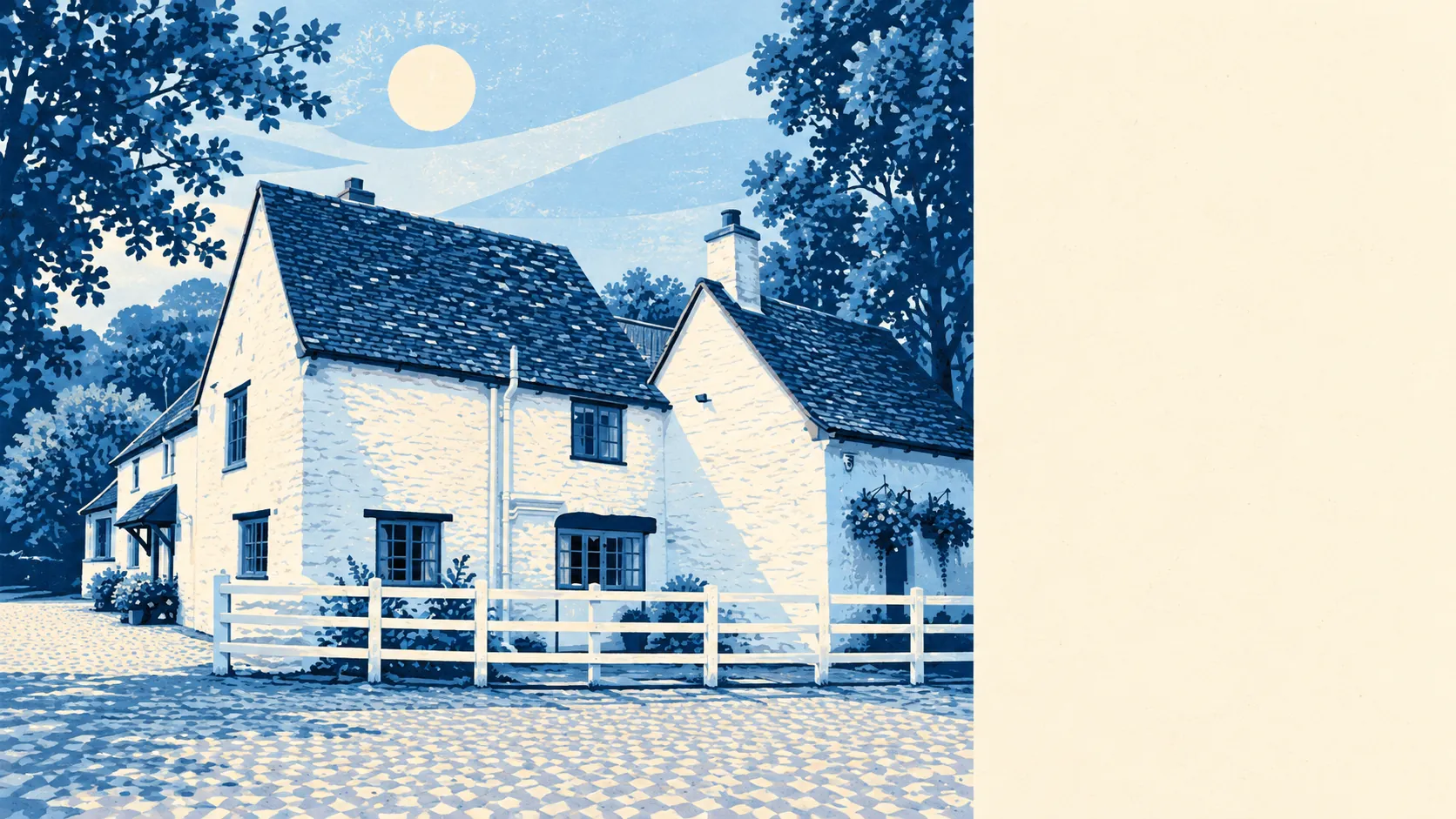
Marcham gives a family with a car and a laptop most of what they left town for. Houses outnumber flats by a distance, there's green space a short walk from almost every door, and crime runs below the district's. The catch comes at purchase, though, and the railway is somewhere you drive to.
The Land Registry recorded 36 sales across the Marcham area in the twelve months to April 2026, at a typical price of about £431,000. The 17 detached houses went for around £580,000. Semi-detached homes went for about £356,000 and terraces for about £378,000, so the terraces came out dearer, which is what six sales in a village will do to an average. Three flats sold, at a median of roughly £130,000, so the bottom rung of the ladder exists mostly in theory. Band C is the most common council-tax band, and only about 13% of homes fall in the two cheapest bands.
The Vale of White Horse puts typical private rent across its whole district at about £1,330 a month as of April 2026. A three-bedroom home costs about £1,480, and three bedrooms is the most common size here.
The council-tax valuation list shows a village of semis. About 35% of homes are semi-detached, 28% detached, 19% terraced, 11% bungalows and just 7% flats. Most of the stock is post-war, and only about 9% was built before 1930, so the thatched cottage on the parish leaflet is the exception the village gets photographed by. About 63% of homes with an energy certificate are rated A to C. About three-quarters heat with mains gas, and around 9% rely on electricity alone. In an older house, that shows up on the winter bill sooner than it shows up anywhere else.
About 57% of households own their home, around 27% rent privately and roughly 15% rent from a social landlord. The median age across the wider Marcham area is about 34. That's young for a village of semis, and it's pulled down partly by a sizeable group of residents living in communal establishments. The Office for National Statistics models gross household income for the area at about £70,000 a year in the financial year to March 2023. That's the kind of money that buys a semi here and then spends ten years extending it.
The flood picture depends on which measure you read. About 11% of postcodes have a high reading on at least one flood indicator, surface water included. Only about 1% of the area falls in the Environment Agency's highest river-and-sea zone, with about 2% in the zone below it. The Environment Agency lists three recorded flood events here. The latest was in July 2007, when a main river overflowed a channel that had no raised defences.
This is driving country. About 41% of working residents drove to work at the last census and about 37% worked from home, while under 1% took the train. Radley, Culham, Appleford and Didcot Parkway are the nearby stations, and for most people here they're car parks with trains attached. There are 62 bus stops in and around the area, averaging about 34 weekday departures each and about one bus an hour at peak. Broadband is the strong point, with gigabit speeds available to about 90% of premises. The Department for Transport's 2019 modelling puts the nearest town centre about 14 minutes away by car, though by bus it takes around 21.
Thames Valley Police recorded about 47 crimes per 1,000 residents across the Marcham area in the year to May 2026. That's roughly 19% below the Vale of White Horse average of about 58.
The area has 74 listed buildings, four of them grade II* and the other 70 grade II, and Marcham has its own conservation area. Owners of the older houses near the church soon get to know the conservation officer, mostly by email.
The surroundings are where Marcham earns its keep. The nearest green space is about 200 metres from the average front door, with about ten more within a kilometre, and water is roughly 240 metres away. For a family with a dog and small children, that's the whole weekend sorted without starting the car. The figures on this page also take in neighbouring Shippon, Dry Sandford, Appleton and Steventon.
Marcham is a better-than-average choice, and it's clear who it works for. That's a household that drives, works at home for part of the week, and wants fields at the end of the road more than a station at the end of it. The price is where the village pushes back: £580,000 for a detached house, and a starter flat you'll rarely see come up for sale. First-time buyers and anyone who needs a train every morning should look further along the line. Everyone else pays once at completion and gets the countryside every day after that.