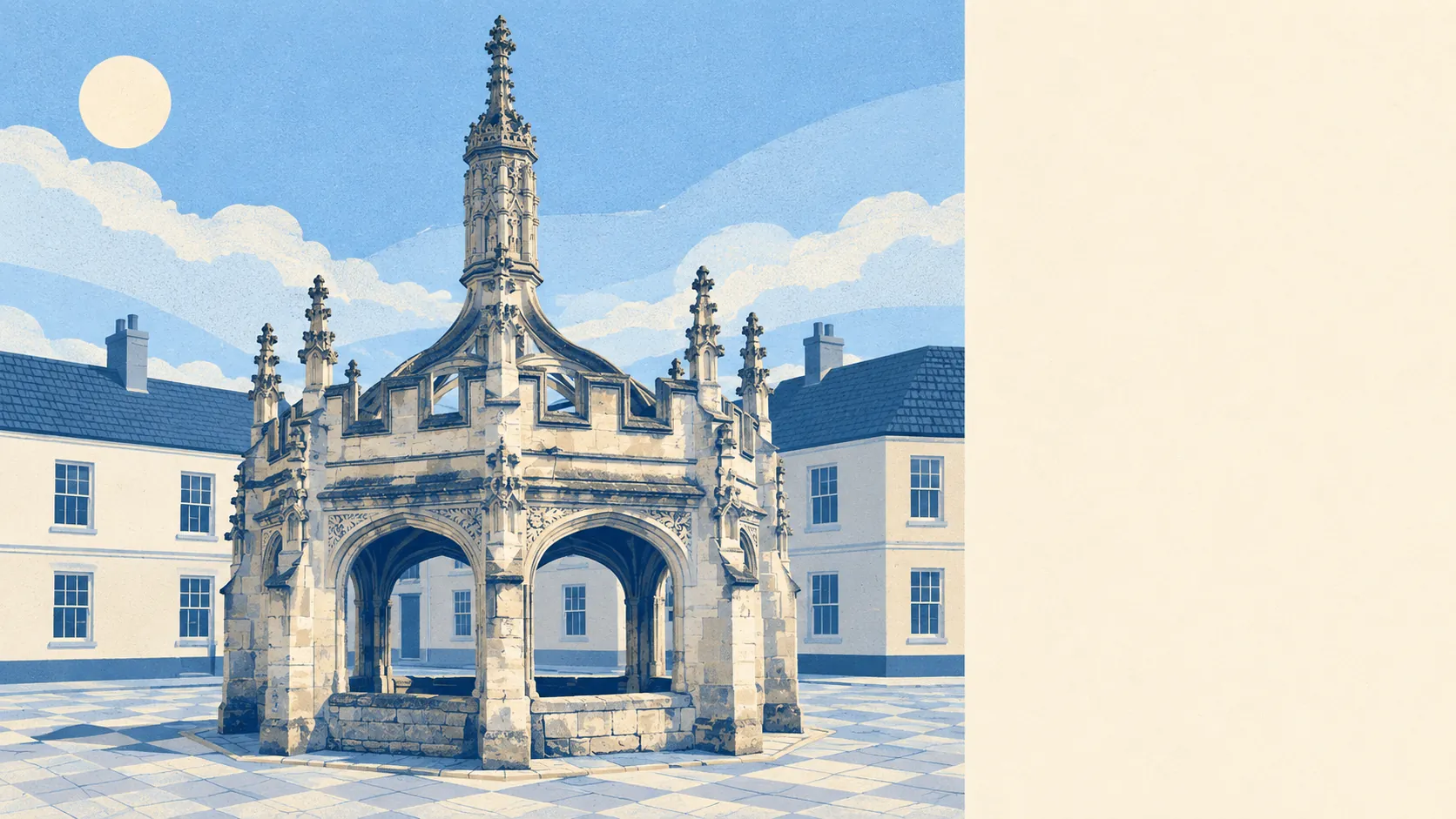
Yes, with permission, and more of it than you'd expect. The town has hundreds of listed buildings. The old centre sits inside a conservation area. The neighbours still send in planning applications by the hundred. It can be done here, just not quickly.
Historic England's list has 326 listed buildings in the area. Six are Grade I, 14 are Grade II* and 306 are Grade II. Most are the ordinary kind, houses and cottages and shopfronts, which is the part buyers forget. Listing covers the whole building, inside as well as out, so replacing windows, removing a wall or adding a room at the back of a Grade II house needs listed building consent on top of any planning permission, and the council will want to see why the change respects what's there.
There's one conservation area, Malmesbury's own, covering the historic town. Inside it, some of the changes that elsewhere need no application at all come under planning control, and demolition, trees and anything visible from the street get closer attention. Owning an unlisted house doesn't get you out of this if the house sits inside the boundary.
Four scheduled monuments sit in the area, the strictest tier of protection, and the town defences are one of them. They matter mostly to anyone whose garden runs along the line of the old walls, where digging a foundation becomes a much longer conversation.
The planning register shows people extending here all the same. Between April 2024 and June 2026 the council logged 587 applications in the area, 279 of them in the last twelve months. That is not a town where nobody dares apply. It's a town where everyone applies, because they have to.
Check the ground as well as the paperwork. The British Geological Survey rates shrink-swell clay here at class 3, a moderate hazard, and about 37% of postcodes reach that class. Clay that swells in wet winters and shrinks in dry summers is why an extension's foundations may need to go deeper than the builder's first quote assumed. A structural engineer's view before the drawings are final is cheaper than one after the cracks appear.
One listed building in the area is on Historic England's Heritage at Risk register. That describes a historic building in poor repair, the sort that can attract grant funding and certainly attracts scrutiny. It's not a hazard to someone buying an ordinary house nearby. It's a sign of how seriously the town's fabric is watched.
History explains the mood. In the twelfth century Roger of Salisbury rebuilt the wooden town walls in stone and put up a castle beside them. The castle didn't last. The instinct to control what goes up on this hill has done considerably better. In the 1840s a doctor with a passion for astronomy added a tall, narrow tower to the roof of Tower House, and it still dominates the skyline to the east. Today that would take a year of drawings and consultation. Back then it took a doctor.
In practice, the default rights to extend without an application are narrower here than on a newer estate. For a listed house or anything inside the conservation area, assume consent is needed, speak to the council before you commission plans, and budget for a heritage statement and some back-and-forth. The newer housing north of the old town, away from the listings and the boundary, is where ordinary permitted development works more or less as it does anywhere else.
Freedom to extend is one of Malmesbury's weak spots: possible, common, and slow, and the town expects you to justify every change to anything old. Buyers who need a big extension should look at the newer streets. Buyers who want the stone should treat the house as nearly finished.