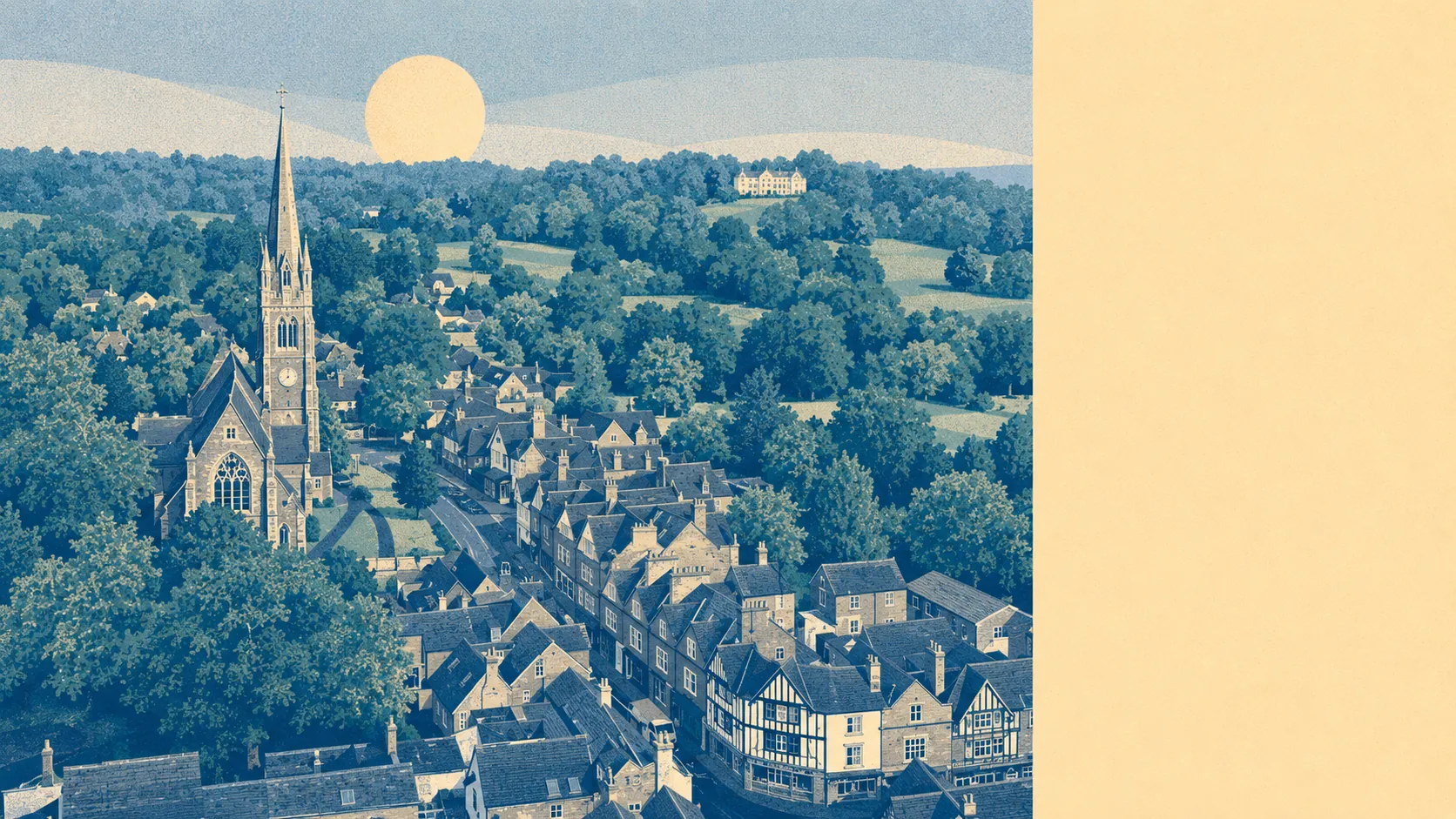
The area around Lyndhurst is mostly forest, and that is the whole point of it. Woodland and heath begin just over a hundred metres from the average front door. The typical postcode has around fourteen patches of green space within a kilometre. Water and cycle routes sit close behind. This is not a village with countryside nearby. It is countryside with a village dropped into the middle of it.
The green-space access is about as strong as it gets in England. With open ground barely a hundred metres away on average and roughly fourteen separate stretches of it within a short walk, you do not go looking for nature here so much as fail to avoid it. Water is close too, around half a kilometre to the nearest of it and about five bodies of it within a kilometre, and the national cycle network runs within roughly four hundred and fifty metres of two thirds of postcodes. The whole village sits inside the national park, ringed by the ancient oak and beech of the open forest, the heathland out at Parkhill and the bog at Matley. Space is the one thing this area never runs short of.
The village itself is the busy heart of all that quiet. It works as a genuine tourist hub, with independent shops, cafés, galleries, pubs and a museum drawing people in year round. St Michael and All Angels church stands on one of the highest points, built in a patchwork of coloured brick that is hard to miss. To the east sits Bolton's Bench, a picturesque hill that local folklore insists is the corpse of a dragon, which is the kind of origin story a place only keeps if it rather enjoys it. On the road out to the neighbouring hamlet of Emery Down runs a row of much-photographed thatched cottages, and the King's House in the village still hosts the Court of Verderers, the body that has helped run this forest for centuries. Around the edges, quieter hamlets like Minstead, Bank and Pikes Hill sit deeper in the trees, trading amenity for seclusion.
The trade-off is honest enough. The forest that makes the setting also keeps the village small, so the surrounding area gives you scenery and space rather than the bustle and choice of a town. For the people who move here, that is the feature, not the compromise. They came for the trees, the walks and the folklore, and the forest hands all three over without being asked twice.
The area around Lyndhurst is outstanding, and there is no need to soften it. If the surroundings are what you are buying, this is close to the top of what England offers, and it is comfortably the best thing about living here.