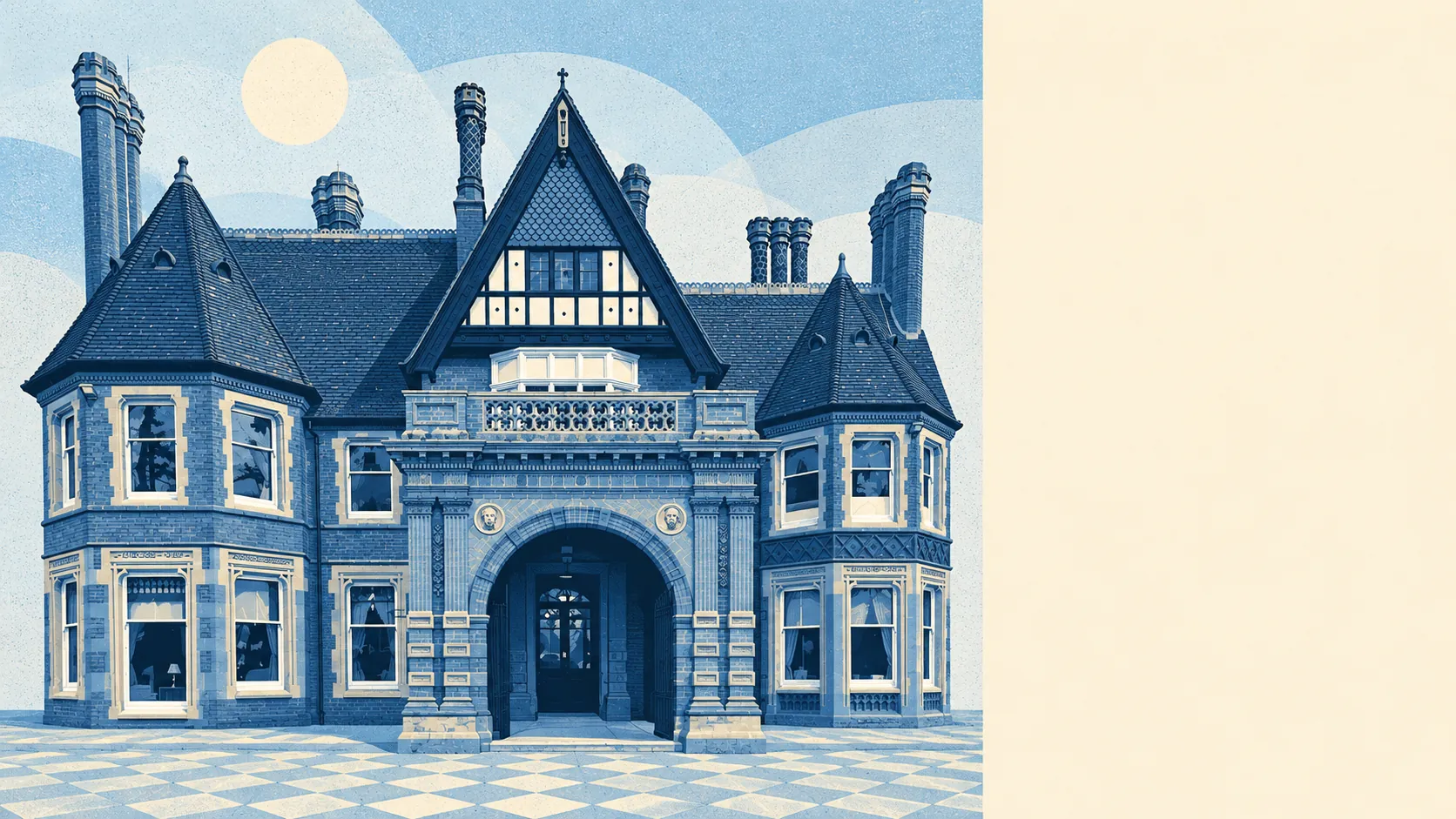
You can extend most houses in Luton, but the town protects more of itself than its reputation suggests. About a hundred and fifty listed buildings. Six conservation areas. Six scheduled monuments. Thousands of planning applications from neighbours who went ahead anyway. The paperwork is concentrated in particular places, and anyone buying in them should expect it.
Historic England lists 157 buildings in Luton: 3 at Grade I, 7 at Grade II* and 147 at Grade II. For any of them, almost every change, inside or out, needs listed building consent on top of any planning permission. That covers windows, walls, roofs and sometimes the paint. Grade II is the commonest grade by a long way, and it still means the council has to approve the replacement of a sash window. Owning one of those 157 buildings means sharing the decisions about it with the council.
There are six conservation areas within the area: High Town, the Town Centre, Plaiters Lea, Rothesay, Luton South and Lilley. Inside them, works that would normally go ahead without an application may need one, and the council takes a closer interest in front elevations, roofs, demolition and trees. Lilley is a village with its own conservation area, so a cottage there gets about as much attention as a building on a town-centre street.
Six scheduled monuments lie within reach of the town, including Waulud's Bank, the Neolithic enclosure at Leagrave, and the strip lynchets on Stopsley Common. This is the strictest tier of protection there is, and it matters mainly if your garden backs onto one.
Plenty of people extend their homes here regardless. Luton's planning register shows 3,784 applications between April 2024 and June 2026, and 1,646 of them were made in the last twelve months. Somebody on most streets has an extension, a loft or a dormer going through the council at any one time, so expect your own application to get the same scrutiny the neighbours know well.
The British Geological Survey's shrink-swell rating, which measures how much the ground swells and shrinks as it gets wet and dries out, reaches class 3 at its worst in Luton, and about 1% of the area falls in that class. For an extension, the class affects how deep the foundations go and whether a structural engineer wants a look at the soil first. It is a cost, and it does not stop you building. In nearly all of Luton the clay will not be the problem.
One listed building in the area is on Historic England's Heritage at Risk register. That means a building in poor condition, whose repair may attract grant money and will certainly attract scrutiny. It is a concern for whoever owns that building, and it has no effect on a buyer of an ordinary house down the road.
In practice, the answer depends on which house you buy. An unlisted house outside the six conservation areas generally keeps its permitted development rights, which cover many single-storey rear extensions and loft conversions without a full application, within national limits. A listed building needs consent for most changes, and a conservation area narrows what you can do without asking. The quickest way to find out is to put the address into Luton Borough Council's planning register and conservation area map. A house with a refused application in its history has already been tested, and the council will remember the result.
Luton gives you less freedom to alter a home than its post-war streets suggest, because the listed buildings, conservation areas and monuments cover more ground than buyers expect. Anyone planning a big extension should check the house against those maps first.