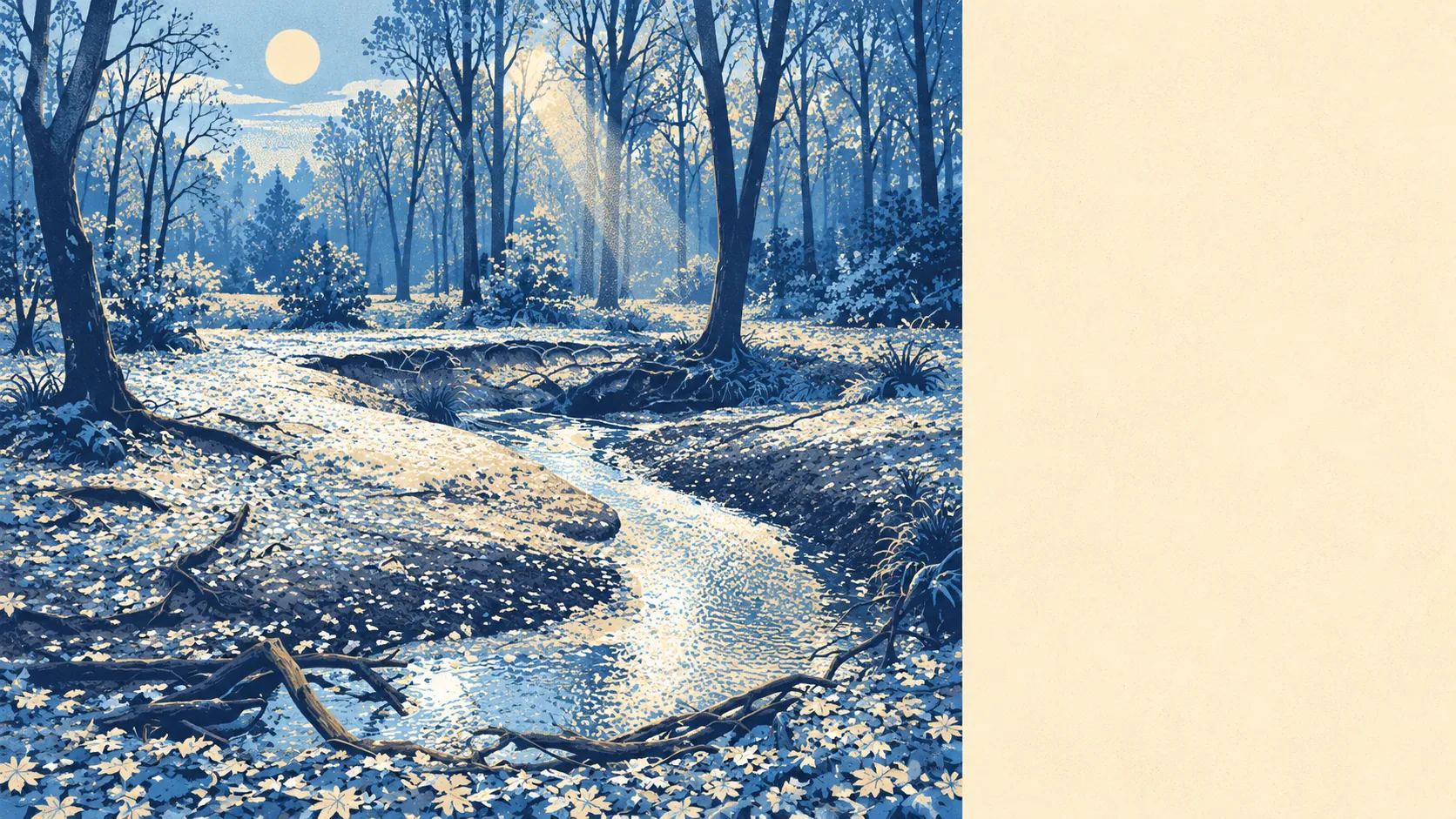
The area around Loughton is mostly forest, and the forest is the main reason the town exists in its current shape. Green space is a couple of minutes from almost any front door. Water is never far either. The nearest national cycle route is some distance away, and the high street is busier than you might expect for a forest town.
The average home in Loughton is about 180 metres from the nearest green space, with about 14 green spaces within a kilometre. The forest runs along the whole western side of town, and High Beach is a village inside it. Most dog walks here start at the front door, with no car involved.
Water is close as well. The average home is about 350 metres from the nearest blue space, with about 15 of them within a kilometre, from the forest ponds to the Roding on the far side of town.
The National Cycle Network is further off. The average postcode is about 5.8 kilometres from it, and no postcode in Loughton counts as close.
Loughton's high street is busier than its forest-edge image. The rated-premises register counts 580 shops, 29 pubs and 44 restaurants in the area.
Air quality is measured across the whole council area: the district council area that includes Loughton averaged about 7.7 micrograms of fine particles per cubic metre in 2024.
The highest roads in town run along the forest edge, and from the green outside the Gardeners Arms, where York Hill, Pump Hill and Baldwins Hill meet, the view reaches across London to the North Downs on a clear day. It is a good place to look at the city most residents chose not to live in. In the forest to the north-west, Loughton Camp, a hillfort from before recorded history, was rediscovered in 1872. A fort went missing for centuries in a wood outside London, which tells you how thick that wood is.
Private gardens add to the public green space. Across Loughton there are about 94,000 square metres of garden for every 1,000 residents, so many homes have outdoor space of their own as well as the forest nearby.
The council's valuation list counts about 1,020 rateable premises in Loughton. The largest groups are 295 offices and 271 shops, followed by 83 industrial units, many of them on the Debden side. These figures count premises on the rating list, which includes empty and changed-use units as well as businesses that are trading. Debden's industrial estate gives the town a working side that the leafy roads at the top of the hill would not suggest.
Eating out is a reasonably safe bet. Of 191 food premises with a hygiene rating, about 83% hold the top score of five and about 3% are at the low end.
No area of outstanding natural beauty, site of special scientific interest or ancient woodland overlaps Loughton's built-up area. The forest begins where the town stops, so the protected landscape is next door and not under anyone's house.
What surrounds Loughton is the best thing about living there. Forest, water and the view across London are all within a short walk of most homes, and the 1878 Act means nobody can build over them.