Yes, if you want a Somerset town that never bothered pretending to be anything else. Most people here own outright. The median resident is in their early fifties. The rivers are the main event, in both the good way and the February way. It is a good place to live, provided you already knew you wanted a place like this, because Langport is not going to sell itself to you.
The housing stock is the giveaway. On the council tax valuation list, which counts every dwelling rather than just the ones with a recent energy certificate, roughly 30% of homes are detached, 22% semi-detached, 18% bungalows and 16% terraced, with under 10% flats. That is the profile of a town that has never had to build up, only out. About 24% of dwellings predate 1930, so the older stock is real but not dominant, and the post-war years did most of the actual building. Around 64% of homes run on mains gas and about 7% are on electric-only heating, which is the number worth checking before a viewing rather than after, because an electrically heated older bungalow bills differently to the gas-fired one next door. On energy certificates, roughly 58% of the certificated stock sits in bands A to C, about 32% in band D and 10% in band E or worse. Perfectly ordinary, which is a compliment nobody ever accepts as one.
On price, the Land Registry's last twelve months put the typical Langport sale at around £273,000 across 50 transactions, with the median detached at roughly £342,500, semi-detached at about £285,000, terraced at around £254,000 and flats at roughly £132,000. That flat figure is the one that raises eyebrows in London and raises nothing at all here. Council tax runs modest by national habit: band B is the most common band, and about 35% of dwellings sit in bands A or B. Nobody is buying a Langport house for the tax bracket, but nobody is being punished by it either.
Renting is harder to pin to the town itself. The typical private rent across the Somerset area runs at about £990 a month, which is a local-authority figure rather than a Langport one, and a town this size will sit wherever its handful of available properties happens to put it in any given month. Treat it as the shape of the market, not a quote.
On safety, the published crime rate for Langport is about 74 recorded crimes per thousand people over the twelve months to May 2026, sitting roughly 20% below the Somerset average. That is the strongest thing the numbers say about the place and it says it quietly. The most common recorded category is violence and sexual offences, which is the broad statutory grouping that tops the list almost everywhere and includes assault without injury, and with totals this low a handful of incidents shifts the mix by several points, so the shares are worth treating as weather rather than climate.
Connectivity is where the shine comes off. Under 1% of residents commute by train and under 1% by bus, while about 58% drive and roughly 29% work from home, which is the highest share of any single arrangement here after driving. There are 23 bus stops in the town's area, with around 24 scheduled weekday departures per stop on average and about 71% of the stops with service data carrying something at weekends, and the Department for Transport's 2019 modelling puts a town centre at roughly 28 minutes by car against about 47 by public transport. Those public transport figures age faster than the car ones as services get withdrawn, and not in the direction you would like. Broadband is the split personality: about 98% of premises can get superfast, but only around 32% can get gigabit, and roughly 0.2% sit below the universal service obligation. Fine for a video call, less fine if you were promised the future.
The environment is the other half of the bargain, and it is a genuinely good half. Green space averages around 113 metres from a postcode here with roughly 15 spaces inside a kilometre, and water is closer still at about 181 metres, which in Langport is less an amenity than a fact of geography. Then the honest bit. Roughly 23% of postcodes carry a high rating on at least one flood indicator, including surface water, with about 29% at medium and 39% at low. On the Environment Agency's river-and-sea flood zones, which measure a different and narrower thing, around 13% of the area sits in zone 2 and about 2% in zone 3. One recorded flood event appears in the record, in February 2014, caused by overtopping of defences. Roughly 17% of postcodes fall inside the Parrett Internal Drainage Board area, which is a decent shorthand for how much of this landscape is managed water rather than accidental water. On radon, about 52% of the area sits in band 3 or above with a maximum band rated High, so a radon test belongs on the survey list.
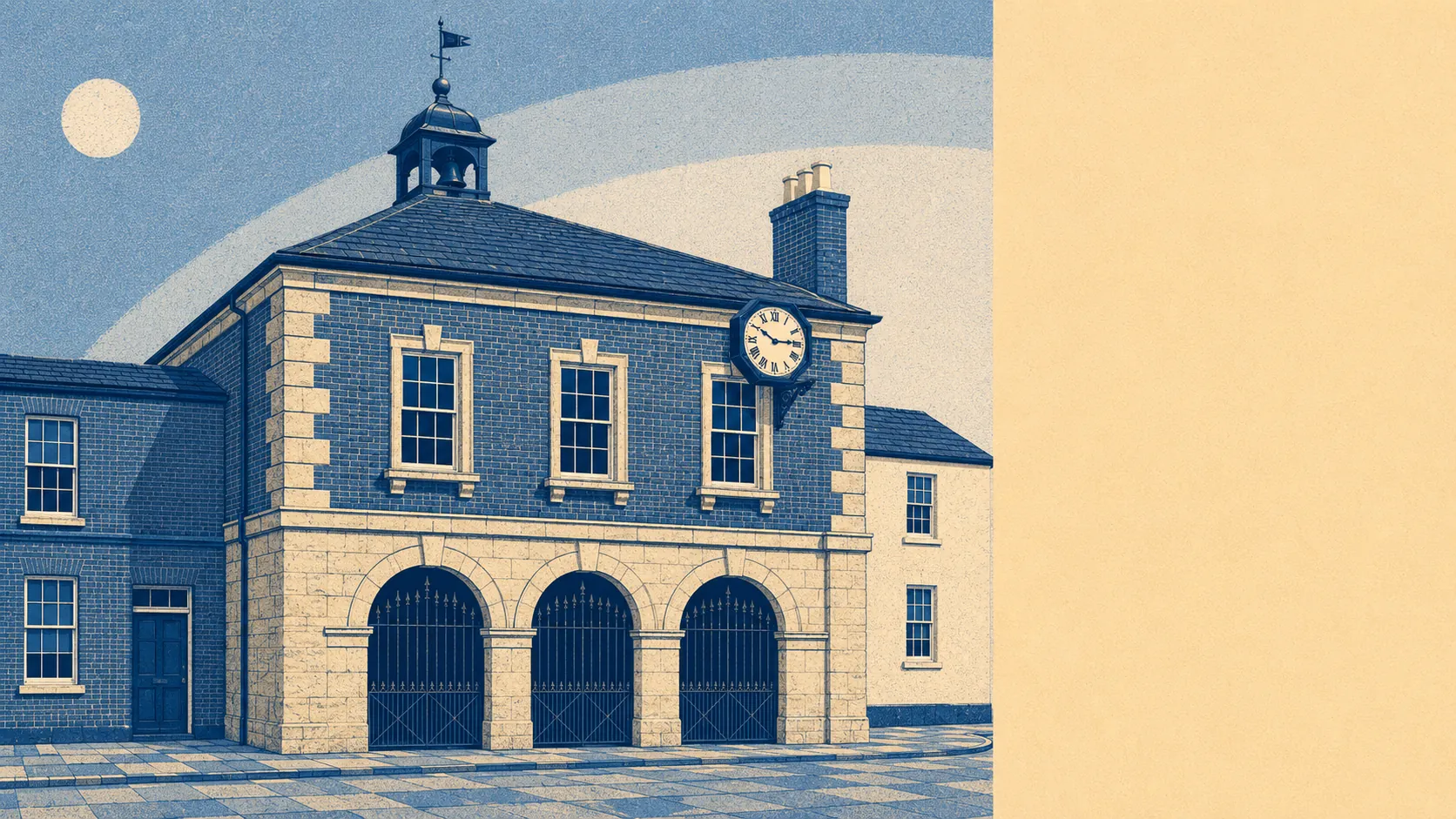
Heritage sits lightly but it sits. There are 79 listed buildings in the area, three of them Grade I and two Grade II star, and one conservation area covering Langport and Huish Episcopi. If your house is inside it, window replacements and extensions go through a slower, fussier conversation than they would two streets out, and The Hanging Chapel over the road by All Saints' Church is the town's reminder that it has been building things over other things for a very long time.
The character follows from all of it. About 69% of homes are owner-occupied, the median age is 51, and median gross household income across the area runs at roughly £54,500 in the financial year to March 2023. This page also covers Curry Rivel and Huish Episcopi, the latter close enough to Langport that the boundary is a technicality to everyone except the parish council.
It suits people who want space, water, quiet and a short drive to everything, and who either work from home already or have made peace with the car. It suits buyers priced out of the prettier Somerset postcodes who would rather own a bungalow with a garden than rent something with a view.
It does not suit anyone who needs a train, needs gigabit, or intends to buy near a river and then be surprised by the river. Check the flood mapping for the exact address before the survey, not after the offer.
The town produced Walter Bagehot, who wrote about government and economics for a living and whose family bank once had banknotes in circulation second only to the Bank of England, and Emma Overd, a folk singer born and buried here. A town that gave the country a constitutional theorist and a folk singer has a reasonable claim to range.
Langport is a good place to live and an honest one about what it is. Its real strength is the surroundings: water and green space closer than most towns manage, in a landscape that has been shaped rather than tidied. The weak spot is getting anywhere and connecting to anything, because the trains do not serve you and the fibre has only half arrived. Buy here for the ground, not for the journey.