Kennington comes out about even, and the thing holding it there is the pavement: police record around 241 crimes a year here for every 1,000 residents. For a buyer, that number decides how the walk home from the Tube feels more than anything inside the front door does. Most of the rest pulls hard the other way, starting with a park that is closer than the nearest bus stop for a lot of people.
Over the twelve months to May 2026, the Metropolitan Police's figures put Kennington's crime rate at about 241 per 1,000 residents, roughly 60% above the Lambeth average. The mix explains most of it. Theft from the person makes up about 20% of recorded crime here, against about 2% across England and Wales, and robbery about 5% against 1%. Violence and sexual offences, the biggest category almost everywhere, come in under the national share, at about 22% against 35%. Most of what pushes the rate up goes after whatever is in your hand on the way to somewhere else.
Doing anything to a building here means planning permission. Historic England lists 288 buildings in and around the district: one at Grade I, 13 at Grade II*, and the other 274 at Grade II. There are 26 conservation areas nearby, including Kennington itself, Kennington Park Road, Albert Square and Eliot's Row. New windows, a different front door or a roof extension in any of them is a conversation with Lambeth Council before it is a job for a builder. Geoffrey Chaucer was Clerk of Works at Kennington in 1389, the first in a long line of people telling locals what they could and couldn't do to a building.
The flood numbers look worse than they are. About 95% of the area falls in the Environment Agency's highest river-and-sea flood zone, which maps where water would go if nothing held it back. The agency's own assessment of risk from rivers and the sea, which allows for the Thames defences, puts about 8,800 properties at very low risk and none at high, medium or low. A wider measure, covering surface water too, puts about 6% of postcodes at high risk on at least one indicator and about 10% at medium. The most recent river flood on record here was in 1928, when the defences were overtopped. That is a long time for a map to stay this nervous.
Only about 24% of households own their home. The typical resident is 34, and the Office for National Statistics models median gross household income at about £70,500 for the financial year to March 2023. That is a working-age, well-paid, renting crowd. Owning here puts you in the minority on most staircases.
Getting about is easy. The Northern line runs through the district, Vauxhall station is a short walk west with the Victoria line and trains to London Waterloo, and Elephant & Castle is next door. There are 92 bus stops, each with about 678 weekday departures on average, around 36 buses an hour at the peak, and a weekend service at every one. Gigabit broadband reaches about 89% of premises. At the 2021 Census about 49% of workers were working from home and only about 7% drove to work. Around 68% of households don't have a car, and with that bus service they aren't losing much.
Buying is expensive. The Land Registry recorded 138 sales in the year to May 2026, at a median of about £527,500. Flats made up 121 of those sales, at a median of £475,000. Only 15 terraced houses sold, at a median of about £1,112,500. Band B is the most common council tax band, and about 31% of homes sit in bands A or B. Getting a house in Kennington is mostly a matter of waiting for one to come up.
Lambeth's typical private rent is about £2,530 a month as of April 2026, up about 7% on the year. That is a mean across the whole borough from the Office for National Statistics' rent index, so a particular flat in Kennington could come in above or below it. With three in four households renting, that rent shapes who lives here more than the sale prices do.
Nearly all the homes are flats. The council-tax valuation list puts about 88% of dwellings in Kennington as flats, about 10% as terraced houses, and virtually none as detached. About 26% were built before 1930. Energy certificates rate about 69% of certificated homes at band C or better, which is respectable for this much older and post-war stock. About 59% of homes are on mains gas, and about 16% are heated by electricity alone.
What you get for all this is the outdoors. On average the nearest green space is about 67 metres from home, and water is about 553 metres away. Kennington Park, which James Pennethorne laid out over the old Kennington Common, is the obvious one. John Wesley and George Whitefield preached to thousands on that common in the 1730s, and the Chartists held their biggest rally there in 1848. These days the joggers are the ones out there trying to convert people.
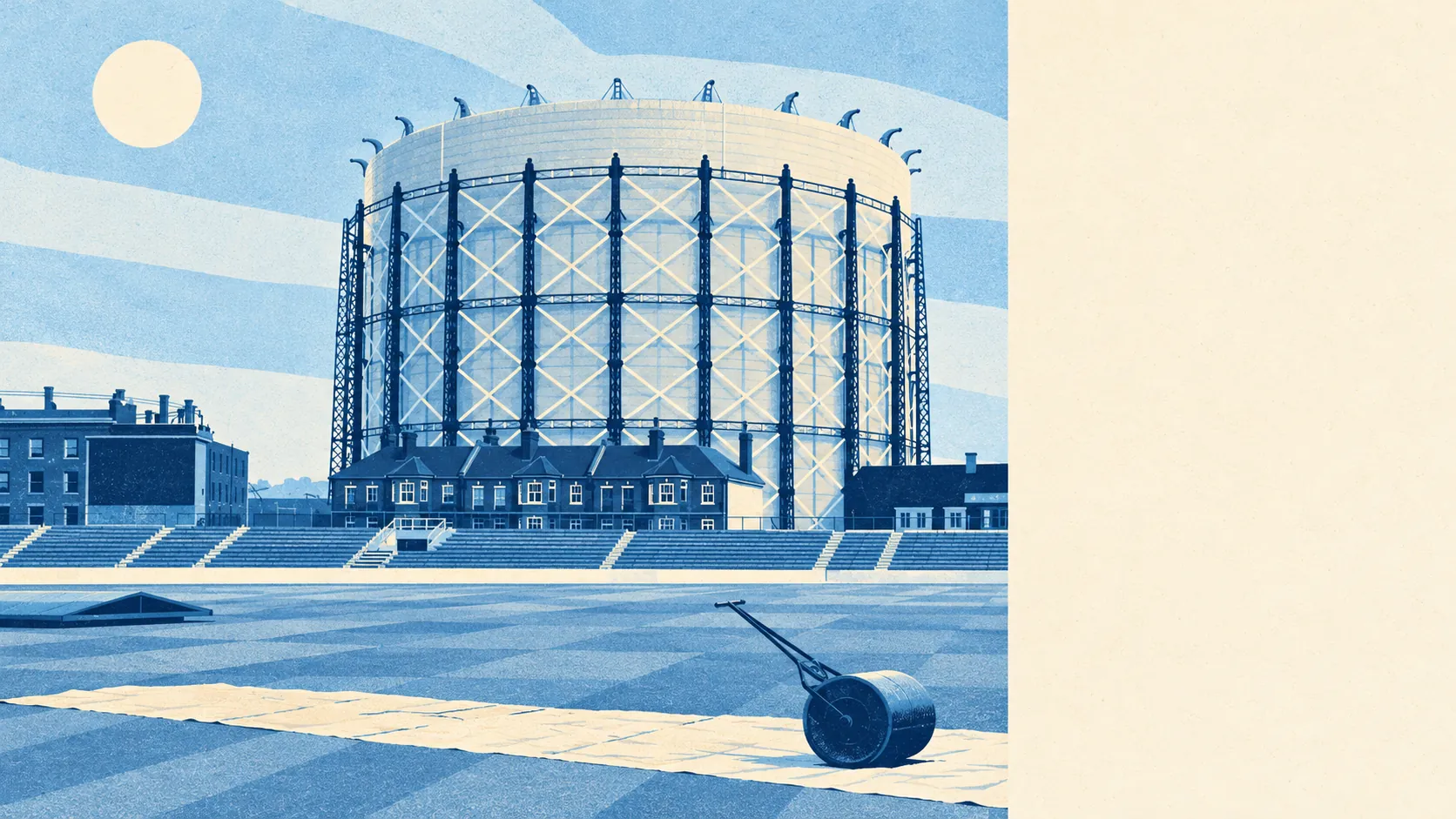
Oval, the corner of Kennington around the cricket ground, has hosted Test cricket longer than anywhere else in the country. England's loss to Australia there in 1882 gave rise to The Ashes, so locals have been living next to a national grievance for well over a century. The residents have been just as memorable. William Hogarth lived in Kennington, David Ricardo worked out economics here in the 1790s, and William Blake had a house on Hercules Road on the Lambeth edge. The Chartist poet Eliza Cook lived here too. William Bligh, whose crew mutinied on the Bounty, ended up on Lambeth Road, proving people have long moved to Kennington to get away from trouble at work.
Kennington is right for someone working in central London who is happy without a car, wants a park within shouting distance, and is content in a flat. Anyone after a family house with a garden on a normal budget, or a street that stays empty after dark, should look further out.
For a buyer, the crime picture means keeping your phone in your pocket on the busy roads and paying attention to which block, and which side of which junction, you're actually buying on. The green space nearly makes up for it: few places this close to Parliament put a park this near the front door. Taken together, Kennington is a middling place to live, with an excellent location and a crime rate that comes along with it.