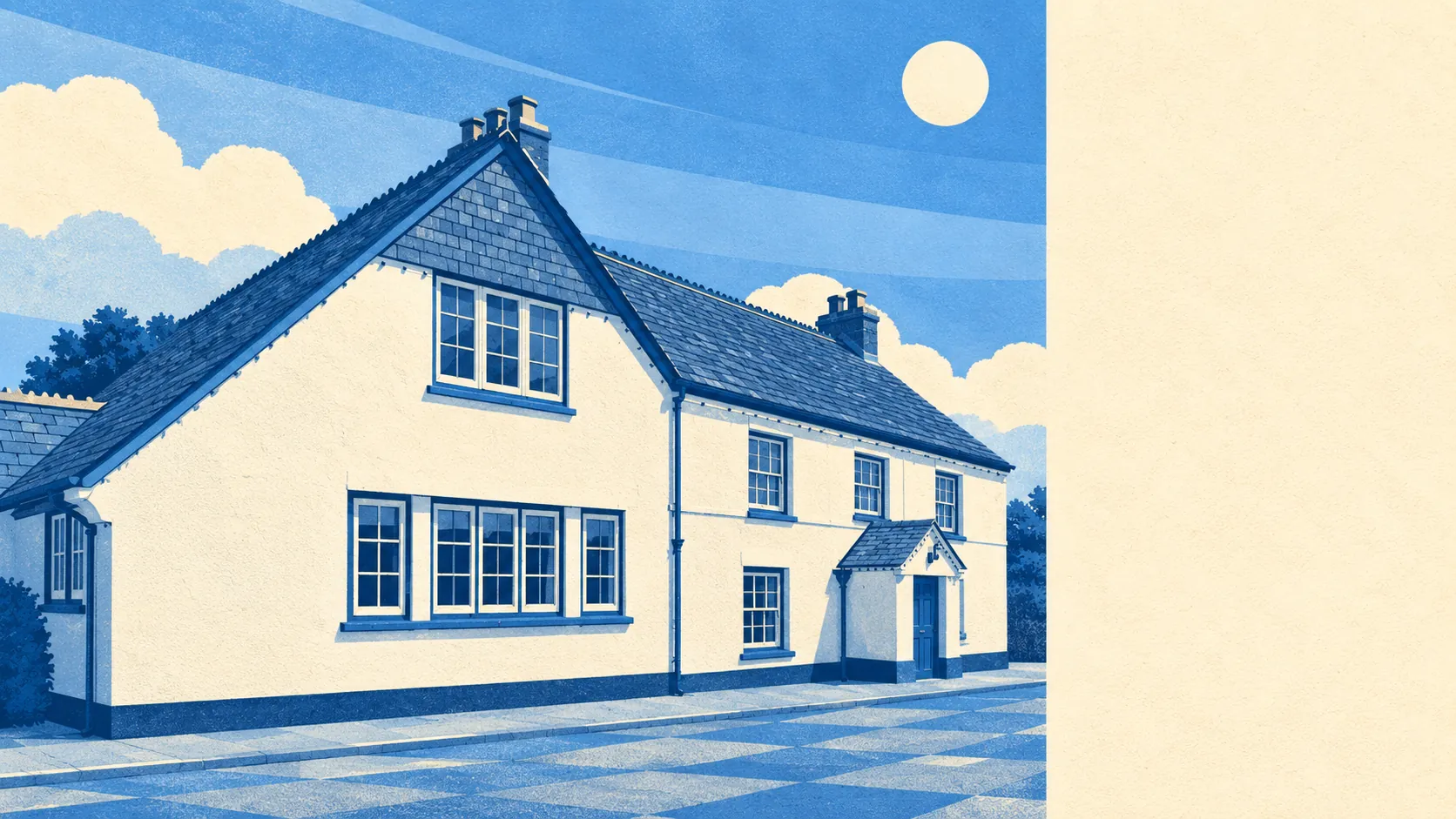
Open, worked, and closer to proper countryside than the road through it suggests. Green space starts a few minutes from the door and keeps going. Water is a short walk rather than a drive. The gardens are large enough that people genuinely use them. Nothing here is protected as a beauty spot, which is exactly why it still functions as somewhere people live rather than somewhere people park. This is Cornwall with its sleeves rolled up.
Green space is the headline. The typical postcode here sits roughly 370 metres from open green space, with about seven separate green spaces within a kilometre. That is the kind of access urban planners write strategy documents about and rural Cornwall simply has. You are not driving to a park; you are walking past three of them on the way to the shop.
Water is close too. The average postcode is roughly 910 metres from blue space, with about three within a kilometre. Inland Cornwall does water in the form of pools, streams and flooded pits rather than a sea view, and the distance to the coast is a drive rather than a stroll.
For longer routes, the National Cycle Network runs roughly two kilometres from the average postcode, with about 6% of postcodes sitting close to it. There is no ancient woodland in the area at all, so the green here is fields, moor and rough ground rather than old forest.
On amenities, the valuation list across the surrounding postcode districts carries 269 shop premises, 59 pubs and 24 restaurants. That pub count relative to the restaurant count tells you exactly what sort of evening economy this is, and it is not one with a tasting menu. Food hygiene ratings across the 28 rated food premises are strong, with about 75% holding the top score and none sitting at the bottom of the scale.
Air quality is good. Fine particle levels across the Cornwall council area averaged about 5.1 micrograms per cubic metre in 2024, which is the sort of number that comes from having more fields than traffic queues.
The character comes from what the landscape has been used for. This is old clay and mining country, and the survivals are industrial rather than picturesque: engine houses, the china clay works, the hillfort at Castle an Dinas and the ruined chapel on Roche Rock standing on top of it all. Roche, St Columb Major, Summercourt and Quintrell Downs are the neighbouring settlements, with Trerice and Rialton Manor as the grand houses in the wider area. Nobody built this landscape to be looked at, and that is most of its appeal.
Private outdoor space is the quiet advantage nobody advertises. Across the area's neighbourhoods there are roughly 184,000 square metres of private garden per 1,000 residents, which in practical terms means most homes have a garden worth having rather than a yard with a bin in it. In a county where a lot of housing is either terraced or converted, that is worth more than another public park.
The wider business picture backs up the village-plus-employment feel. The valuation list records 303 rateable premises in the area itself, and across the surrounding districts there are 234 office premises alongside the shops and pubs. These are premises on a rating list rather than businesses currently trading, so treat them as capacity rather than a directory. One figure stands out: 1,361 holiday lets across those districts, which is the tourism economy sitting just over the hedge without having taken over the village itself.
On designations, there is nothing. No area of outstanding natural beauty overlaps this area, no site of special scientific interest, no ancient woodland. That absence is worth stating plainly, because it is not a criticism. It means the green here has no special planning armour around it, and it also means nobody is coming to photograph your lane.
The surroundings are the best thing about this place: green on every side, water within a walk, gardens with actual room in them, and not a single visitor centre demanding your attention.