Yes, if you have already finished making your big decisions. Nearly three-quarters own their homes. The typical resident is in their fifties. Close to a third of the people who work never leave the house to do it. This is not a town going anywhere in particular, and that is the entire proposition rather than a criticism of it.
The housing stock explains most of the town's temperament before anyone opens their mouth. On the council-tax valuation list, about 28% of dwellings are detached, 23% semi-detached and 23% terraced, with bungalows at around 14%, which is a higher share than most places manage and says a good deal about who has been buying here. Flats make up roughly 6%, so the one-bedroom-over-a-shop route into ownership barely exists. Around 31% of dwellings were built before 1930, and that stone-and-slate inheritance comes with a bill: on energy performance certificates, about 42% of certificated homes sit in bands A to C, 34% in band D, and 24% in band E or worse. Mains gas reaches only about 42% of households, and roughly 12% run on electricity alone for heating, which is the sort of thing worth establishing before falling in love with an inglenook.
On price, the Land Registry's last twelve months to May 2026 put the typical sale at about £274,000 across 166 transactions. The spread inside that is where the real decision lives: detached homes came in at a median around £482,500, semi-detached at £260,000, terraced at £240,000, and the handful of flats that sold at £155,000. For council tax, band B is the most common, and roughly 34% of dwellings sit in bands A or B, so the bills are not where this place hurts you.
Renting is thinner ground. The typical private rent across the Somerset area runs at about £990 a month, up around 4% on the year, and that is a figure for the whole local authority rather than for Ilminster's own streets. With rented homes forming a quarter of the stock, anyone hoping to try the town for six months before committing will find the market is small and does not particularly care about their timetable.
Safety is where Ilminster genuinely outperforms. Recorded crime across the area runs at about 47 offences per 1,000 people in the twelve months to May 2026, against roughly 93 per 1,000 for Somerset as a whole. That is a published rate from Avon and Somerset Constabulary rather than an average of anyone's opinions on the local social media page. For context on what constitutes local drama, the most violent recorded episode remains a skirmish in 1645, when Edward Massie's parliamentary troops and Lord Goring's royalists fought over the bridges as a warm-up for the Battle of Langport. Nothing since has come close.
Getting anywhere is a car proposition and the numbers do not pretend otherwise. The railway station closed in 1962 and the nearest running one is Crewkerne, which explains why rail accounts for around 0.1% of commuting and buses about 0.3%, while roughly 56% drive and about 31% work from home. There are 134 bus stops across the area, averaging about 13 weekday departures each, and only around 31% of stops see any weekend service at all, so the bus is a plan rather than a habit. A town centre sits about 12 minutes away by car and about 26 by public transport, and the nearest hospital is around 30 minutes by car. Broadband is the compensation: gigabit-capable connections reach about 79% of premises, superfast about 92%, and only 0.1% fall below the minimum decent standard, which is why the work-from-home share is what it is.
Water and geology deserve a proper look rather than a glance. Around 21% of postcodes carry a high rating on at least one flood indicator, surface water included, which is the broad measure and the one that catches drives, lanes and low corners. On the narrower Environment Agency mapping for rivers and the sea, about 4% of postcodes fall in flood zone 3 and about 3% in zone 2, with eight recorded flood events on the register and the most recent in 2012. Radon is worth a test rather than a shrug: the area reaches the highest band, High, and around 35% of postcodes sit in band 3 or above. Against that, green space is close to universal, averaging under 300 metres from the doorstep with roughly seven separate sites within a kilometre, and open water averaging under 400 metres away.
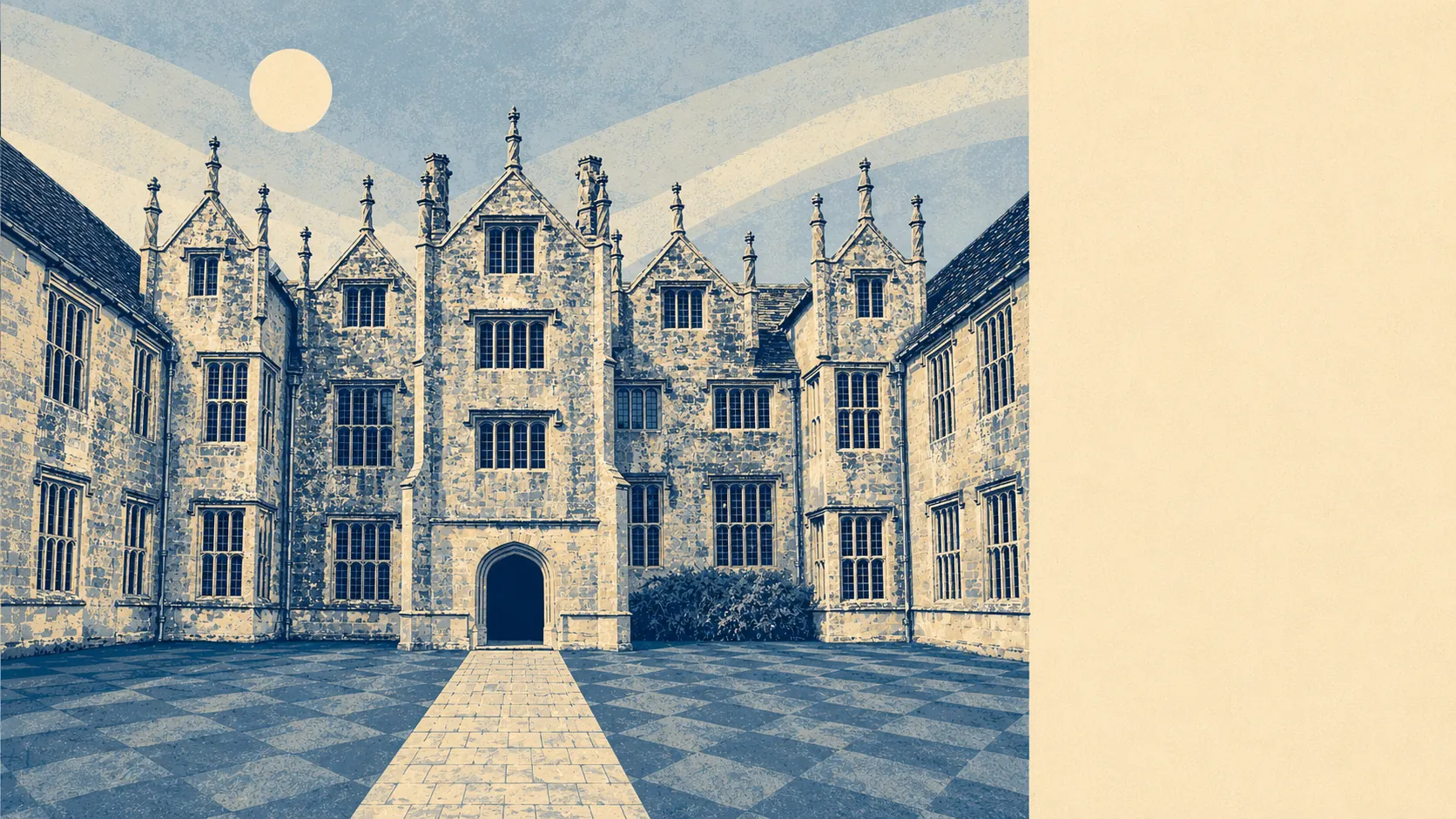
Heritage is the real constraint on what a buyer can do next. The area carries 613 listed buildings, of which 8 are grade one and 44 grade two star, spread across 11 conservation areas including Ilminster itself, Shepton Beauchamp, Dowlish Wake, Barrington and Hinton St George. In practice, that means the window you want, the door you want and the extension you sketched on the back of the viewing brochure are all matters for the planning department first. Buyers who understand this in advance budget for it. Buyers who do not spend a year discovering that their opinion about the colour of their own front door is one of several opinions in play.
The wider Ilminster area, meaning the town and the villages that sit around it, houses about 13,200 people, and this page covers Ashill, Dinnington, Donyatt, Dowlish Wake, Hambridge and Westport, Horton and Broadway, Ilton, Shepton Beauchamp and Whitelackington alongside the town. Home ownership across that area runs at around 74%, the median age is 52, and typical household income before tax was about £53,000 in the financial year to March 2023. Around 30% of households are one person living alone, and roughly 18% of all households are a pensioner on their own, which shapes the demand for everything from bungalows to a shop that still opens on a Wednesday.
It suits people who work remotely, run at least one car without resenting it, want space and quiet more than choice, and are content that the excitement budget goes on the garden. It suits downsizers particularly well, which the bungalow count already told you.
It does not suit anyone commuting by train, anyone who needs a Saturday bus, or anyone whose plan involves buying something old and cheap and then doing whatever they like to it. Younger buyers hoping to start on a flat will find there are barely any.
The town has form for producing people who then left. John Edward Taylor went off and founded the Manchester Guardian in 1821. John Baker emigrated to Australia and became Premier of South Australia. Charles Moore made his name as a geologist and was elected to the Geological Society in 1854. Three men of ambition, three exits.
Ilminster comes out average overall, and the average is made of two very different halves. Its real strength is safety, where the recorded rate sits at roughly half the county's, backed by green space almost everyone can walk to. The weak spot is freedom: between hundreds of listed buildings and eleven conservation areas, this is a place where the house is partly the town's business and always will be. Buy here for the life you already want, not the one you intend to renovate into existence.