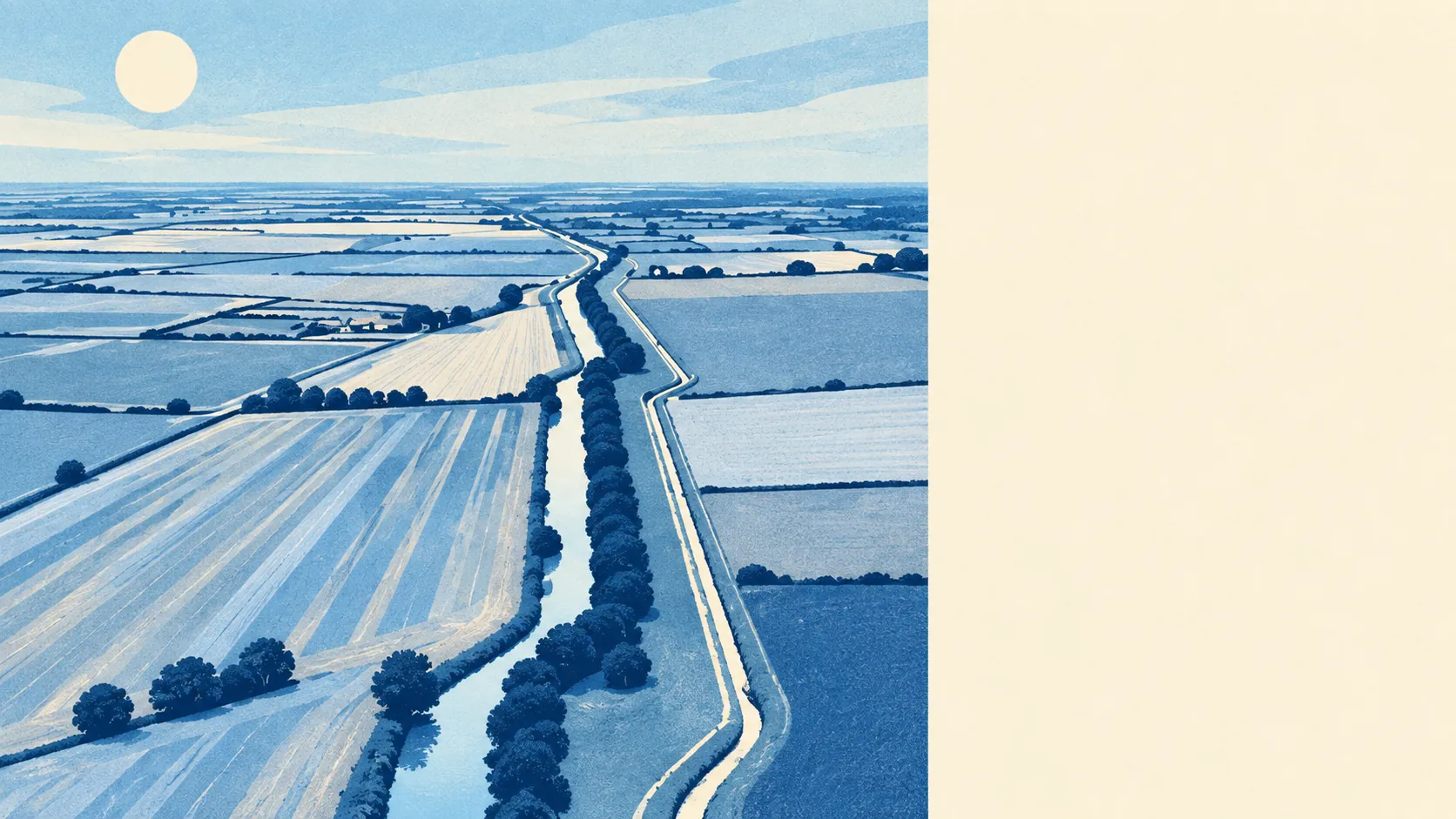
Hythe is a retirement plan with a canal running through it. About three in four own their home. The typical resident is in their mid-fifties. Crime runs well below the rest of the district. A third of the postcodes sit in the flood zones. Comfortable, settled, and damp around the edges.
No single house type runs Hythe, which is unusual for a seaside town. On the council-tax list, flats make up about 24% of homes, semi-detached houses 21%, terraces 21%, detached houses 19% and bungalows 12%, a share that tells you who the town was built to keep. About 29% of homes went up before 1930, so the period stock is there, it just has to share the street with post-war infill. Of the homes holding an energy certificate, about half sit in bands A to C, around 36% in band D and 13% in E or worse. Mains gas heats about 77% of homes, and only about 7% rely on electric heating alone, which spares most buyers the storage-heater surprise that catches people out elsewhere on this coast.
The Land Registry's twelve months to mid-May 2026 recorded 208 sales at a typical price of about £357,000. Detached houses went for around £600,000, semis about £356,000, terraces about £330,000 and flats around £203,000. The gap between a flat and a detached house is the gap between moving to Hythe and retiring to it. Council tax band C is the most common, and about 29% of homes sit in bands A or B.
There is no rent figure for Hythe on its own. The typical private rent across the Folkestone and Hythe area was about £1,140 a month as of April 2026, up about 9% on a year earlier. That number averages the whole district together, and a landlord with a view of the promenade will not be treating it as a ceiling.
Hythe's published crime rate for June 2025 to May 2026 was about 51 per 1,000 residents, against about 85 across Folkestone and Hythe as a whole. That puts the town roughly 40% below its own district. Kent Police charged in about 16% of cases across the force over the same year, above the national rate of about 12%. The most threatening activity in Hythe is scheduled, flagged in red, and run by the army on Hythe Ranges.
The stations serving Hythe are Sandling and Westenhanger, with Folkestone Central and Folkestone West further along, and at the 2021 census about 2% of working residents took the train. About half drove, and about a third worked from home. There are 75 bus stops, averaging about 61 weekday departures each, and 95% of them have a weekend service. Gigabit broadband reaches about 88% of premises and superfast about 99%, which matters more here than the rail map. On the Department for Transport's 2019 modelling, the nearest hospital is about 25 minutes by car and just over an hour by public transport. Nobody picks Hythe for the commute, and the people who try it tend to end up working from the spare room.
Now the serious part. About 32% of Hythe's postcodes fall inside the Environment Agency's highest-risk river-and-sea flood zone, Zone 3, with another 6% in Zone 2. On the wider postcode indicators, which also count surface water, 16% of postcodes carry a high risk on at least one measure. About 17% of postcodes sit within the Romney Marshes Area Internal Drainage Board, and the shoreline plan for this coast is to hold the line over the next 20, 50 and 100 years. Check the specific address before anything else. Against that, the outdoors is close to hand: the nearest green space averages about 150 metres away, water about 180 metres, and a sliver of the Kent Downs Area of Outstanding Natural Beauty reaches the edge of the area. The Royal Military Canal, dug to keep Napoleon out, now mainly keeps dog walkers in.
Hythe carries 132 listed buildings: 3 at Grade I, 4 at Grade II* and 125 at Grade II. The Hythe and Saltwood conservation areas cover the older parts, and there are 10 scheduled monuments in the area, including stretches of that canal and parts of Saltwood Castle. The council logged 310 planning applications in the twelve months to June 2026. If the house you want is listed or inside a conservation area, the replacement windows become a conversation with the council rather than a purchase.
About 73% of households own their home, the median age is 55, and gross household income averaged about £54,000 in the financial year to March 2023. This is a town that has mostly paid off its mortgage and would like the volume kept where it is.
The page also takes in Saltwood, with its castle and its own conservation area, and Lympne, strung along the old sea cliffs above Romney Marsh. Newingreen sits at the junction of the A20 and Stone Street, and Postling a little further up the Roman road. All four trade the town's high street for more quiet, which in Hythe is saying something.
Hythe suits people who want a proper town by the sea without the noise that usually comes with one: couples downsizing, remote workers who need gigabit broadband more than a train, and anyone happy to drive to most places that aren't the seafront. It also suits buyers who will happily pay for a listed house and then spend years arguing with the council about its windows.
It does not suit a daily rail commuter, anyone after nightlife, or a buyer who hasn't checked the flood map for the exact address. If you want the arts scene and the bigger station, Folkestone sells that trade openly. Hythe sells the quiet.
The town has form for quietly impressive residents. Elizabeth Bowen spent her childhood here and came back to retire to Carbery on Church Hill, overlooking the parish church. Cyril Connolly's family were living in Hythe when the First World War began. Kenneth Colley, Admiral Piett in Star Wars, lived here, a much calmer posting than the one the films gave him. Saltwood Castle was the ancestral home of Lord Deedes and later of Kenneth Clark and his son Alan Clark, the diarist, which gave the parish a neighbour who wrote down everything. Hythe also gave the country Mackeson Stout, first brewed in 1909. The brewery closed in 1968, and the stout is now brewed somewhere else under contract.
Hythe is a good place to live, provided you buy with the flood map open. Its real strength is the surrounding area: green space within a short walk, water nearby, the canal, the Downs, and a crime rate well below the rest of the district. The weak spot is flood risk, and on the wrong street it is a serious one. Buy on the right street and Hythe will leave you alone, which is most of what it has ever wanted to do.