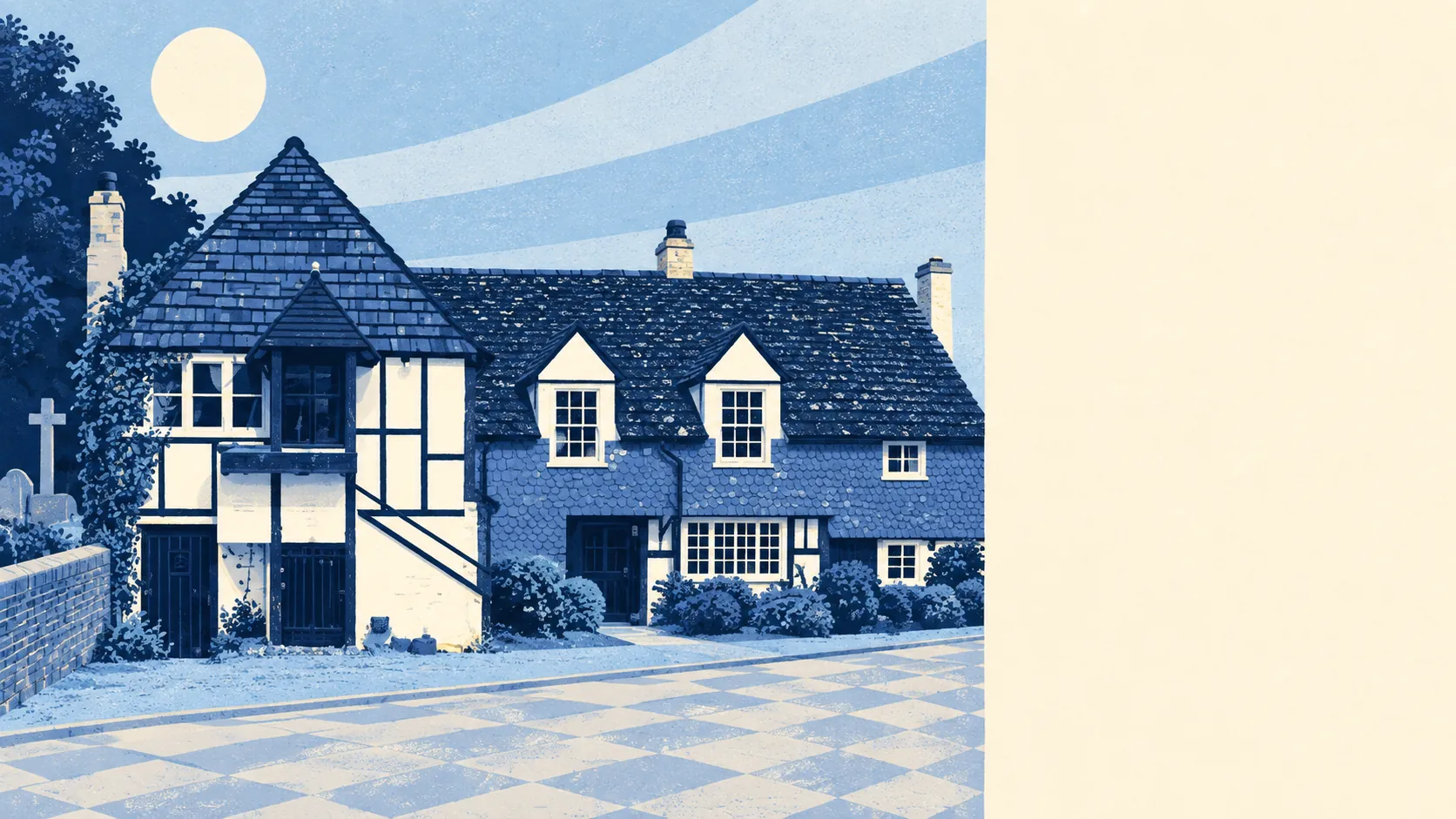
Horley is where Surrey keeps its sensible shoes. Seven in ten own their home. Most of the houses are post-war and none of them are showing off. Gatwick is the next thing south, and the whole town is arranged around getting somewhere else on time. Nobody moves here for romance. They move here because it works.
The housing is a spread, not a type. The council-tax valuation list, which counts every dwelling, puts semis at about 27%, detached houses at 23%, flats at 22%, terraces at 17% and bungalows at 8%. Only 13% were built before 1930, so anyone after cornicing and sash windows will be doing a lot of walking to find very little. The upside of all that post-war and later building shows up on the energy certificates: about 65% of certificated homes sit in bands A to C, and only 8% are E or worse. Heating is mostly conventional, with 78% of households on mains gas and 8% on electric-only heating, which is the one to ask about at the viewing rather than in February.
The Land Registry's last twelve months, to May 2026, put the typical sale at about £430,000 across 304 sales. That number hides four different markets. Detached houses went for around £600,000, semis for £455,000, terraces for £375,000 and flats for £214,000. A flat here costs roughly a third of a detached house, which tells you who the flats are for: people who want to be near the station and the airport and aren't planning to entertain. Council tax clusters in band D, and only 10% of homes sit in bands A or B, so the cheap-band bargain an estate agent might hint at is mostly a rumour.
Renting is priced at the borough level. The typical private rent across the Reigate and Banstead area was about £1,630 a month as of April 2026. That is an area figure, not a Horley one, and a flat near the station will not behave like a four-bed out towards Charlwood.
Surrey Police data puts the crime rate at about 77 per 1,000 residents in the year to May 2026, roughly 4% above the Reigate and Banstead average. That is level with the borough, give or take, and the published figure is the one to trust. Violence and sexual offences make up the biggest share, as they do almost everywhere, because the category sweeps in a great deal of low-level stuff. Public order offences run a little higher than the national share. A town with a railway station and a busy main road through it produces exactly this kind of profile, and it is a long way from alarming.
Schools are the part locals quietly brag about. The seven primary schools in the area averaged about 106 on the Key Stage 2 maths score, comfortably on the right side of the expected standard. Secondary is one school deep: Oakwood School, with an Attainment 8 score of 43. There is no sixth form in town, so the teenage years involve a bus to Redhill, Reigate or Crawley. Across Surrey as a whole, Ofsted has graded 147 of 159 settings good or better. Primary options in and around town include Langshott Primary, Manorfield Primary and Nursery, Trinity Oaks, Yattendon, and the Meath Green infant and junior pair.
Horley Rail Station sits on the Brighton main line, with Gatwick Airport station one stop down. For all that, only 4% of working residents take the train to work, 44% drive, and 37% work from home. The town has 148 bus stops, averaging about 83 departures each on a weekday, though only 60% see any weekend service, so Sunday plans involve a car. Broadband is strong: gigabit-capable connections reach 86% of premises and superfast covers 99%. Mobile coverage from at least one network reaches every postcode.
Flood risk is the thing to check house by house. On the postcode indicators, which include surface water, about 11% of postcodes carry a high flag on at least one measure and 17% a medium one. The Environment Agency's river-and-sea flood zones are tighter: about 1% of the area in zone 3 and 8% in zone 2. The River Mole has form here. Green space is the town's quiet win: the average home is about 186 metres from a green space, with around 20 within a kilometre, and water of some kind about 306 metres away.
Heritage constraints are light. There are 57 listed buildings, one of them Grade I, and three conservation areas: Horley itself, Church Road and Massetts Road. Outside those streets, extending a 1970s semi is a conversation with the planners, not a siege. Inside them, the Church of St Bartholomew sets the tone and the planners will want a word about windows.
The people match the houses. About 70% own their home, the median age is 40, and gross household income averaged roughly £64,000 in the financial year to March 2023, on the Office for National Statistics' modelled estimate. That is a town of settled working households, not retirees and not students. This page also covers Charlwood, the village to the west, which brings the older buildings and the country lanes Horley's own streets mostly lack.
Horley suits the practical buyer. The airport worker who wants a short commute and a proper garden. The family who wants a decent primary school and can live with a bus for sixth form. The London commuter on the Brighton main line who has done the arithmetic on a three-bed semi and stopped pretending Reigate was ever in budget.
It is a poor fit for anyone chasing period character, a lively high street after dark, or silence overhead. If the dream is a Georgian townhouse and a wine bar, this is the wrong postcode, and no amount of staring at listings will change that.
The town has more backstory than it lets on. Horley Motor and Engineering built cars on Balcombe Road between 1904 and 1909, some sold under the name No Name, which is the most Horley branding decision imaginable. Robert Baden-Powell lived here briefly. Robert Smith of The Cure spent part of his childhood here, jazz musician Dick Morrissey was born here, writer Juliet Jacques grew up here, and racing driver Jack Fairman has a pub named after him. A town that produced the frontman of The Cure and then carried on being this cheerful deserves some credit.
Horley is a good place to live, and an above-average one. Its real strength is the surroundings: green space within a short walk of nearly every door, with Charlwood's lanes next door. The weak spot is value, with prices that assume you want Surrey and Gatwick together and are happy to pay for both. Come for the commute, stay for the park at the end of the road, and accept that the planes were here first.