Hastings is a good place to live, once you've checked the water. Green space sits a couple of minutes from almost every front door. A typical home sells for well under £300,000. More than a third of postcodes carry a high flood flag on at least one measure. Cheap and green is a real offer. Cheap, green and unchecked is how people end up on first-name terms with a loss adjuster.
Flats are the biggest single slice of the housing. On the council-tax valuation list they make up 38% of all dwellings, ahead of terraces at 24%, semis at 16%, detached houses at 13% and bungalows at 8%. About 42% of homes went up before 1930, so a good share of the town was built for Victorians who came for the sea air and treated a draught as part of the cure. Of the homes with an energy certificate, 47% reach band C or better, 40% sit in band D and 13% are in E or worse. Around 77% of households heat with mains gas and about 10% run on electric-only heating. In a tall Victorian conversion, that second figure is a question to ask before the viewing, not after the first winter's bill.
The Land Registry's twelve months to the end of May 2026 recorded 983 sales at a typical price of about £282,000. Flats went for around £170,000, terraces £270,000, semis £310,000 and detached houses £410,000. The Office for National Statistics house price index had the average down about 4% over the year to May 2026, so a listing priced on last year's optimism is pitching to a market that has moved on. Band A is the most common council-tax band, bands A and B together cover about 60% of homes, and a band A bill runs to about £1,780 a year. It's one of the few costs in town that stays put.
Rent can't be pinned to a street, because the available figure covers the whole borough. The typical private rent across the Hastings area was about £1,010 a month as of April 2026, up 2% on a year earlier. By size, it runs from about £700 for a one-bed to about £900 for a two-bed and £1,100 for a three-bed. These are averages from an official index, not asking prices, so the seafront flat with the view will want more and will say so in the listing.
Recorded crime comes to about 134 offences per 1,000 residents over the year from June 2025 to May 2026, roughly 3% below the average for the borough as a whole. Shoplifting makes up 14% of recorded crime, against about 8% across England and Wales, which is more of a problem for the tills than for anyone walking home. Sussex Police charged in about 10% of outcomes against 12% nationally. That's a force-wide figure, not a Hastings one, and it doesn't flatter anyone.
The railway is generous. Hastings, St Leonards Warrior Square, West St Leonards and Ore stations sit on lines to London by two routes, plus Brighton and Ashford. At the 2021 Census only 3% of working residents took the train to work, while 46% drove and 27% worked from home. So the town has two routes to London and mostly doesn't use either. The roads are the reason people grumble: Hastings sits in the biggest urban area in Britain with no direct dual-carriageway link to the motorway network, and the A21 to London still jams. The 515 bus stops average 78 weekday departures each. Gigabit broadband reaches 76% of premises and superfast 99%, which helps a town where working from home is more common than the commute.
On flood risk, the two measures need keeping apart. Counting postcodes flagged on at least one flood indicator, surface water included, 38% carry high risk. The Environment Agency's river-and-sea flood zones are much smaller, with about 4% of the area in zone 3 and 1% in zone 2. So the wider exposure comes from the indicators that include surface water, not from the sea walking up the high street. The shoreline plan's policy for the coast is to hold the line for the next hundred years, which is the official way of saying the sea wall stays. The surroundings are the strong point. The nearest green space is roughly 150 metres away on average, with about 25 within a kilometre, from Alexandra Park to St Leonard's Gardens, and open water sits around 300 metres off. The High Weald Area of Outstanding Natural Beauty presses against the northern edge, and Fairlight and Pett give way to open cliff and marsh to the east.
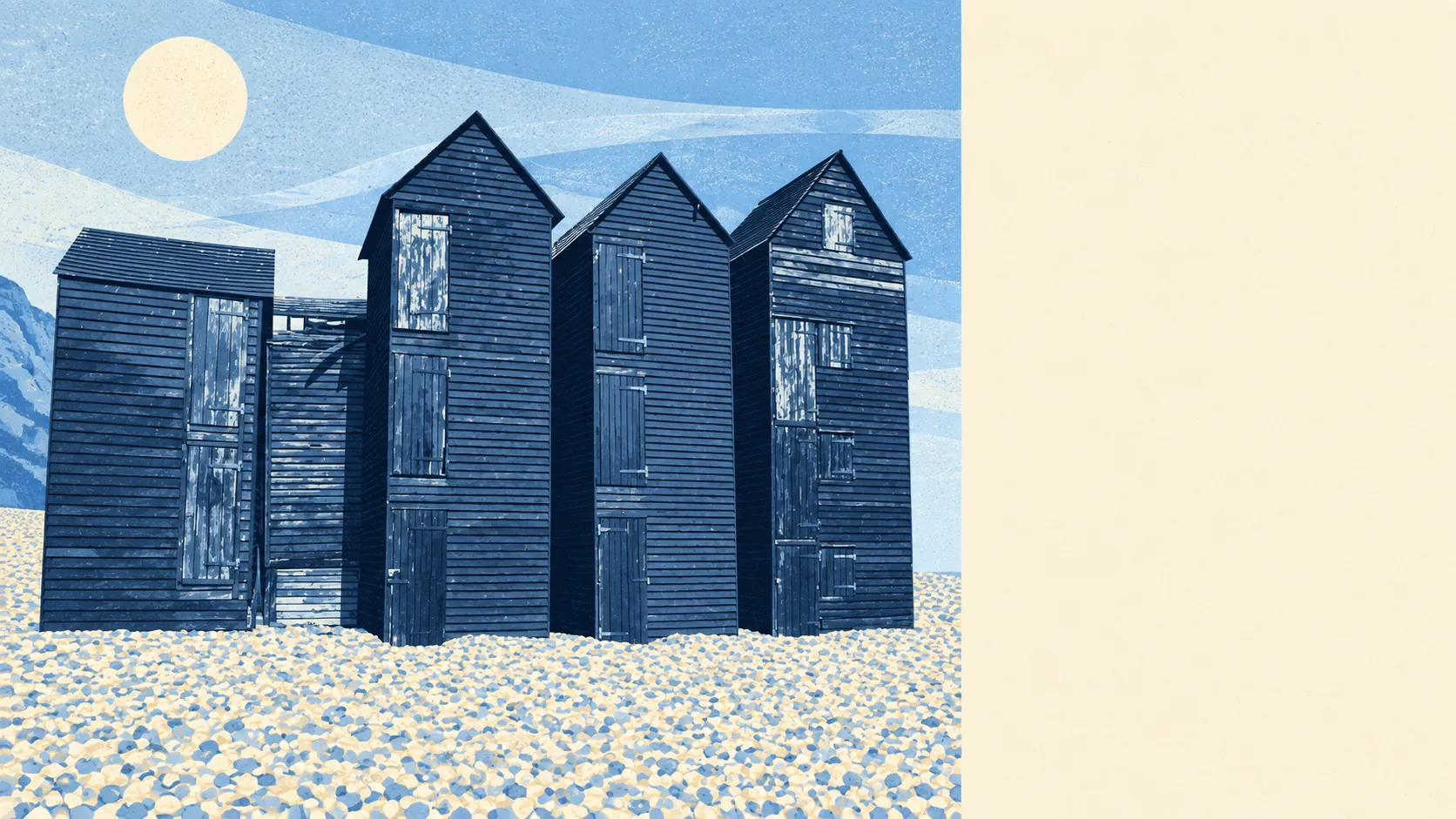
Heritage is everywhere, and it has opinions about your windows. There are 598 listed buildings: Hastings Castle at Grade I, 23 at Grade II* and 574 at Grade II. The town has 18 conservation areas, from Old Town, Hastings to Warrior Square, St Leonards, plus 8 scheduled monuments, and 11 entries sit on the Heritage at Risk register. Even the fishermen's net and tackle stores on the beach are listed. If your plan involves uPVC and a dormer, the planning department got there first.
About 57% of households own their home, the typical resident is around 44, and average gross household income ran to about £46,700 in the financial year to March 2023. That is a town of settled owners and a big rental market side by side. St Leonards-on-Sea to the west and Silverhill in the middle have their own character, Bulverhythe runs along the western seafront, and Guestling sits out on the Rye road. They all get counted as Hastings, and some of them would rather you noticed they aren't the Old Town.
Hastings suits buyers who want a period house or a big flat near the sea for money that won't stretch far elsewhere, who work from home or commute rarely, and who like a town with a past and plenty of green on the doorstep. Energy-conscious renovators who enjoy paperwork will be happy for years.
It suits people less if they need a quick drive to the motorway, want a modern low-maintenance box, or treat a flood search as someone else's problem. Buyers who won't read the flood check are the ones who end up telling everyone the town let them down.
John Logie Baird ran the experiments here that led to the first television image. Robert Tressell wrote The Ragged-Trousered Philanthropists here, a novel about exploited house painters that anyone who has priced repainting a listed sash window will read as current affairs. Catherine Cookson started writing after joining the local writing group, and there's a blue plaque on her old home in Exmouth Place. The place has a long habit of quietly making things.
Hastings lands in the middle, and fairly. Its real strength is what surrounds it: parks, sea and the High Weald within easy reach of almost any address. The weak spot is flood risk, and it's a real one. Buy with the flood check done, and it's a good place to live for the money. Buy without it, and the sea wall won't be the only thing holding the line.