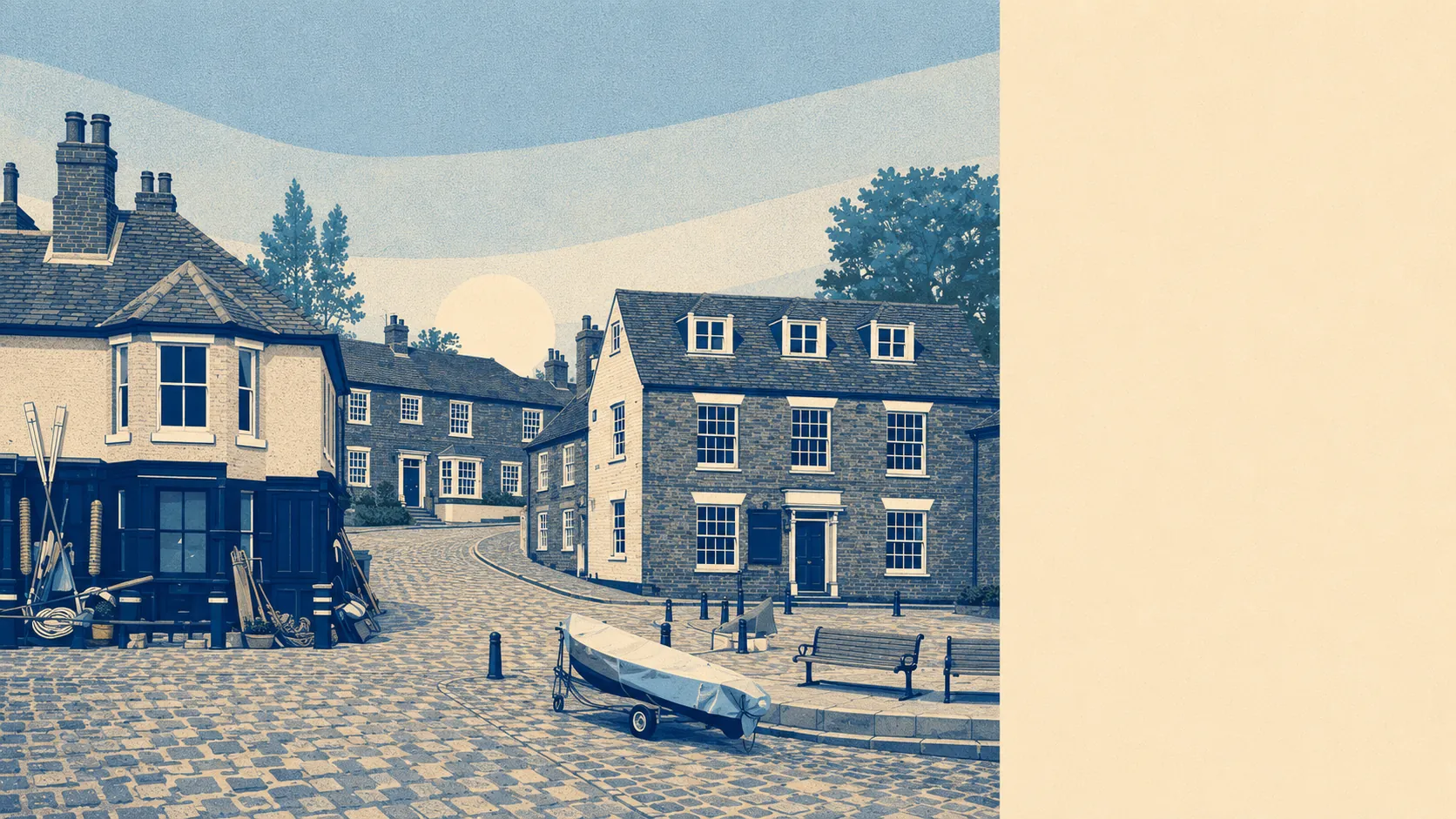
Hamble-le-Rice is a yachting village that mostly gets to the water by car. The median age is 48. Two-thirds of people own their homes. Nearly half the households run two cars or more. This isn't young coastal cool with a marina bolted on. It's comfortable, settled, and it drives everywhere.
The housing backs that up. Seven in ten homes are houses, and only about one in five is a flat, most of those clustered near the marinas rather than in the village proper. The bulk of the stock went up in the late twentieth century, between 1983 and 2002, which is why the energy ratings are better than you'd expect from somewhere with a medieval name. About half the homes sit in the top energy bands, four in ten land in the middle band D, and under one in ten drag along at E or worse. Fewer than one in ten homes predate 1930. Hamble is old as a place and young as a housing estate, and the two facts sit oddly next to each other.
Buying in means paying for the postcode. The typical sale over the past year landed at £315,000, across 59 sales, and that median hides a wide spread. A flat goes for around £242,500. A terrace runs about £295,000. A semi is roughly £329,000. A detached house is £512,500, which is to say the detached buyers and the flat buyers are barely in the same market. Council tax mostly sits in band C, and just over a quarter of homes fall in the two cheapest bands, so the running costs are middling rather than punishing.
Renting is the minority sport here, with about a third of homes rented and most owned outright before that. Across the wider Eastleigh area the typical private rent is about £1,210 a month, and Hamble sits at the pricier end of that borough rather than the cheaper one. That is the area figure, not the village's own, but nothing about Hamble suggests it undercuts it.
Crime is low and honestly low. The published rate is about 60 crimes per thousand residents a year, which runs roughly 11% below the Eastleigh average. This is a place where the marina car parks are the closest thing to a crime scene most weeks, and the numbers earn the reputation rather than borrow it.
The trade-off is getting anywhere. Almost nobody commutes by train, under one in a hundred, even though Hamble has its own rail station, and only a little over one in a hundred takes the bus. Nearly half drive to work, and over a third have given up commuting altogether and work from home. There are a dozen bus stops in the village, which tells you the frequency without anyone having to print a timetable. Broadband, at least, has caught up: standard superfast reaches nearly every home, and two-thirds can get a gigabit line. The internet moves faster than the buses.
The catch that the brochures skate past is water. Nearly one in five postcodes carries a high surface-water flood risk, another one in five sits at medium, and about one in twenty of the area falls inside the Environment Agency's highest river-and-sea flood zone. For a village wrapped around an estuary, that is exactly the risk you'd predict and exactly the one buyers talk themselves out of. Against that, the green space is genuinely good. The average home sits around 180 metres from open green space, with a dozen green spaces inside a kilometre, and the water that occasionally threatens the place is also the reason anyone moved here.
If you buy something old, the paperwork comes with it. The village holds 37 listed buildings, two of them in the higher grade II star bracket, plus one conservation area covering Hamble itself. In practice that means the picturesque core around The Square is protected, and altering a listed frontage there means asking permission for things other villages take for granted. Most of the housing stock is modern enough to escape all of this, so the constraint bites a small and expensive minority.
The people match the property. Two-thirds own their homes, the median age is 48, and the typical household income is about £65,000, comfortably above the national middle. This is a place people arrive at and stay, not a place they pass through. It featured in Howards' Way back in the 1980s and has spent the decades since quietly becoming the kind of village that show was selling.
It suits a particular buyer. If you want a house rather than a flat, you sail or at least like being near boats, you work from home or don't mind driving, and you have the income to sit in the £300,000-and-up bracket, Hamble does exactly what it says on the tin.
If you need a train into a city every morning, want a cheap way onto the coast, or expect to rent long-term without paying Eastleigh's top rates, this is the wrong village. And if the flood map makes you nervous, believe it rather than the estate agent.
Hamble-le-Rice rates as an above-average place to live, and the split behind that score is clear. The community itself is the strongest thing about it, settled, safe, and well-off in a way the data ranks as excellent. The weakest thing is the water, with flood risk the one dimension that genuinely drags the place down. Buy here for the village and the neighbours and you're buying the best of it. Just buy on high ground.