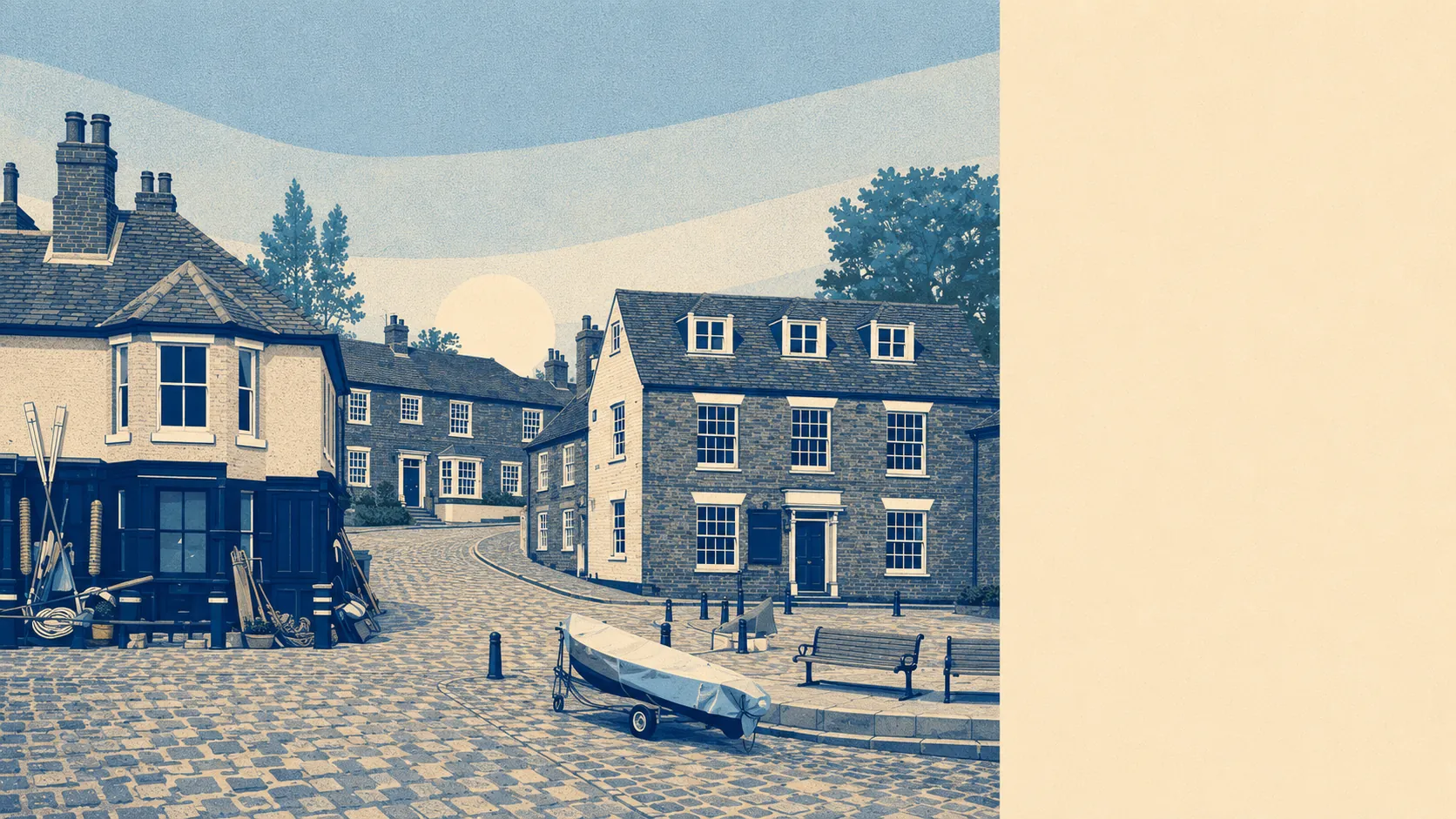
Yes, you can extend a house in Hamble-le-Rice, and most owners have a freer hand than the village's picture-postcard core would lead you to expect. There are 37 listed buildings in the area, but only a couple carry the higher grades. One conservation area covers the historic heart of the village. The bulk of the housing stock is modern enough to sit outside all of it. The heritage brakes here are real, but they are clamped onto a small slice of the place rather than the whole of it.
Start with the listed buildings, because they are the tightest constraint and the least flexible. Of the 37 listed structures in the area, none sit in the top grade one band, two hold the middle grade two star status, and the remaining 35 are grade two. If your home is one of them, altering it means listed building consent for changes that affect its character, inside as well as out, and the higher the grade the less room you get to argue. Replacing windows, moving internal walls, even some repairs can need sign-off. That is the price of owning a piece of the village's history, and 37 homes across a whole parish is a modest number of people paying it.
The conservation area is the broader net. Just one covers the older centre of Hamble, and living inside it brings extra consents that owners on the newer streets never think about. Within a conservation area the council keeps a closer grip on the things that shape the streetscape, so changes that would be automatic a few roads away can need permission, and trees and demolition come with added protection. It is less restrictive than outright listing, but it is the reason two identical-looking projects can hit very different amounts of paperwork depending on which side of the boundary they fall.
For most people, though, none of this applies. The housing stock leans heavily late twentieth century, with only about one in fifteen homes dating from before 1930, so the majority of houses in Hamble carry ordinary permitted development rights and can add the usual rear extension or loft conversion without a fight. The proof is in the volume: around 500 planning applications went into the council across the past year, which is not the profile of a place where nobody gets to build anything. Extensions plainly happen here. What decides your project is location rather than the village name, because the modern estates and the protected core play by different rulebooks.
Extending in Hamble-le-Rice comes out as a middling proposition, neither a free-for-all nor a lockdown: straightforward on the newer streets, a genuine paperwork exercise in the conservation heart and the listed handful. Find out which Hamble your house sits in before you pay anyone to draw the plans.