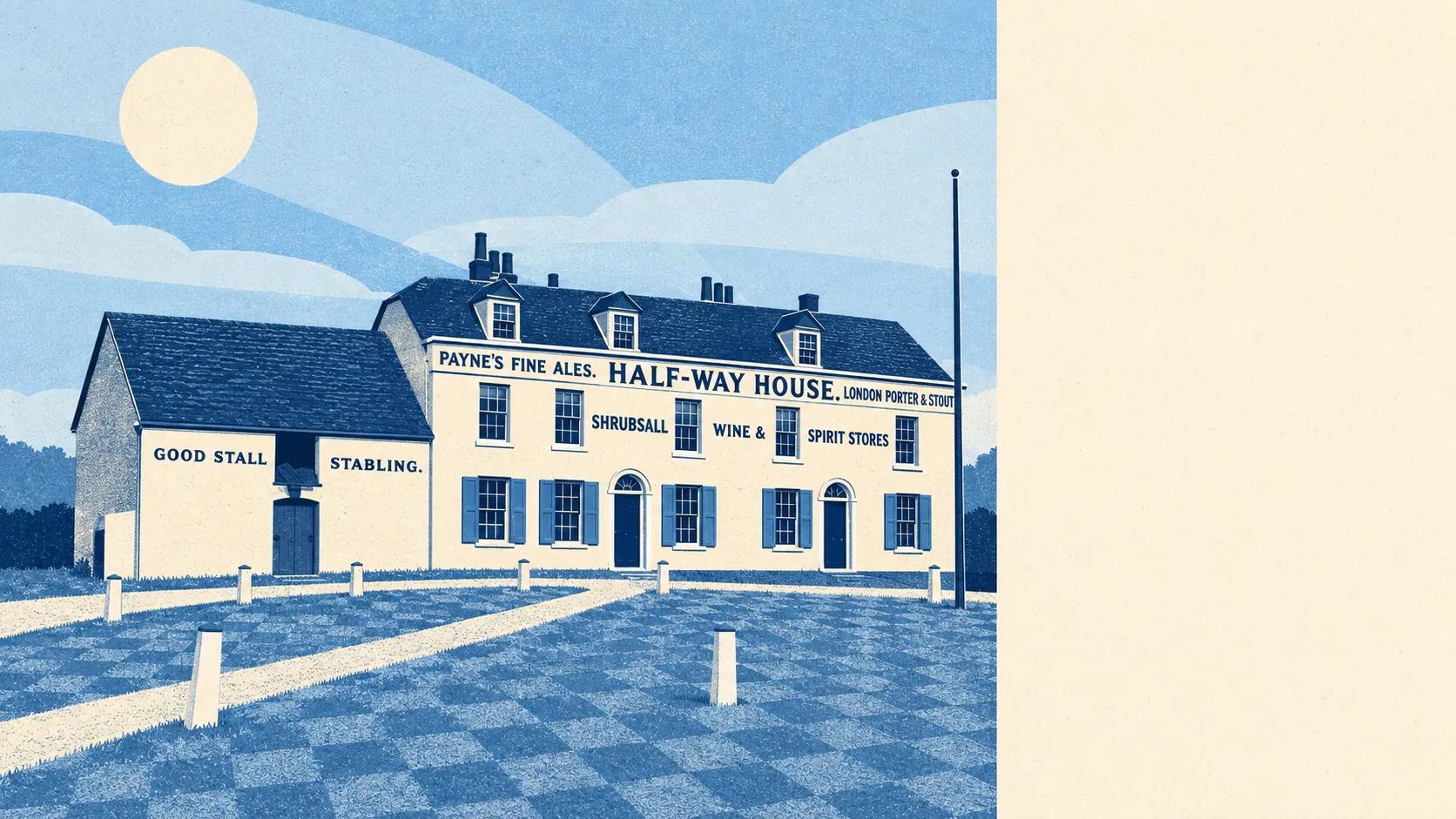
The area around Halfway Houses is green, watery and on the doorstep, which is more than many tidier suburbs manage. Parks and open space are a short walk from almost anywhere. Water is closer than most buyers expect. Pubs outnumber restaurants. No landscape designation covers any of it, and the dog walkers have never noticed.
Green space is the easy win. The typical home sits about 166 metres from the nearest green space, with around 12 green spaces within a kilometre. That is close enough that nobody needs to drive to walk.
Water is nearly as close. The typical home is about 400 metres from blue space, the planners' word for ponds, drains, creeks and anything else wet, with around 27 bodies of water within a kilometre. On low ground on an island, that is not a surprise. Some of it is scenery and some of it is drainage, and from the footpath the two look much the same.
The National Cycle Network is further off, about 1.2 kilometres from the typical home, and no postcodes sit close to it. There is no ancient woodland in the area. Cycling here means ordinary roads, not a signposted route from the front gate.
Across the wider ME12 postcode district, the property ownership records count 271 shops, 30 pubs and 21 restaurants, alongside 105 offices and 14 holiday lets. Those cover Sheerness and Minster as well as Halfway Houses, so they describe the island end the village sits in rather than its own high street. Thirty pubs to twenty-one restaurants tells you how this corner of Sheppey prefers to spend an evening.
Fine-particle air pollution across the Swale council area averaged about 7.1 micrograms per cubic metre in 2024. That is a council-area figure, not one measured on any particular street.
The character comes from what sits around it. Sheerness is one side, Minster the other, with Queenborough, Rushenden and Marine Town all within the same stretch of the island. Queenborough Castle and the nunnery site at Minster Abbey are scheduled monuments nearby, which gives the island more history per square mile than the bungalows would lead anyone to expect. The coast itself sits a median of about 1.9 kilometres from the typical home: close enough to visit, far enough that nobody lives on the promenade.
Private gardens do the rest. Halfway Houses has about 102,000 square metres of private garden for every 1,000 residents. That is real outdoor space attached to the houses, which explains why the public parks are used for walks rather than for anyone's only patch of grass.
Inside the area itself, the valuation list holds 98 rateable premises. Shops are the largest category at 24, followed by a spread of warehouses, stores, workshops and cafés. These are premises on the list, not a count of businesses open today, and a vacant unit counts just the same as a busy one. It is a working edge of the island as much as a residential one.
Of the 28 food premises with a hygiene rating, about 64% hold the top score and none sit at the bottom. Nobody here is eating out somewhere the inspector would rather not discuss.
No area of outstanding natural beauty, site of special scientific interest or ancient woodland overlaps the area. That is not a flaw. It means the green space here is for using, not for protecting from the people using it.
The surroundings are one of Halfway Houses' real strengths: green space and water within a short walk of nearly every door, backed by private gardens most suburbs would envy.