Hackney Central is a fair, middling place to live, but the home you buy here comes with a rulebook. The neighbourhood packs in 257 listed buildings and 25 conservation areas, and every one of them shrinks what an owner can change. The parks are close. The trains are close. Permission for a dormer on the roof is further away than either.
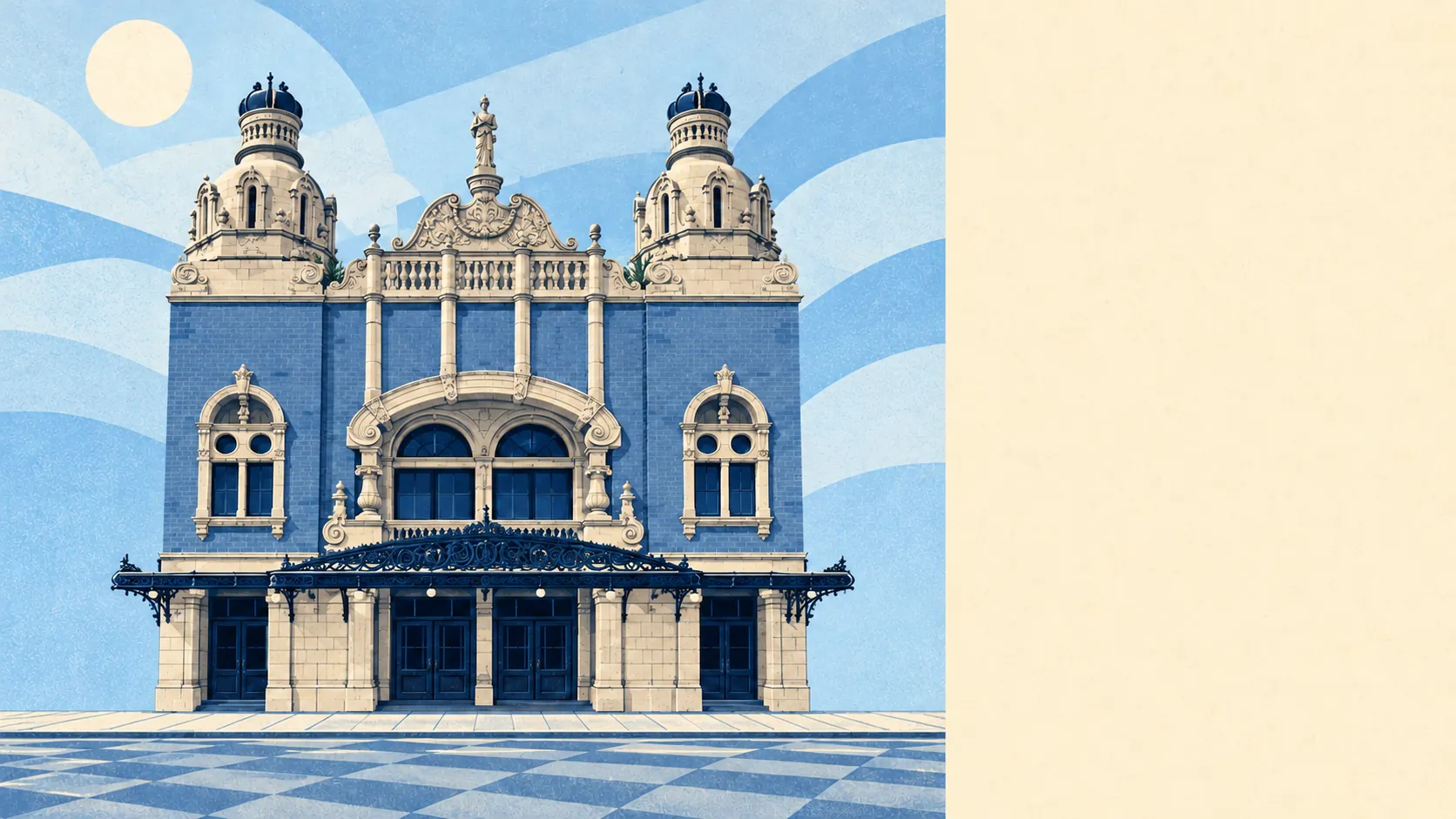
Historic England's list covers six buildings at Grade I, 12 at Grade II* and 239 at Grade II across Hackney Central and the streets around it. They run from St Augustine's Tower, the oldest building in Hackney, to Frank Matcham's Hackney Empire on Mare Street. The 25 conservation areas include Clapton Square, Albion Square, Broadway Market, Mare Street and De Beauvoir. Inside them, windows, doors, roof lines and front boundaries are the council's business as well as the owner's. Fourteen of the listed buildings are on Historic England's Heritage at Risk register, so the protection has not always stretched to keeping the grand ones in good repair. Sales particulars love the words "period features". They rarely mention that the features come with a legal guardian.
The Metropolitan Police recorded crime here at a published rate of about 193 offences per 1,000 residents in the year to May 2026, roughly 26% above the average for Hackney as a whole. The mix leans towards the street. Theft from the person makes up about 10% of recorded crime, against about 2% across England and Wales, and anti-social behaviour about 21%, against 16% nationally. Violence and sexual offences, the biggest category almost everywhere, come to about 21% here, well under the national share of 35%. Theft from the person means pickpocketing and snatching, which is the crime of a high street that never empties.
Flooding comes in two versions, and they disagree for a good reason. On the Environment Agency's river-and-sea flood zones, none of the area falls in zone 2 or zone 3. Add surface water, though, and about 37% of postcodes rate high on at least one flood indicator, with about 35% rated medium. The name Hackney comes from a Saxon settlement on raised ground in a marsh, and in a heavy downpour the drains are reminded of it.
The neighbours are young, educated and mostly renting. Only about 23% of households own their home, while about 41% rent socially and 32% rent privately. The typical resident is about 34, and about 57% hold a degree. Median household income across the area comes to about £68,700 a year, an Office for National Statistics model of gross income for the financial year to March 2023. Plenty of those earners would buy if they could. Here, a good salary gets you a good landlord.
Getting about is the easy part. Hackney Central station is on the London Overground, westbound towards Richmond and Clapham Junction and eastbound to Stratford, and Hackney Downs nearby runs trains to Liverpool Street. London Fields, Homerton, Dalston Junction and Dalston Kingsland are all close. There are 149 bus stops in the area, and a typical one sees about 27 buses in the peak hour, with every one of them served at weekends. About 69% of households have no car at all. Gigabit broadband reaches about 92% of premises, and about 54% of working residents worked from home at the 2021 Census.
The Land Registry's twelve months to May 2026 recorded 284 sales at a typical price of about £587,500. That figure is mostly flats. 240 of those sales were flats, at a typical £550,000, while 35 terraced houses went for about £1,042,500 and seven semi-detached houses for about £1,400,000. Band C is the most common council-tax band, and about 30% of homes fall in bands A and B. Seven semis changed hands all year, so anyone after a side return to build into needs patience as well as money.
Renting is no escape hatch. Hackney's typical private rent across the whole borough came to about £2,620 a month as of April 2026, on the Office for National Statistics' index, up about 3% on a year earlier.
The housing stock is overwhelmingly flats. On the council-tax valuation list, about 84% of dwellings are flats and about 14% terraced houses, with semis at about 1% and detached houses barely there at all. About 35% were built before 1930, so the classic purchase is a Victorian house carved into flats, though the post-war estates and the newer blocks make up the rest. About 67% of homes with an energy certificate rate C or better. About 62% heat with mains gas and about 16% rely on electricity alone.
Outdoors, Hackney Central does far better than the size of its gardens suggests. The nearest green space is typically about 100 metres from the front door, there are around 70 within a kilometre, and water is about 620 metres away, with London Fields on one side and the Regent's Canal and Victoria Park conservation areas within reach. Private gardens are scarce, so the park becomes everyone's back garden, and on a sunny Saturday everyone turns up to use it.
Dalston, De Beauvoir Town, London Fields and Shacklewell all fall inside this patch, and the same trade holds in each. You get a flat near a station and a short walk from a park. In exchange, the building is someone else's heritage.
This is the right place for a buyer who wants a flat, has no car, would live in the park if allowed, and plans to change little beyond the paint. Families hoping to add a loft room or push a kitchen into the garden should look elsewhere. Even the rare houses that come up tend to sit inside a conservation area, and permission for the extension takes longer than finding the house did.
In the end, Hackney Central is a fair place to live for people who take a home as it comes and a frustrating one for people who buy to rebuild. The green space on the doorstep is excellent, and the plans you can draw for the house are tightly limited. Buy the layout you can live with, because the council will have views on the one you wanted.