Gillingham is a good place to live if you choose the street before the town. Terraces run the show. About two-thirds own their homes. The nearest park is a stone's throw from most front doors. Crime runs above the Medway average. Get the street right and the rest of the town is easy company.
The terrace is Gillingham's dominant fact, much as the dockyard used to be. On the council-tax valuation list, about 42% of homes are terraced, 21% are flats, 19% are semis, 10% are detached and 7% are bungalows, and 28% were built before 1930. That older stock is New Brompton's legacy: the defensive Lines blocked building near the dockyard, so housing for its workers went up beyond them. Energy certificates split the town down the middle. About 49% of certificated homes rate A to C, 41% sit in band D and 10% are E or worse. Band D is where Gillingham lives, the energy-certificate version of "could try harder". About 81% of homes heat with mains gas and about 7% are electric only. If the terrace you're viewing is one of those, ask about the bills before you ask about the loft.
The Land Registry recorded 1,020 sales in the year to late May 2026, at a median of £310,000. Type moves the number a long way. Terraces went for a median of £280,000, semis £355,000, detached houses about £500,000 and flats £174,000. That last figure is the cheapest ticket in, and the word "spacious" on a listing starts meaning something once you reach the semis. Band B is the most common council-tax band, and bands A and B together cover about 40% of homes, so the annual bill tends to be kinder than the asking price.
For renters, typical private rent across the Medway area was about £1,240 a month as of April 2026, up roughly 4% on a year earlier, according to the Office for National Statistics' rent index. That is a council-wide figure, not Gillingham's own. By size, the Medway typical runs from about £900 for a one-bed to about £1,340 for three bedrooms. About a fifth of Gillingham households rent privately, so you won't be the only one on the street waiting on a landlord to fix the boiler.
Safety is the weak entry on a decent report. Police.uk records put Gillingham at about 124 crimes per 1,000 residents in the year from June 2025 to May 2026, roughly 15% above the Medway average. Violence and sexual offences make up about 36% of the total, close to the national share of 35%. Anti-social behaviour is 19% against 16% nationally, and criminal damage is 9% against 7%. Kent Police charged someone in about 16% of cases over the same period, against about 12% nationally. Estate agents will call the High Street "lively". The honest version is that the numbers run hotter than the rest of Medway, and a buyer should walk the street at night before signing.
Schools are the part that holds up. Ofsted has graded 40 settings in the area, and 37 of them are good or better, including 4 outstanding. Two are rated inadequate, so check the specific school rather than the average. Across 29 primary schools the average end-of-primary maths score is about 104, and the seven secondary schools average about 46 on the government's Attainment 8 measure at 16. The secondary list includes Rainham Mark Grammar School, Rainham School for Girls, The Howard School, Brompton Academy and The Robert Napier School. With grammar schools on that list, parents start talking about one particular test much earlier than any of them will admit.
Gillingham (Kent) and Rainham (Kent) stations both sit inside the patch, and Chatham is next door. Even so, only about 4% commute by train, about 49% drive and about 27% work from home. Two stations and half the town still drives: the railway is for London days, while ordinary Tuesdays go by car. There are 482 bus stops, averaging about 23 weekday departures each, and about 82% of them have a weekend service. Department for Transport modelling from 2019 puts the town centre about 15 minutes away by public transport. Gigabit broadband reaches about 94% of premises, so working from home is easy here.
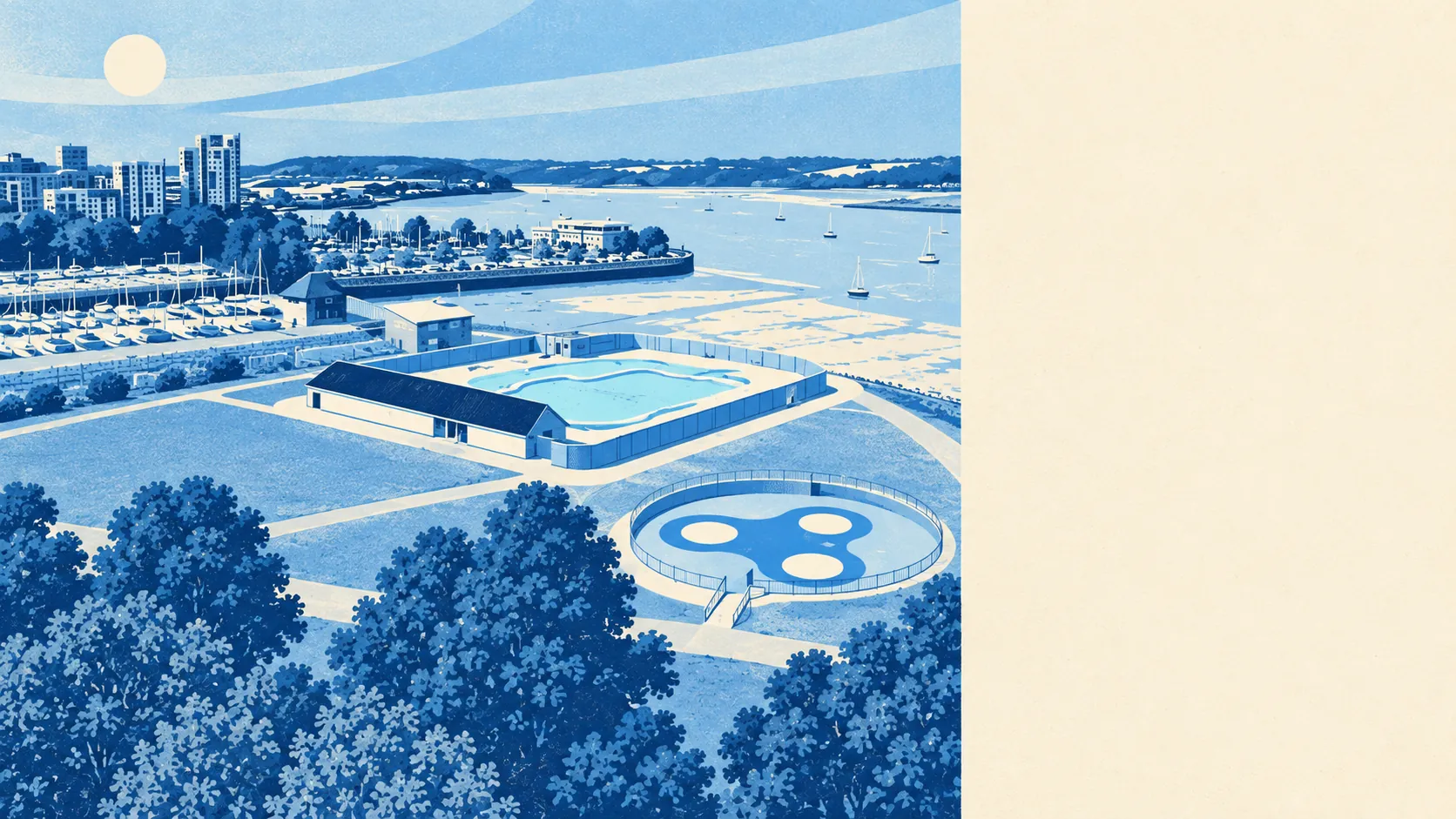
Flooding needs a careful read. On the Environment Agency's river-and-sea flood zones, about 5% of postcodes fall in Flood Zone 3 and about 1% in Zone 2. On the wider postcode indicators, which include surface water, about 12% of postcodes carry a high rating on at least one measure and 16% a medium one. The two figures measure different things, and a buyer near the water should check the exact address. Green space is where Gillingham wins outright. The nearest patch is about 155 metres away on average, with around 21 green spaces within a kilometre, including the Great Lines Heritage Park and the Lower Lines Park. Gillingham Marina adds a stretch of water for anyone who wants one.
The history comes with rules. The surrounding area holds 213 listed buildings, 16 of them Grade I and 44 Grade II*, alongside 14 conservation areas and 50 scheduled monuments, many of them tied up with the old dockyard and its defences. Gillingham Green, Gillingham Park, Lower Rainham, Lower Twydall and Brompton Lines are all conservation areas. Buying in one means tighter controls on what the outside of your house can become. The Dutch sailed up the Medway in 1667. Getting a plastic window approved in Lower Rainham can feel like the harder campaign.
About 65% of households own their home, the median resident is 39, and modelled gross household income averaged about £56,500 in the financial year to March 2023. It isn't a retirement town and it isn't a student town. It's a town of people roughly halfway through a mortgage. The page also covers the neighbourhoods around the centre. Rainham stretches east, and Twydall has two Palmerston forts, one of which gave its name to a whole style of fortification. Wigmore sits by junction four of the M2, Hempstead runs along its valley, and Bredhurst is still a village on the far side of the motorway.
Gillingham suits a buyer who wants a proper house for the money, has children close to school age and likes a park at the end of the road. First-time buyers, commuters who only go to London a couple of days a week, and anyone who can live with a terrace will find the numbers on their side.
It doesn't suit a buyer who wants to put a big stamp on a period house, or who needs the High Street quiet after dark. If your plans involve a dramatic rear extension in a conservation area, or a front door that opens onto silence at eleven at night, pick your street very carefully or look elsewhere.
Gillingham is better than average, and it gets there without fuss. Its real strength is the surrounding area: parks and open space close to almost every front door, with the schools not far behind. The weak spot is how little freedom you get to change a home, because so much of the town's history is protected. Choose the street first and the town takes care of the rest.