The area around Gants Hill is much greener than its traffic suggests, and most front doors are a short walk from some green space. The typical home has around twenty green spaces within a kilometre. There is water within a ten-minute stroll. The gardens are bigger than you would expect in a suburb this dense. The roundabout is what people know the place for, but the parks are where residents spend their time.
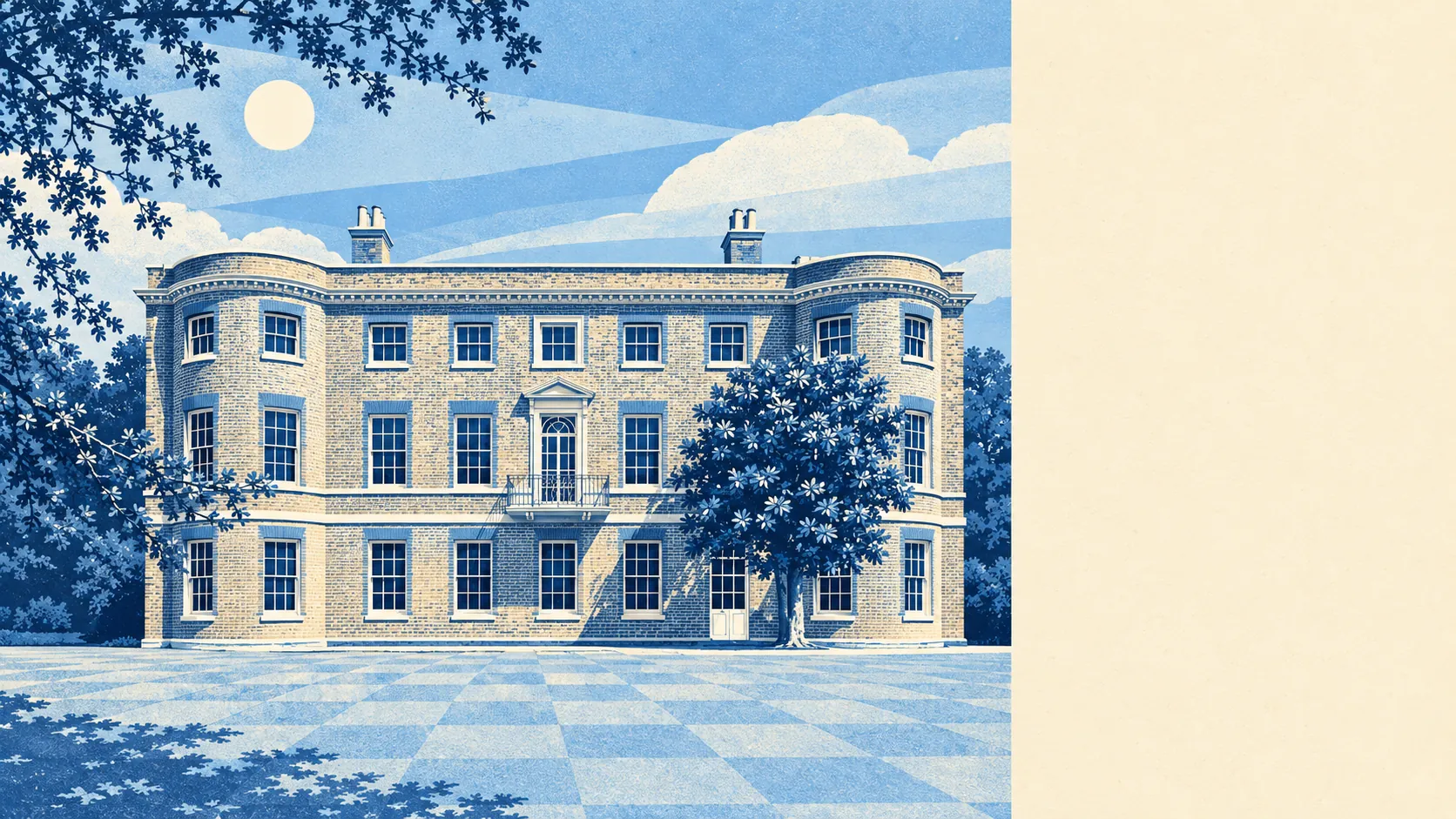
On average, the nearest public green space is about 200 metres from home, and the typical home has around 21 green spaces within a kilometre. The biggest is Valentines Park, which fills the land between Gants Hill and Ilford and comes with a historic mansion. Most residents can reach grass faster than they can reach a bus stop.
The nearest water is about 640 metres away on average, with around 13 ponds, lakes or watercourses within a kilometre of the typical home. None of them is the sea, but that is a decent amount of water for a suburb in East London.
The National Cycle Network is about 5 kilometres away on average, and no postcode in the area counts as close to it. There is no ancient woodland. Getting out into the countryside means a journey, but getting out into a park takes a couple of minutes.
The rated-premises count gives 265 shops, 20 restaurants and 2 pubs. For an area of this size, that is a lot of shops and very few pubs, so most evenings out mean a restaurant or a bar.
Across the Redbridge council area, fine-particle pollution averaged about 9 micrograms per cubic metre in 2024.
Gants Hill is suburban and arranged around its roads. Perth Road runs through the Commonwealth Estate, where the streets are named after cities of the former colonies, including Colombo, Auckland, Toronto and Melbourne. The old Odeon cinema, which opened as the Savoy, was demolished in 2003 to make room for a block of flats, which shows what the area needed more by then. The conservation areas at Valentines Mansion, Mayfield and Barnardo's Village Homes give some streets an older character than the interwar terraces around them.
People here have more private outdoor space than the density suggests, at about 43,000 square metres of garden for every 1,000 residents. Most houses have a garden of their own, and on a terraced street that matters.
The council's valuation list has 630 rateable premises in the area, and shops and offices are the two largest groups among them. These are premises on a tax list, so some may be empty and the list says nothing about who is trading this week. Taken together, they describe a district shopping centre with offices above it.
Of the 159 food premises rated for hygiene, about 62% hold the top score of five and about 11% are at the low end of the scale. Most places to eat are clean, and a minority are not.
No area of outstanding natural beauty, site of special scientific interest or ancient woodland overlaps Gants Hill. It is an ordinary suburb with public parks and private gardens, and none of its green space needs a protective designation for people to use it.
For green space within a short walk of home, Gants Hill does better than nearly any suburb could ask. The park and the garden are both close by, even if the countryside is not.