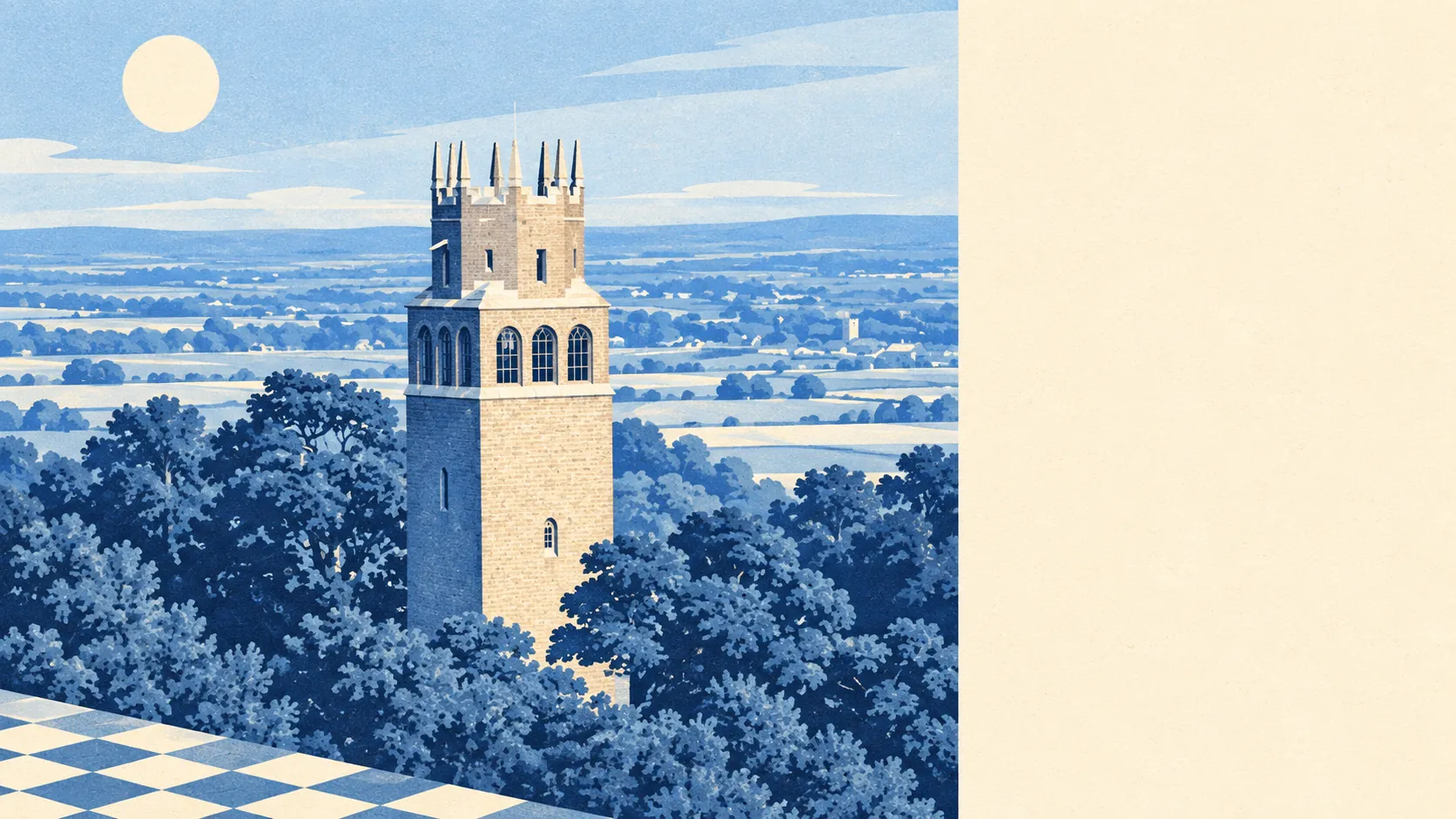
Faringdon is a small town with an unfair amount of countryside wrapped around it. Green space is a short walk from almost every front door. Water is closer than most people expect. The private gardens are generous. The town is the part you drive through to get to the good bit, and here the good bit starts at the end of the street.
Green space is the area's strongest suit. The average home sits about 120 metres from the nearest green space, and has around 21 green spaces within a kilometre. That is closer than many suburbs manage to their own recycling bins. Nobody in Faringdon needs to plan a walk; they need to decide which direction.
Water is nearby too. The average home is about 430 metres from the nearest blue space, with around 12 stretches of water within a kilometre. The town's views reach the Thames to the north and the Ridgeway to the south, which is a lot of landscape for a place this size to have on permanent display.
The rated-premises records count 65 shops, 14 pubs and 8 restaurants. That is a market town's high street rather than a destination, with the pubs doing more of the social lifting than the restaurants. Fourteen pubs for a town this size suggests the residents have their priorities in order.
Air quality is measured at council level. Fine particles across the Vale of White Horse averaged about 6.6 micrograms per cubic metre in 2024.
The surroundings carry more than their share of history. The Great Barn at Great Coxwell, the Iron Age earthworks at Badbury camp and Little Coxwell camp, Kelmscott Manor and the park and gardens at Buscot are all within reach of the town. Uffington, a few miles south, brings the White Horse hill figure with it. Little Coxwell has the Eagle Tavern and, less predictably, the office of the Hurlingham Polo Association, the governing body for polo in the UK, which is the kind of fact that tells you exactly what sort of countryside this is.
Private outdoor space is ample. Faringdon has about 127,000 square metres of private garden for every 1,000 residents, the measure that shows how much outdoor space people actually own. The housing may be mostly post-war and later, but the plots were drawn for people who wanted a lawn and a shed and got both.
The business rating list counts 232 rateable premises in the area. The largest groups are 54 shop premises, 42 offices, 22 warehouses and stores and 18 industrial premises, with smaller numbers of restaurants and other uses behind them. These are premises on the valuation list, not a count of businesses currently trading, but the mix describes a working town with a trading estate attached rather than a commuter village with a tea room.
Eating out comes with a clean bill of health. Of the 48 food premises with a published hygiene rating, about 77% hold the top score of five, and about 2% sit at the low end. The odds of a decent kitchen are good. The odds of a varied menu are a separate question.
No protected-landscape designation overlaps the area. There is no area of outstanding natural beauty, no site of special scientific interest and no ancient woodland within it. That is not a fault. It means the countryside here is working farmland and open vale, and nobody needs a permit to enjoy it.
The surrounding area is Faringdon's real strength: green space on the doorstep, water within a short walk and a landscape of barns, hill forts and manor houses that most towns would put on a tea towel.