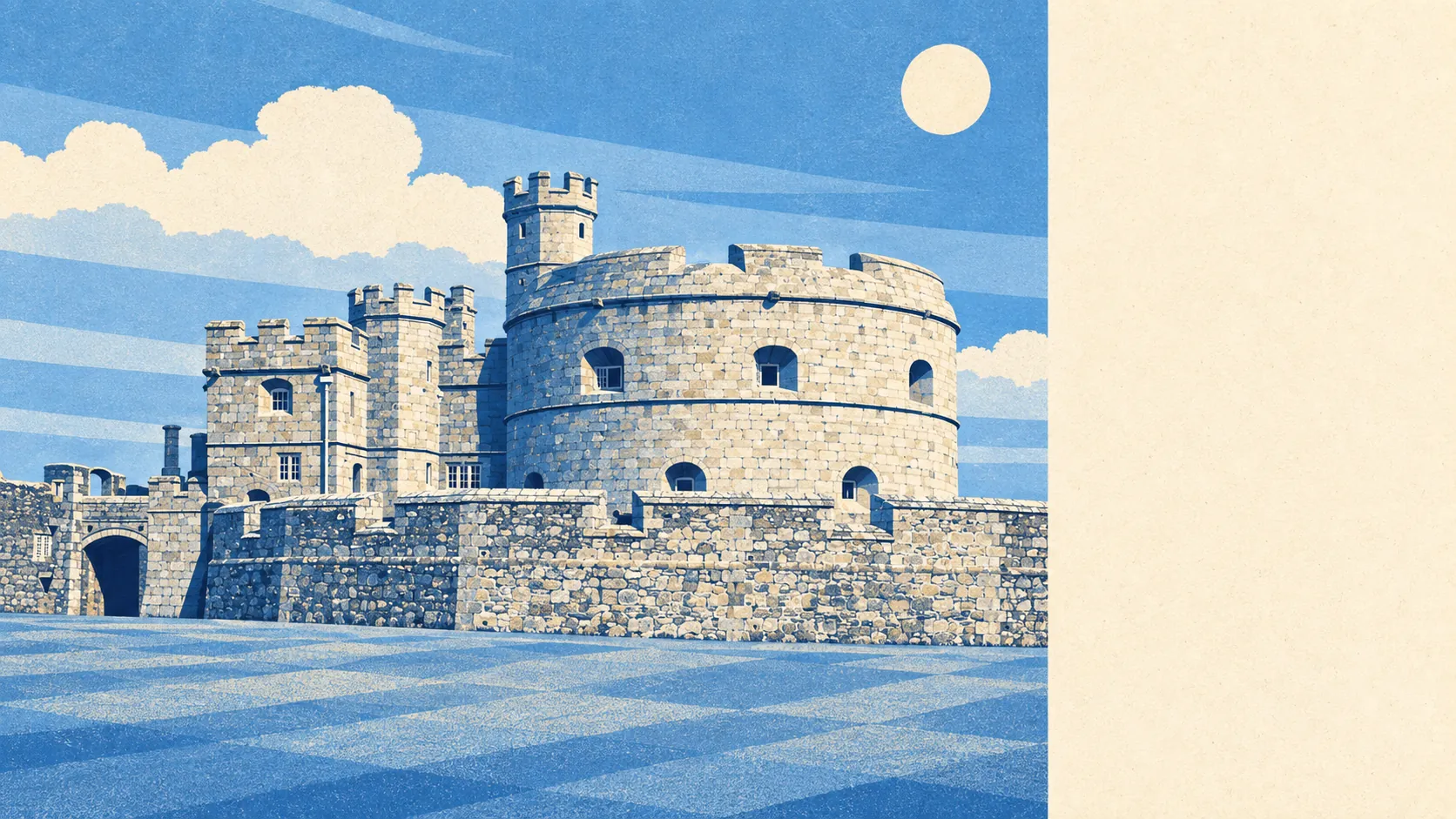
The surroundings are the best thing Falmouth owns, and it does not have to try. Green space starts roughly a two-minute walk from the average front door. Open water is barely further. The town sits on one of the deepest natural harbours in the world with creeks running inland in three directions. This is a place where the landscape is not a weekend destination, it is the thing at the end of the street.
For parks and open space, the average postcode here has about 22 separate green spaces within a kilometre, with the nearest sitting around 150 metres away. Twenty-two is not a park and a playing field, it is a network: Kimberley Park near the town centre, the gardens at Penjerrick and Enys out towards the parishes, the cemetery ground, and a scatter of smaller commons and recreation grounds through the villages.
Water is closer still, and there is a ridiculous amount of it. Blue space sits around 237 metres from the average postcode, with roughly 57 separate stretches of it within a kilometre. That is what happens when a town wraps around the Fal, the Carrick Roads and a set of creeks, with the Helford River a short way south. Falmouth also runs ferries to St Mawes, Flushing, Trelissick, Malpas and Truro, so the water functions as infrastructure rather than scenery.
The National Cycle Network is the weak link. The nearest route sits around 7 kilometres from the average postcode, and no postcodes here count as close to one, so long-distance cycling starts with a drive or a stretch of ordinary road. There is no ancient woodland recorded in the area either.
The trading mix is more urban than the coastline suggests. The rating list carries 321 shop premises, 40 restaurants, 33 pubs and 125 offices, which is a proper working town centre rather than a seasonal parade. It also carries 564 holiday lets, which is the single most honest number on this page about how the area earns its living and why the streets feel different in February.
Fine-particle air pollution for the Cornwall council area measured around 5.1 micrograms per cubic metre in 2024. That is a council-wide figure rather than a street-level one.
The character shifts fast as you move out. The town itself is dense, steep and busy around the harbour and the university. Within a few minutes you are in Swanvale or Boslowick, which are ordinary residential Cornwall, and a little beyond that in Budock Water, Mawnan Smith, Mylor Churchtown and Mylor Bridge at the head of its creek, or down at Maenporth and Port Navas where the road runs out at the water. Constantine sits further inland, and Restronguet Weir and Flushing are close enough to see across the water and awkward enough to drive to.
Private outdoor space is the part the public figures miss. Across the 15 neighbourhoods measured here, private gardens work out at roughly 97,600 square metres per 1,000 residents, which is a genuinely generous amount of ground for a town with this much terraced and flatted stock. The gardens are often long, thin and stepped up a hillside rather than square and level, but they exist.
On the valuation list there are 1,261 rateable premises in total across the area, dominated by shops, offices, storage and workshop units. Those are premises rather than trading businesses, so the count describes the built commercial fabric rather than what is open on a Tuesday in January.
Eating out is reliably fine. Of 214 rated food premises, about 84% hold the top hygiene score and about 1% sit at the bottom of the scale, which for a town with this much seasonal turnover in kitchens is a better record than the trade usually manages.
One honest absence: no area of outstanding natural beauty, no site of special scientific interest and no ancient woodland overlaps this area. The landscape here is working coast and farmland rather than designated landscape, which means fewer protections on the view and, to be fair, fewer people arriving to photograph it.
The setting is exceptional and it is the reason to be here. Green space at the end of the road, water at the end of nearly every other one, and gardens bigger than the architecture implies, in a town that treats all of it as ordinary.