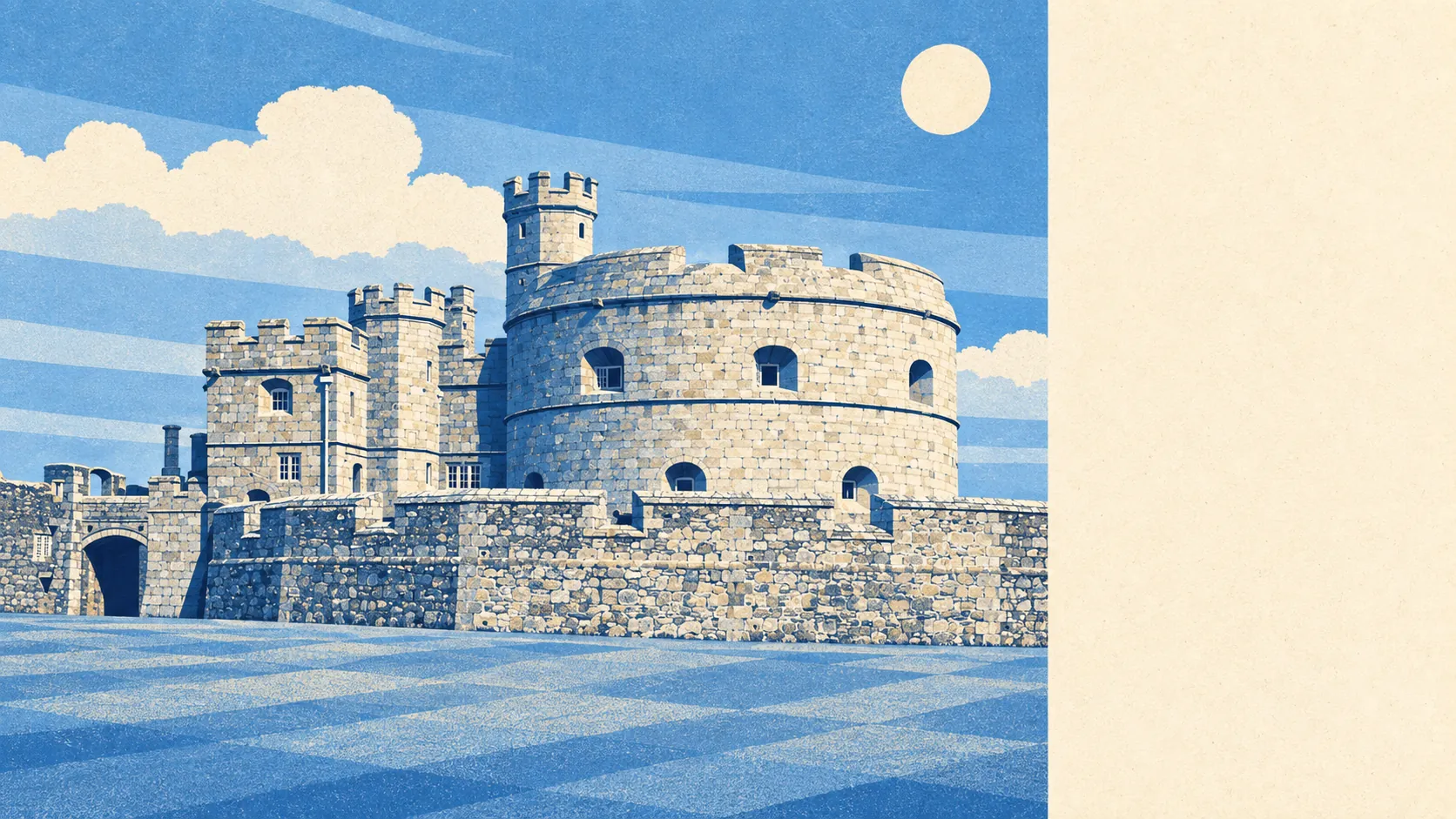
Yes, but in a good part of this town the planning department gets the casting vote. Close to three hundred buildings here are listed. Two conservation areas cover the old core and the village across the water. Around one in seven postcodes carries a mining legacy underneath. Plenty of people still alter their homes here, they just do it with consent in hand rather than a skip and an optimistic weekend.
There are 290 listed buildings in and around the town, of which 2 are Grade I, 15 are Grade II star and 273 are Grade II. Listing attaches to the whole building rather than the pretty bit at the front, and it covers the inside as well as the elevation, so listed building consent is needed for anything affecting character: windows, internal walls, chimneys, render, roof coverings, and usually the things a builder would describe as like-for-like. Doing the work without that consent is a criminal offence rather than a retrospective paperwork problem, which is the part people learn late.
Two conservation areas sit within the area covered here, at Falmouth and Flushing. Inside one, permitted development rights are narrower than elsewhere, the council can require consent for demolition and for works to trees, and materials and detailing are assessed against the character of the area rather than your own taste. Cladding, satellite dishes, replacement windows and side extensions that would be automatic on a post-war estate all become conversations.
Four scheduled monuments also sit within the area. That is the strictest protection in the system, and it matters mainly if your boundary runs close to one, in which case the works consent regime is separate from ordinary planning and considerably less flexible.
None of this stops anyone. Cornwall Council logged 1,278 planning applications across the area between April 2024 and June 2026, with 573 of those in the most recent twelve months. Whatever the constraints look like written down, people here submit applications by the hundred, and the volume is the best evidence available that altering a home in Falmouth is a normal thing to attempt rather than a doomed one.
Underneath, there is the old Cornish problem. About 15% of postcodes in the area carry a recorded mining legacy, and 16 postcodes sit directly over a recorded working. In practice that means a mining search on purchase, potentially a specialist report before any works that load the ground, and occasionally a lender or insurer wanting to see one before they commit. It is a due diligence step rather than a verdict on any particular house, and a positive search is a reason to instruct the right surveyor, not to walk away.
The practical shape of it: outside the conservation areas and away from anything listed, a modest rear extension or loft conversion follows the ordinary rules that apply anywhere in England, and a great many of them evidently do. Inside the protected areas, or on a listed building anywhere in the town, assume consent is needed for more than you expect and get pre-application advice from Cornwall Council before you pay an architect to draw something the answer is already no to.
Freedom to alter is the thing this town gives you least of. A dense heritage core, two conservation areas and mining ground underneath make it a place where the extension happens on someone else's timetable, and where the houses with the most character come with the least room to change them.