Yes, provided you want a town with a job rather than a view with a town attached. Six in ten own their homes. A fifth of households keep no car at all. Half the housing sits in the two cheapest council tax bands. Falmouth is a working port that learned to be charming, which is a different animal entirely from a resort that learned to work.
The housing stock splits four ways and refuses to settle. Flats take about 29% of every dwelling on the council tax valuation list, terraces 28%, semis 19%, bungalows 12%, and detached houses only 10%, which is the clearest sign you are in a town built up a hill rather than out across a field. Roughly 30% of it went up before 1930. Energy certificates put about half the stock in bands A to C, 35% in band D, and 15% in band E or worse, so the granite and slate charm comes with a bill attached. Around 69% run on mains gas. About 13% are heated by electricity alone, and in a pre-war terrace that is the kind of detail worth knowing before the second viewing rather than after the first winter quarter.
Prices are the part that makes people from up-country sit forward. The Land Registry recorded 289 sales in the twelve months to May 2026 at a median of £325,000. Flats came in around £238,000, terraces around £310,000, semis around £335,000, and detached houses around £545,000, which is where the view tax finally shows up on the invoice. The commonest council tax band is B, and about 51% of dwellings sit in band A or B. A town that looks expensive in photographs is, in bands, unremarkable.
Renting is harder to pin to the town itself. The best figure available is the typical private rent across the Cornwall area, about £1,000 a month as of April 2026, up 4.6% over the year. That is a whole-county average taking in everything from moorland cottages to Truro flats, so treat it as the shape of the market rather than a quote for something with a harbour glimpse.
Safety is the weak point and there is no polite way around it. The published rate is about 86 recorded crimes per thousand residents in the year to May 2026, roughly 16% above the Cornwall average of 74. The mix explains most of it: shoplifting makes up about 14% of recorded crime against 8% nationally, and anti-social behaviour about 17%. That is the signature of a town centre carrying far more people than live in it, which is exactly what a harbour, a university and a summer do to a high street. Devon and Cornwall Police charged in about 8% of cases over the same year, against 12% nationally, which is its own kind of answer.
Connectivity is better than a Cornish postcode suggests. Falmouth has three stations of its own, Falmouth Docks, Falmouth Town and Penmere, with Penryn one stop up the branch, all feeding the line to Truro. There are 214 bus stops in the area, averaging 29 weekday services each, and every stop with service data also runs at weekends, which is not a given west of Exeter. Around 45% drive to work, about 29% work from home and roughly 16% walk. For broadband, gigabit service reaches about 79% of premises and superfast about 89%, with no premises falling below the universal minimum, and around 95% of the area gets a signal from all four mobile operators. The catch is the hospital: about 33 minutes by car, and about an hour by public transport.
Water is the reason the town exists and the thing to check street by street. On the postcode indicators, which include surface water and every flood source going, about 9% of postcodes carry a high rating, 11% medium and 30% low. On the Environment Agency's river-and-sea flood zones the picture is tighter, with about 1% of the area in zone 3 and about 7% inside the climate-adjusted extent. Against that, green space sits about 150 metres from the average postcode with roughly 22 separate patches within a kilometre, and open water about 237 metres away. The median postcode is around 418 metres from the coast. You do not commute to the outdoors here, you fall into it.
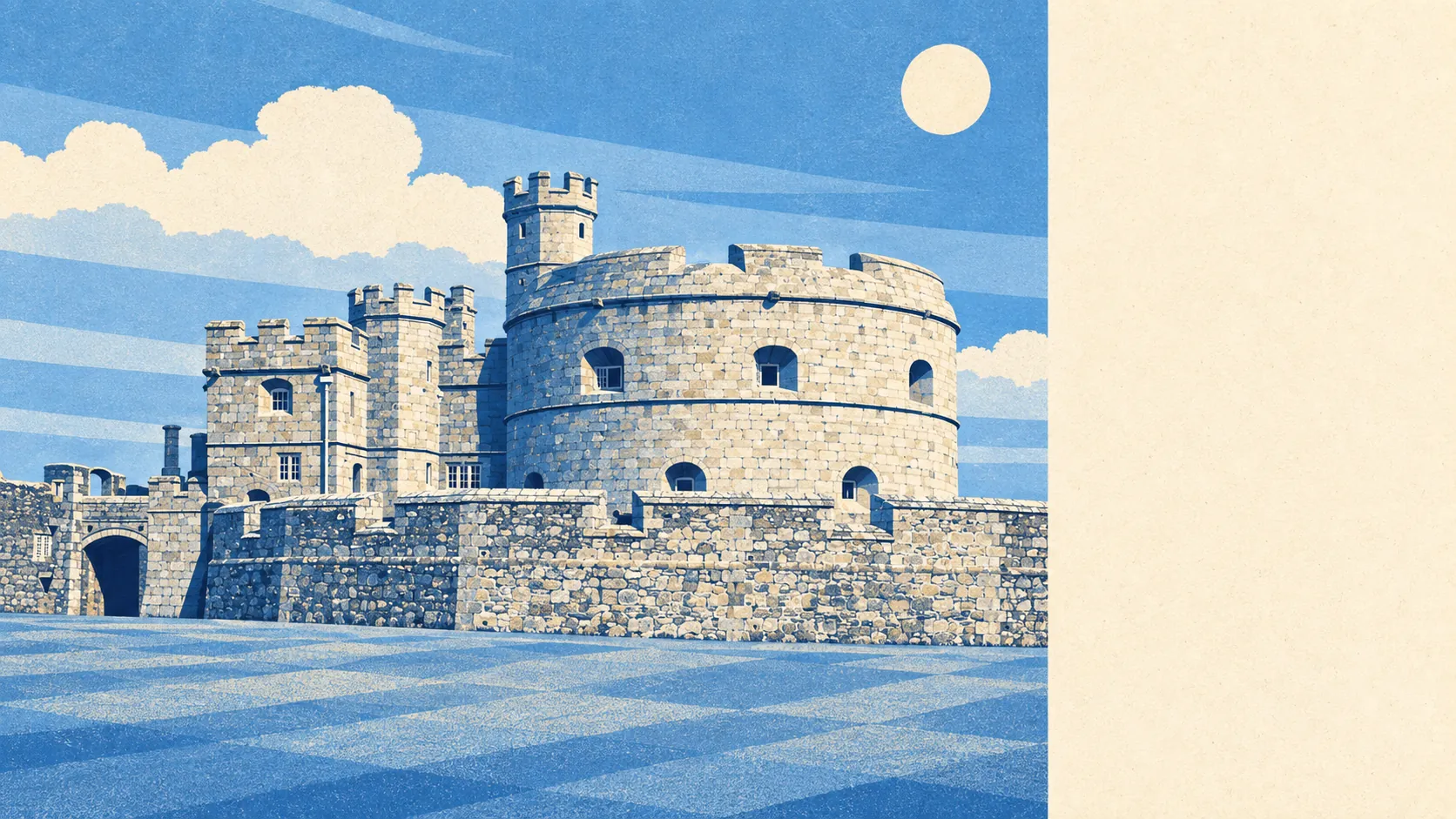
Heritage is where the renovation dreams meet the planning portal. There are 290 listed buildings in and around the town, two of them Grade I and fifteen Grade II star, along with four scheduled monuments and two conservation areas at Falmouth and Flushing. Pendennis Castle is listed, which surprises nobody, but so are quays, gate piers and ordinary-looking terraces on Church Street and Arwenack Street. Owning inside the conservation grid means the windows, the solar panels and the shade of the front door are a conversation with someone else before they are a decision of yours.
The people are less transient than the seasonal noise implies. About 61% own their homes, the median age is 39, and the median household income runs to roughly £48,000 in the financial year to March 2023. The page also takes in the villages around the water, Budock Water and Mawnan Smith inland, Mylor Bridge at the head of its creek, Constantine further west, and Port Navas on the Helford, where the population goes up sharply in July and the parking goes down accordingly.
Buy here if you want a walkable town with real employment, a boat within reach, and the sort of green and blue access that people in the home counties pay a premium to pretend they have.
Think harder if you need a hospital ten minutes away, a driveway, or a high street that behaves the same in February as it does in August, because Falmouth does none of those three.
The town has always exported people who went on to be useful elsewhere. Josiah Fox, born here in 1763, ended up designing frigates for the United States Navy. William Odgers, born here in 1834, came home with a Victoria Cross. Charles Darwin stepped off the Beagle onto this quay in 1836 and got straight on a coach to Shrewsbury, which is the most Falmouth thing in the historical record: people arrive by water and leave by road. Dawn French took the university chancellorship in 2015 and stayed, which restores the balance somewhat.
Falmouth earns its keep. Its real strength is the setting, the green space and the water, which are close enough to the front door to change how you spend a Tuesday. The weak spot is safety, and specifically a town centre that absorbs the friction of everybody else's day out. Live five minutes up the hill from that and you get the best version of this place, with the noise firmly downhill where it belongs.