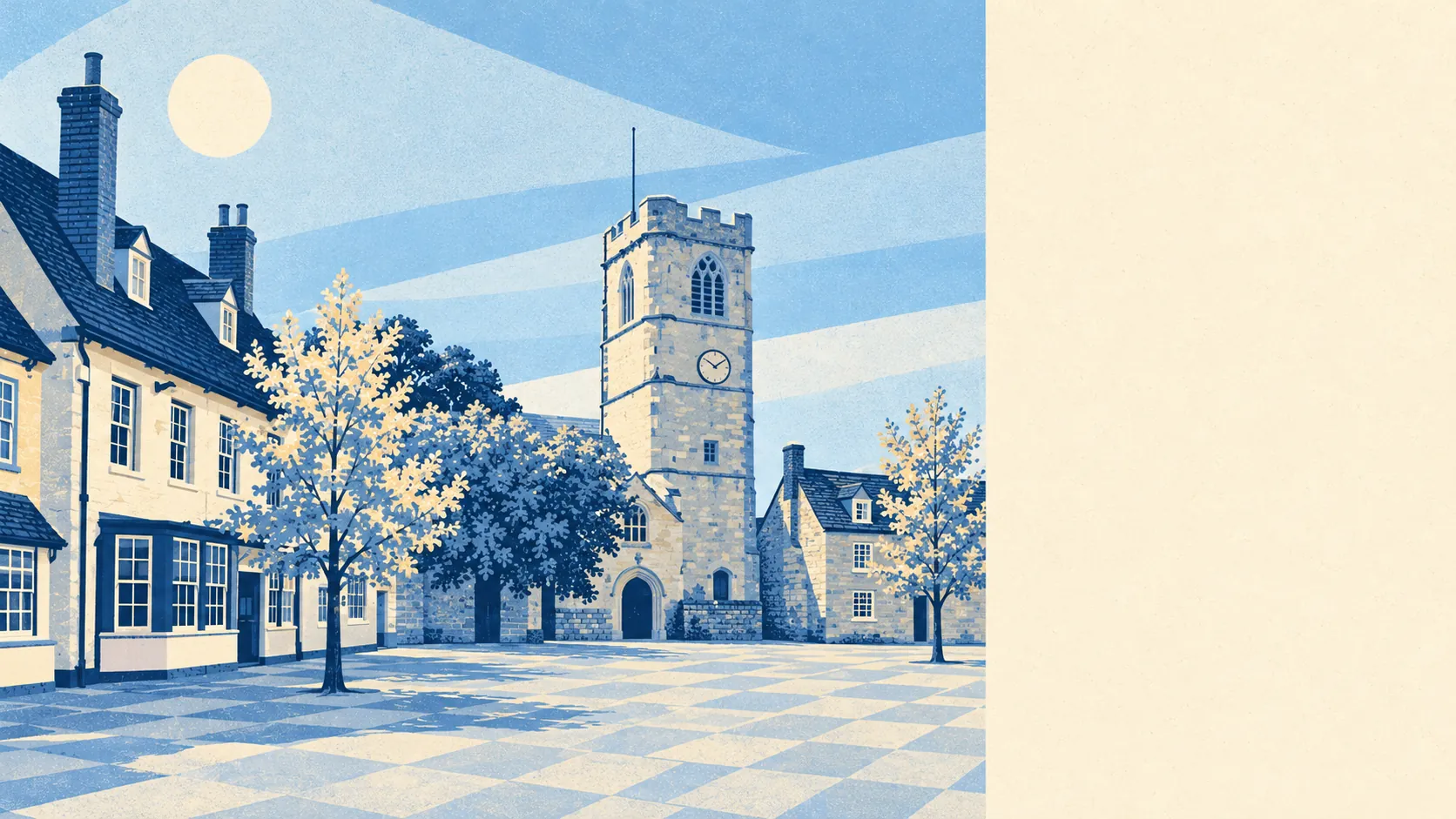
Eynsham grew up beside a Thames ford on the flood plain and has stayed remarkably dry ever since, which is the main reason it makes a sound buy. About one postcode in twenty carries a high flood flag of any kind. Around one in fifty falls in the river-and-sea high-risk zone. A village that began as a river crossing and keeps its carpets dry has done the hard part already.
The Environment Agency's postcode flags give the fullest view. They count every flood indicator, surface water included, and about 5% of Eynsham's postcodes carry a high rating on at least one of them, 8% a medium and a quarter a low. The river-and-sea flood zones put it lower still: about 2% of postcodes in the high-risk zone and 1% in the medium one. The Environment Agency has one recorded flood here, in July 2007, when the main river overtopped a channel with no raised defences beside it. Wharf Stream and the Thames both earned their place in the village's history. On today's mapping they have mostly stayed in their banks.
Around 68% of households own their home, according to the 2021 Census, and the typical resident is 47. The Office for National Statistics models gross household income at about £68,700 for the financial year to March 2023, averaged across the wider statistical area that takes in Eynsham. Those are the figures of a commuter village that has paid off a fair chunk of its mortgage. The dinner parties are full of solicitors and very short on student debt.
Green space is about 215 metres from the average front door, and water about 390 metres, with the Thames and its tributaries close enough to walk to after dinner. Swinford Bridge, a scheduled monument, still carries traffic over the river. Eynsham Lock was the last flash lock on the Thames and wasn't rebuilt as a pound lock until 1928, so this stretch of river has a long record of resisting improvement.
Getting about is the weak side, and every buyer who commutes feels it. Rail means Hanborough or Combe, and fewer than one working resident in a hundred took the train at the 2021 Census. About 44% drove, 36% worked from home and 6% took the bus. The bus is better than its share suggests. There are 32 stops, each averaging 86 weekday departures, about four an hour at peak, and 93% of stops also have a weekend service. The Department for Transport's modelled times, from 2019, put the nearest town centre at about 27 minutes by public transport and 18 by car, and a hospital at 45 minutes by public transport. Those 2019 figures date faster for bus and rail than for car journeys. Broadband is less of a worry: gigabit-capable connections reach about 75% of premises and superfast 99%. Most of Eynsham commutes to the router.
The Land Registry recorded 43 sales in the year to May 2026, at a median of £390,000. Detached houses went for around £608,000, semis for £385,000 and terraces for £360,000, so the step from terrace to semi is small and the step to detached is large. The Land Registry's house price index puts the local average down about 2% over the same year. Band C is the most common council tax band, and only about 9% of homes sit in bands A or B. Cheap is the one thing Eynsham never got round to building.
Renting gets priced at West Oxfordshire's level, where the Office for National Statistics puts a typical private rent at about £1,270 a month. That is an average for the whole district, and it says nothing specific about a three-bed on Eynsham's high street.
The housing is a fairly even split. The council tax valuation list, which covers every home, puts semis at about 29%, terraces at 27%, detached houses at 24%, bungalows at 10% and flats at just 9%. Only about 19% of homes were built before 1930, and the energy certificates point mostly to post-war building. On those certificates 56% of homes rate band C or better, 33% band D and 11% band E or worse. About 82% of homes heat with mains gas. Eynsham is mostly a village of sensible semis with sensible boilers, and nobody moving here should be braced for a damp cottage.
Thames Valley Police recorded about 46 crimes per 1,000 residents in the twelve months to May 2026, around 13% below the West Oxfordshire average. That is a published rate for the four small statistical areas that make up the village, and the district comparison is the sensible one to make. Eynsham's own history has been rougher on property than its residents are now. Fires in 1629 and 1681 took out whole rows of houses, and the parish kept its own fire engine in the Bartholomew Room until 1949.
Eynsham has 77 listed buildings, one at Grade II* and 76 at Grade II, plus one conservation area covering the old centre. The site of Eynsham Abbey and the market cross are both scheduled monuments. Owners of a listed home or one inside the conservation area will need consent for changes that a 1960s semi on the edge of the village makes without asking. The abbey was founded in 1005, became one of the largest in the area and was dissolved in 1538, leaving few remains. Getting permission for new windows is a long way down from that.
Ælfric of Eynsham, the abbey's first abbot, was one of the most prolific writers in Old English, so the village was producing literature before most of England had spelling. The modern list of notable residents includes Kingsley Amis and Mollie Harris. This page also covers Church Hanborough, which brings a small slice of the Hanborough side under the same roof.
Eynsham is right for households with a car or a home office who want a proper village with a working centre, a dry footprint and the city within reach. Buyers who need a train to London from their doorstep, or who don't want to drive to a hospital, will find the bus timetable starts to rule their week. Families moving up a size will feel the gap between the semi and the detached price.
The flood picture is the best thing a buyer gets here. A village on the Thames flood plain where only a sliver of postcodes carries real risk spares buyers the insurance shock that riverside places usually hand them. The cost is the commute. Eynsham is a better-than-average place to live for anyone who can make peace with the bus, and the river has never asked for anything more.