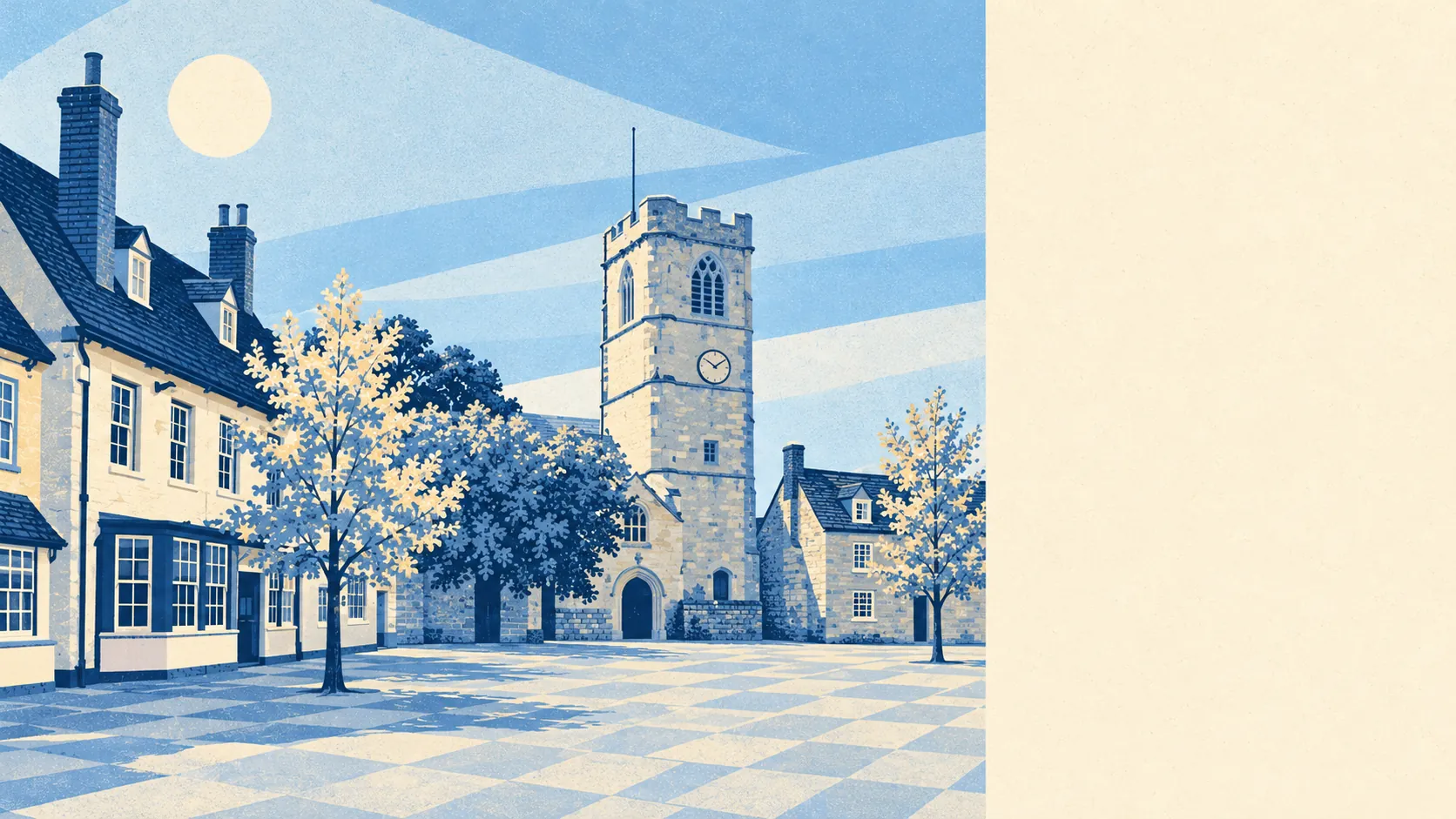
Most houses in Eynsham can be extended, and a minority come with real restrictions. The village has dozens of listed buildings and one conservation area around its old centre. Outside those, the usual planning rules apply. Everyone builds on the same clay. Whether an extension is easy or awkward depends on which of those groups the house is in.
Eynsham has 77 listed buildings: none at Grade I, one at Grade II* and 76 at Grade II. Listing covers the whole building, inside and out, so an extension, new windows, a moved internal wall or a replaced staircase all need listed building consent from West Oxfordshire District Council, on top of any planning permission. The Grade II* building needs the closest attention. The 76 at Grade II make up the bulk of Eynsham's heritage, and they are where most of the paperwork will come from.
There is one conservation area, named after the village and covering its historic core. Inside it, changes that would be routine on a later estate can need planning permission, and the council will look harder at materials, roof lines and anything visible from the street. Part of the house may be ordinary while its front wall counts as part of the village's character. Most alterations to the front of a house inside the conservation area get the closest look.
There are three scheduled monuments in and around the village, including the site of Eynsham Abbey and the market cross. Scheduling is the strictest protection there is, and it matters mainly to the few owners whose land borders one.
Planning records covering Eynsham list 1,082 applications from April 2024 to June 2026, and 538 of them in the last twelve months alone. That volume shows the village is actively changing its houses through the planning system. Every one of those applications went through the system, so builders' vans are a normal sight around Eynsham.
The ground needs as much thought as the paperwork. The British Geological Survey rates the whole area at class 3 on its shrink-swell scale, which measures how much clay soil expands when wet and shrinks when dry. That is a reason to plan deeper foundations and get a structural engineer's view at the start, and no reason to be alarmed. Clay that moves with the seasons also moves with nearby trees, so an extension next to a large tree needs a closer look.
In practice, a post-war semi outside the conservation area can probably add a single-storey rear extension under permitted development, the national rules that allow some work without a full application. A listed cottage or a house in the old centre will need consent for much the same project. Ask the council whether a particular property is listed or inside the conservation area, because the answer decides which kind of project the house is. In the later 19th century someone walled up the open arcades of the Bartholomew Room, a building from 1703, without anyone having to ask. A change like that now comes with forms.
Eynsham gives a fair amount of freedom to alter a home: plenty of room on the post-war streets, very little in the old centre, and the same clay under both.