Yes, in most of Enfield Town you can extend a house without much trouble. Listed buildings are few and scattered. There is one conservation area. The clay ground matters more to most extensions than the planners do, and a few hundred households a year are already applying to extend or alter their homes.
There are 90 listed buildings in the area. Two are grade I, five are grade II* and the other 83 are grade II. Listing covers the whole building, inside as well as out, so almost any change to a listed home needs listed building consent on top of planning permission, and grade I and II* buildings get the closest scrutiny. Interiors here have always been treated as worth keeping. When the last of the sixteenth-century Enfield Palace was demolished in 1928, a panelled room, a plaster ceiling and a stone fireplace were moved into a house on Gentleman's Row.
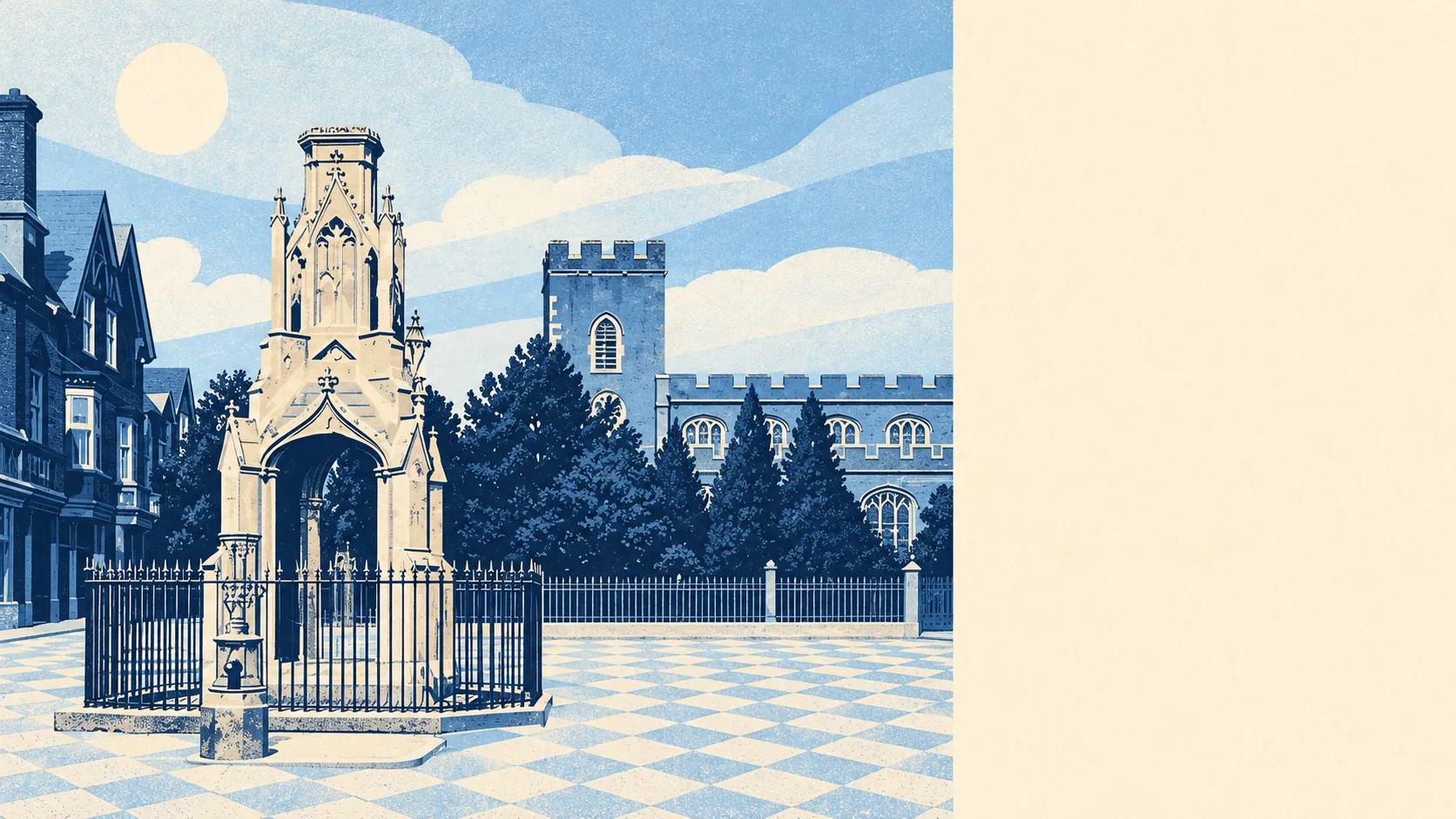
The area includes one conservation area, and Bush Hill Park, the planned estate south-east of the town centre, is also designated. Inside a conservation area, changes that would otherwise go ahead without permission can need consent, and the council judges extensions by how they affect the street as well as the house. The same rear extension can be a formality on one road and a long exchange of drawings on the estate next to it.
There is one scheduled monument in the area. Scheduling is the strictest form of heritage protection, and it matters mainly to anyone whose land borders the monument.
People here extend their homes all the time. Enfield Council received 1,305 planning applications in the area between April 2024 and June 2026, 658 of them in the last twelve months. That count covers applications only, not decisions, so it shows how common building work is here. It says nothing about how many succeeded.
The British Geological Survey puts the area's shrink-swell risk at class 3, and the whole area reaches that class. Clay at that level swells when it is wet and shrinks when it is dry, which can move shallow foundations. In practice, an extension here may need deeper foundations than a builder's first quote assumes, and a structural engineer should look at the ground and any nearby trees before anyone commits to a price. On most streets in Enfield Town, the ground is a bigger obstacle than the planning officer.
Three of the listed buildings are on Historic England's Heritage at Risk register. Each is a building in poor condition, where repairs may qualify for grant funding and will be closely watched. They affect their owners and their immediate neighbours. A buyer of an ordinary house down the road is not affected.
Outside the listed buildings and the conservation areas, many smaller rear and loft extensions can go ahead under permitted development rights without a full planning application, within national limits on size and height. Robert Uvedale was running some of England's earliest hothouses from Enfield in the late seventeenth century, and a modern conservatory on an interwar semi usually needs less permission than his collection of exotic plants needed coal. The one check worth making early is whether the house is listed or inside a conservation area. Historic England's list and Enfield Council's conservation area maps answer both questions, and that answer decides whether a project is a quick build or a long negotiation.
Freedom to extend in Enfield Town is middling. Most streets are straightforward. The listed buildings and the conservation areas are harder, and the clay is a cost that applies everywhere.