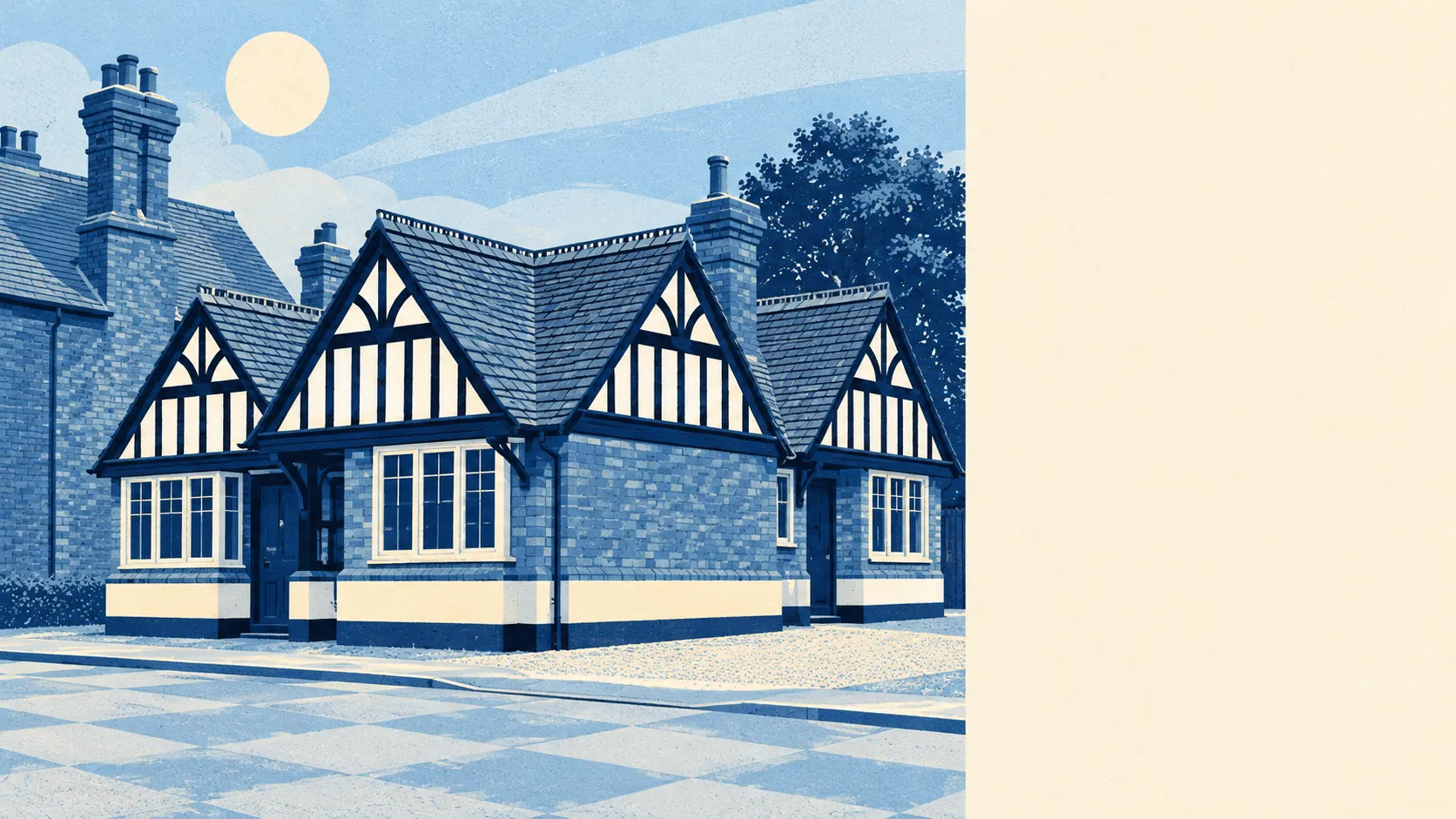
A typical home in Elstree sells for around £467,000, and that cheque buys a village where the good things start at the front gate. Green space is a couple of minutes' walk from most doors. Crime runs well under the rest of the borough. Two in three households own outright or carry a mortgage. The money is the sore point, and Elstree has never once offered to talk about it.
The Land Registry recorded 15 sales in the twelve months to the end of April 2026, at a median of about £467,000. Six were terraced houses, selling at a median of about £451,000, and six were semis at about £488,500, so the step up from a terrace to a semi here is smaller than buyers tend to expect. Fifteen sales a year means the local price gets set by a handful of families deciding to leave. Council tax tells the same story. Band G is the most common band on Hertsmere's valuation list for the area, and only about 6% of homes fall in bands A or B. A Band D home pays about £2,406 a year, and Band G is three letters further up the alphabet.
Renters get a borough number. The typical private rent across Hertsmere was about £1,800 a month as of April 2026, a mean from the Office for National Statistics' rent index that covers the whole authority, Elstree's handful of rented homes included. Expect the village end of that range to lean upward.
The housing is younger than the name. Of every home on the council-tax list, about a third are flats, 29% detached, 20% semi-detached, 14% terraced and 3% bungalows, and only 13% went up before 1930. The energy certificates follow the build dates: nearly half the certificated homes are rated band D, a fifth are E or worse, and a third reach C or better. About 77% of homes heat with mains gas, and about 10% rely on electricity alone. The name goes back to an Anglo-Saxon called Tidwulf and his tree. Most of the houses go back to the 1950s and 1970s.
Safety is where the village earns its keep. Police.uk puts the published crime rate at about 59 per 1,000 residents for the year to May 2026, roughly 35% below the Hertsmere average. That is a decent figure for somewhere the old A5 runs straight through the middle, carrying everyone else's journey past the front windows.
The residents look like people who finished moving some time ago. About 65% own their homes, the median age is 44, and the Office for National Statistics models gross household income at about £72,000 for the financial year to March 2023, averaged across the wider neighbourhood. Mid-career, mortgaged and comfortable, with the school run and the commute already sorted in their heads.
Flood risk needs two different measures, and they disagree. On the Environment Agency's river-and-sea flood zones, none of Elstree falls in zone 2 or zone 3. On the postcode indicators, which also count surface water, about 23% of postcodes carry a high rating on at least one measure. Elstree has no river to blame. The high ratings come from the other sources, rainwater with nowhere to run among them, and the river-and-sea zones never pick those up.
Elstree & Borehamwood station is on the Midland Main Line into London St Pancras, yet at the 2021 Census only about 3% of working residents went to work by train. About 42% drove and about 39% worked from home. The station mostly serves the stretch of Borehamwood west of the line that has been calling itself Elstree for years. There are 17 bus stops, each averaging about 108 departures on a weekday, and every one of them has a weekend service. Broadband is strong: superfast speeds reach about 96% of premises and gigabit about 70%.
The village has 24 listed buildings, two of them Grade II* and the other 22 Grade II, along with the Elstree Village conservation area. Elstree Hill House on Elstree Hill South is Grade II listed, an 18th-century house that once held the old Elstree School. Owners of a listed building need consent for alterations, and the conservation area gives the council a firmer say over what changes on the street front. Plenty of buyers want the old village. Fewer want the paperwork that keeps it old.
Most people have green space about 140 metres away, with around 13 green spaces within a kilometre and water about 420 metres off on average. The open country around Aldenham House and the Green Belt starts close enough that a dog walk can head somewhere different every morning for a fortnight.
The film trade has a long history of living here. Ludwig Blattner, the film producer and studio owner, lived in Elstree from about 1928, and the director and producer John Baxter lived at a house called Aldahvu. Gerry Blattner, another producer and studio executive, took The Chantry on Barnet Lane in the 1960s. Daniel Defoe found the place worth a line in his travel writing. People who spent their working lives deciding how places look on screen chose this one to come home to.
Elstree works for a household with a healthy deposit, a car, and a preference for fields over a high street. Couples settling in for the long haul, people who work from home for most of the week, and anyone wanting low crime and open space without moving deep into the countryside will be happy here. First-time buyers, renters stretching on borough-average rents, and anyone counting on a cheap way in should look elsewhere, because the village doesn't do cheap.
The price is the hard part. A median close to half a million and a council-tax list topped by Band G mean the entry fee is high and keeps costing after completion. Get past it and Elstree is better than average: safe, green within a few minutes' walk, and full of neighbours who plan to stay. The village asks a lot of the bank balance and gives back almost all of it through the front door.