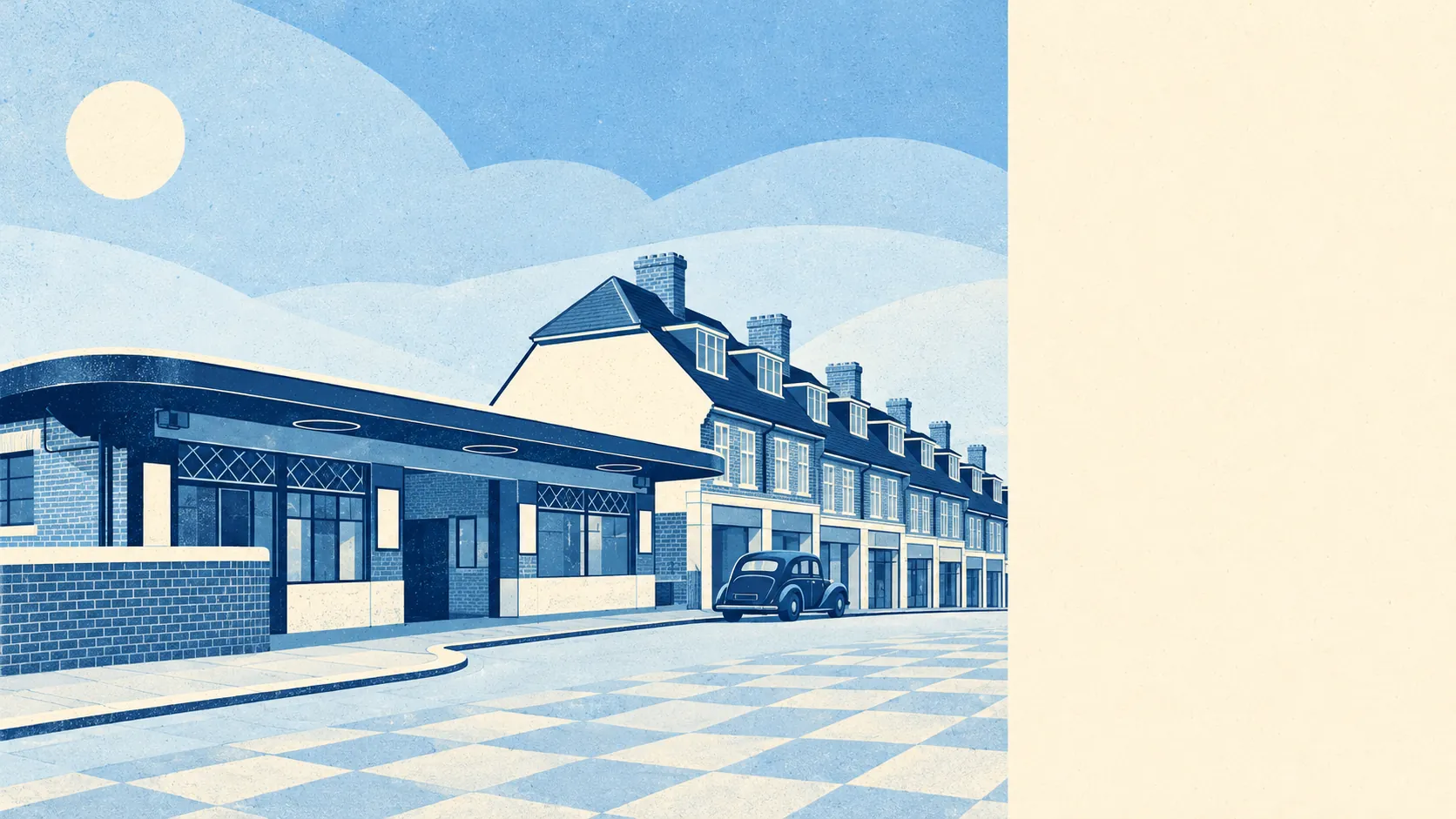
Elm Park still does the job it was drawn up for between the wars, which was to put a family in a semi with a garden and a train at the end of the road. Most people here own their homes. The schools are strong. The semis are the expensive part, and the whole estate is built around them. It is a place for people who already know they want three bedrooms and a lawn, and who have the budget to stop pretending otherwise.
Over the Land Registry's twelve months to May 2026, 349 homes sold in Elm Park at a typical price of £470,000. Semis, the bulk of what changes hands, went for about £525,000. Terraced houses made around £440,000 and flats about £285,000. The 16 detached houses that sold fetched roughly £538,000, barely more than a good semi, because there are hardly any detached houses here and the semis are what everyone is queuing for. Council tax most often falls in band D, and only 13% of homes are in the two cheapest bands. A family with equity from a London flat gets the house this place was built to sell. A first-time buyer gets the flat and a long look over the fence.
Renting is a borough-wide guess. Havering's typical private rent runs at about £1,560 a month across the whole council area, and nothing in that figure tells you what a semi on this estate commands.
The council-tax valuation list gives the place its shape. Semis make up about 36% of homes, terraces 29%, flats 21% and bungalows around 11%, while detached houses manage 4% and anything built before 1930 just 3%. Of the homes with energy certificates, the largest group dates from between the wars, and the ratings follow from that: 46% are in band D, 40% reach A to C, and 14% are E or worse. About 84% of homes heat with mains gas. The estate was planned around the train timetable and the front garden, and in 1935 nobody was selling a house on its loft insulation.
The people who live here mostly stay put and pay a mortgage. About 77% own their homes, the median resident is 43, and the Office for National Statistics models average gross household income at about £75,000 for the financial year to March 2023, before tax and averaged across the area. Just over half of homes, 52%, have three bedrooms. This is family housing occupied by families, and anyone hoping for a scene after dark will be told about a takeaway.
The District line has run through Elm Park since 1935, though these days only about 5% of working residents take a train to work. Around 36% drive and 35% work from home, so the railway the entire estate was built to sell now loses to the kitchen table. Buses do the heavy work locally: 106 stops, each averaging about 301 departures on a weekday and around 18 in the peak hour, enough that waiting is short. Gigabit broadband reaches about 93% of premises, which helps explain the kitchen table.
On flooding, about 8% of postcodes carry a high reading and 19% a medium one on at least one flood indicator, surface water included. Under 1% of postcodes fall inside the Environment Agency's river-and-sea flood zones, and the last recorded river flood was in December 1974. Whatever risk Elm Park carries mostly arrives as rain with nowhere to go.
Green space is close. The nearest park or open space is on average about 210 metres from a front door, and water about 490 metres. Harrow Lodge Park exists because Hornchurch Urban District Council took it, along with wider roads and a railway bridge, in exchange for letting the developer squeeze in more houses than usual. Ninety years on, the park looks like the better half of that deal.
The Metropolitan Police record about 81 crimes a year for every 1,000 residents in Elm Park over the twelve months to May 2026, roughly 14% below the Havering average. Vehicle crime makes up about 10% of what is recorded, against 5% across England and Wales, on an estate where about 34% of households run more than one car.
Heritage rarely gets in an owner's way. The wider area around Elm Park holds 22 listed buildings, one of them grade I and two grade II*, and four conservation areas, among them Langtons and RAF Hornchurch. They belong mostly to Hornchurch's older landmarks. For the owner of an interwar semi, a loft conversion is usually the ordinary planning kind.
Elm Park is a better-than-average place to live, and the schools are why families pay what they pay. Ofsted has graded 29 of the 30 inspected schools nearby good or outstanding, seven of them outstanding, so parents here can put most local schools on the form without dreading the result. The cost is the other side of the same bargain: a three-bedroom semi at around half a million is the price of entry, and a first-time buyer's budget stretches to a flat on an estate designed for houses. Families who can afford the semi and want good schools, a park and a District line train should look hard at Elm Park. Anyone whose budget runs to a flat and whose plans run past ten at night should look somewhere livelier.